
Walk into any finished room and your eyes naturally travel downward to where the wall meets the floor. That strip of trim doing quiet but essential work? That’s your baseboard. It protects drywall from scuffs, hides the expansion gap between flooring and walls, and ties together the visual story of a space. Yet most homeowners barely think about baseboard trim until it’s time to remodel or replace damaged sections.
Choosing the right types of baseboards can elevate a room from “builder-grade” to “designed with intention.” Whether you’re finishing a new build, updating a rental, or tackling a weekend DIY project, the options can feel overwhelming. This guide breaks down every major category—by material, profile and style, and height—so you can pick the perfect base molding for your home, your budget, and your design vision.
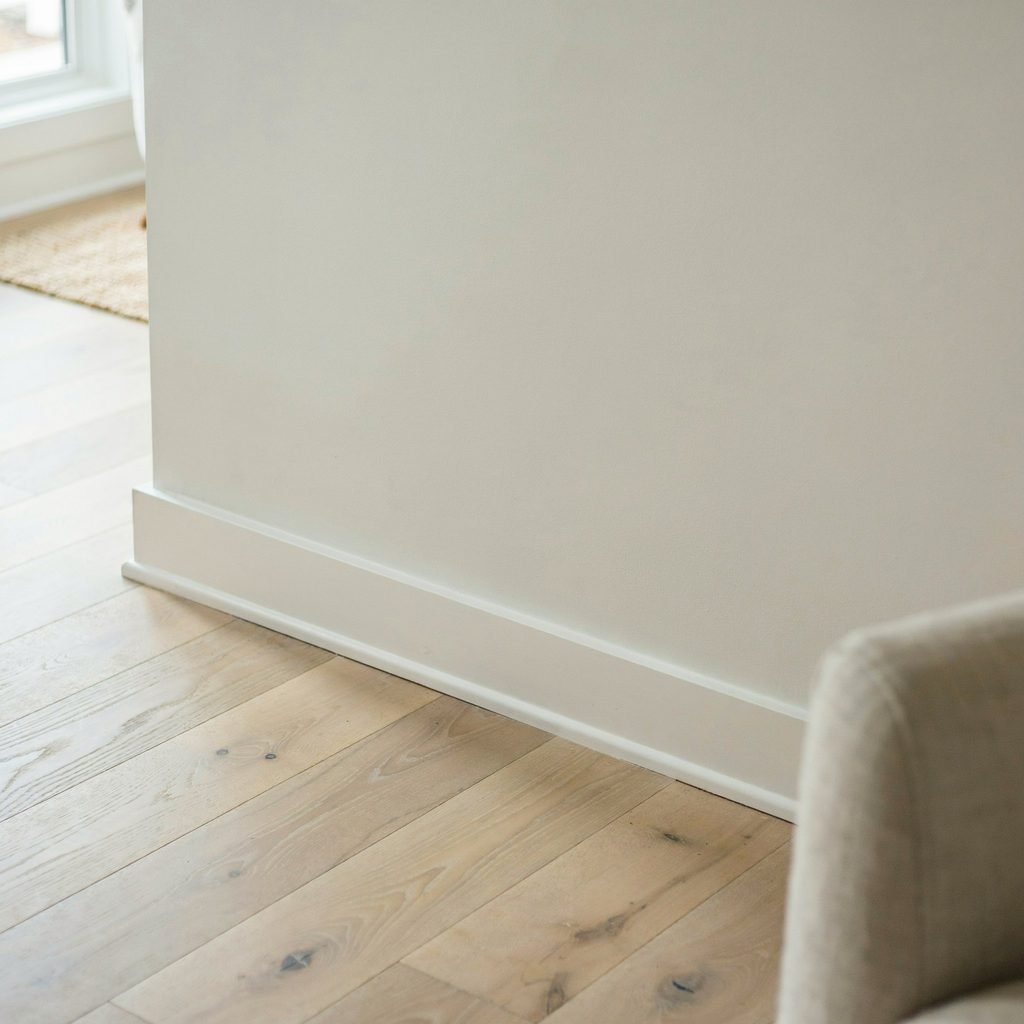
What Is a Baseboard?
A baseboard (also called base molding, wall base, or skirting board) is the trim piece installed along the bottom of interior walls where they meet the floor. It serves three core purposes:
- Protection: Shields drywall or plaster from furniture, vacuums, shoes, and pets.
- Gap coverage: Hides the expansion gap left between flooring materials and walls.
- Aesthetic transition: Creates a clean visual line between wall color and flooring.
How Baseboards Differ from Related Trim
- Shoe molding / quarter round: A small, curved or angled strip installed at the very bottom of the baseboard to cover tiny gaps, especially common with hardwood floors and carpet.
- Casing: The trim surrounding doors and windows. While crown molding vs baseboard comparisons focus on top vs. bottom wall trim, casing frames openings.
- Crown molding: Sits at the top of the wall where it meets the ceiling—essentially the baseboard’s counterpart.
Baseboards are used in virtually every interior room: living areas, bedrooms, hallways, kitchens, bathrooms, and basements.
Types of Baseboards by Material
The material you choose determines durability, moisture resistance, paintability, and cost. Here’s a rundown of the most common baseboard materials available to US homeowners.
Wood Baseboards (Solid Wood)
Solid wood—oak, pine, maple, poplar, and cherry—remains the gold standard for baseboard molding. You can paint poplar or pine for a clean look, or stain oak and maple to show beautiful grain.
- Pros: Durable, refinishable, classic appearance, holds nails well.
- Cons: Higher cost, can warp in humid conditions, requires finishing.
- Cost range: Roughly $1.50–$8+ per linear foot depending on species and profile.
- Best for: Traditional, Craftsman, and farmhouse interiors; living rooms and bedrooms.
MDF Baseboards
Medium-density fiberboard (MDF) baseboards are the most popular budget-friendly option in new US construction. They come pre-primed, take paint beautifully, and offer a smooth, uniform surface.
- Pros: Affordable, consistent shape, easy to paint, widely available.
- Cons: Swells and crumbles if exposed to prolonged moisture; dents more easily than hardwood.
- Cost range: $0.50–$3 per linear foot.
- Best for: Dry interior rooms, painted finishes, DIY-friendly projects.
PVC Baseboards
PVC (polyvinyl chloride) baseboards are 100% waterproof, making them ideal for moisture-prone spaces.
- Pros: Impervious to water, easy to clean, no painting required, won’t rot or mold.
- Cons: Limited profile options, can look plasticky, harder to paint.
- Cost range: $1–$4 per linear foot.
- Best for: Bathrooms, basements, laundry rooms, and other moisture-resistant baseboard applications.
Vinyl Baseboards
Vinyl baseboards are flexible, impact-resistant, and often come in long coils or sticks. They’re common in commercial settings but work well in high-traffic residential areas.
- Pros: Extremely durable, flexible around curved walls, low maintenance, affordable.
- Cons: Limited aesthetic appeal, fewer design choices.
- Cost range: $0.50–$2.50 per linear foot.
- Best for: Hallways, mudrooms, commercial spaces, rental properties.
Aluminum and Metal Baseboards
Aluminum baseboards deliver a sleek, industrial-modern look and resist scratches and dents.
- Pros: Virtually indestructible, modern aesthetic, no painting needed, moisture-proof.
- Cons: Higher cost, limited availability, can dent under extreme impact, colder visual feel.
- Cost range: $4–$12+ per linear foot.
- Best for: Contemporary and minimalist interiors, commercial build-outs, high-traffic zones.
Laminate and Engineered Baseboards
Laminate baseboards feature a decorative surface bonded to a composite core, offering a consistent wood-grain appearance at a lower price.
- Pros: Affordable, consistent color and pattern, scratch-resistant surface.
- Cons: Can’t be refinished, edges may show wear, limited profiles.
- Cost range: $1–$3.50 per linear foot.
- Best for: Budget remodels, matching laminate flooring, rental upgrades.
Reclaimed and Rustic Wood Baseboards
For farmhouse and vintage interiors, reclaimed barn wood or hand-hewn timber baseboards add unmatched character.
- Pros: Unique grain and patina, sustainable, strong visual statement.
- Cons: Inconsistent dimensions, may need custom milling, variable pricing.
- Cost range: $5–$20+ per linear foot depending on rarity.
- Best for: Farmhouse baseboards, rustic cabins, accent walls, heritage restorations.
Types of Baseboards by Profile and Style
Beyond material, the profile—the cross-sectional shape—defines the style. Here are the most popular baseboard styles you’ll encounter.
Flat or Square-Edge Baseboards
A simple, clean rectangular board. The go-to for modern minimalist baseboards and Scandinavian-inspired rooms. Typically 3–5 inches tall.
Rounded or Bullnose Baseboards
A softened top edge gives a gentle, transitional look. Works well in casual and contemporary settings.
Stepped or Layered Baseboards
Two or three stacked layers create depth without ornate carving. A versatile middle-ground style.
Colonial Baseboards
Inspired by 17th- and 18th-century American homes, these feature a beveled or ogee top edge. Usually 4–6 inches tall, painted white or cream.
Craftsman Baseboards
Bold, flat-faced boards often 5–7 inches tall with a simple cap or square top. A hallmark of Arts-and-Crafts architecture.
Victorian or Ornate Baseboards
Elaborate carved profiles, sometimes exceeding 7 inches. Best suited to period restorations and formal rooms.
Modern Minimalist Baseboards
Ultra-slim (2–3 inches), flat, and often flush or shadow-gap mounted. Popular in new contemporary construction.
Farmhouse Baseboards
Wide, flat boards (often 5–8 inches) in white or natural wood. Pair beautifully with shiplap and wide-plank floors.
Contemporary Tall Baseboards
Ranging from 6 to 10+ inches, tall baseboards add drama and work well in rooms with 9-foot or higher ceilings.
Custom or Premium Profile Baseboards
Router-cut or hand-milled profiles for high-end projects. Limited only by budget and imagination.
Baseboard Heights and Sizes
Choosing the right baseboard height matters more than most people realize.
- Low-profile (2–3 inches): Best for modern minimalist interiors, low ceilings (under 8 feet), and small rooms.
- Standard (3–5 inches): The default in most US homes. Works with 8-foot ceilings and nearly any style.
- Tall (5–8 inches): Suits rooms with 9- to 10-foot ceilings, traditional or Craftsman styles, and wide-open floor plans.
- Extra-tall (8–12 inches): Reserved for grand spaces, Victorian restorations, or bold design statements.
Rule of thumb: Match baseboard height to ceiling height. A common guideline is roughly 1 inch of baseboard per foot of ceiling height, though personal taste and flooring type also play a role.
Baseboards by Room and Flooring Type
- Hardwood floors: Wood or MDF baseboards with a matching or contrasting stain work beautifully. Add shoe molding to cover seasonal expansion gaps.
- Carpet: Install baseboards slightly above the carpet pad so the carpet tucks underneath. Vinyl or painted MDF are practical choices.
- Tile and luxury vinyl plank (LVP): PVC or moisture-resistant MDF handles the occasional wet mop without swelling. Quarter round can bridge small gaps.
- Bathrooms, kitchens, basements: Prioritize moisture-resistant baseboards—PVC, vinyl, or sealed aluminum. Avoid bare MDF.
- High-traffic areas, homes with kids and pets: Choose durable materials like solid hardwood, aluminum, or thick vinyl that resist dents, scratches, and scuffs.
Baseboard Cost Guide
Costs vary by region, but here are general US market ranges (material only, per linear foot):
| Material | Avg. Cost / Lin. Ft. | Durability | Moisture Resistance | Best Use |
|---|---|---|---|---|
| MDF | $0.50–$3 | Moderate | Low | Dry rooms, painted finishes |
| Pine / Poplar (paint-grade wood) | $1.50–$5 | Good | Low–Moderate | Living rooms, bedrooms |
| Oak / Maple (stain-grade wood) | $3–$8+ | Excellent | Low–Moderate | Traditional, Craftsman homes |
| PVC | $1–$4 | Good | Excellent | Bathrooms, basements |
| Vinyl | $0.50–$2.50 | Very Good | Excellent | High-traffic, commercial |
| Aluminum / Metal | $4–$12+ | Excellent | Excellent | Modern, industrial spaces |
| Laminate / Engineered | $1–$3.50 | Moderate | Low–Moderate | Budget remodels |
| Reclaimed Wood | $5–$20+ | Variable | Low | Farmhouse, rustic accents |
Additional cost factors: Complex profiles, greater height, pre-finished vs. raw stock, labor ($1–$4+ per linear foot for professional installation), old-trim removal, and room geometry all influence your final number.
How to Choose the Right Baseboard
Use this simple decision framework:
- Match the architecture. Colonial home? Go with a beveled colonial profile. Mid-century modern? Try a flat, low-profile board.
- Coordinate with flooring. Dark hardwood pairs well with white painted baseboards or a matching stain. Tile floors call for moisture-resistant materials.
- Assess moisture exposure. Bathrooms, basements, and laundry rooms demand PVC, vinyl, or sealed metal.
- Set a realistic budget. MDF delivers the most style per dollar. Solid hardwood and aluminum sit at the premium end.
- Decide on finish. Painted baseboards offer flexibility and hide material flaws; stained baseboards showcase wood grain.
- Proportion the height. Balance baseboard height against ceiling height and room scale.
Baseboard Installation and Maintenance Tips
DIY Installation Basics
You’ll need a miter saw (or coping saw for inside corners), measuring tape, level, finish nails or a nail gun, construction adhesive, wood filler, and paintable caulk.
- Inside corners: Cope the end rather than mitering for a tighter, longer-lasting joint.
- Outside corners: Use a 45-degree miter cut. Pre-fit before nailing.
- Long runs: Scarf-joint two pieces at a slight angle rather than butting them square.
- Attach to wall studs where possible; use construction adhesive on drywall-only sections.
Cleaning and Maintenance
- Painted wood or MDF: Wipe with a damp cloth; touch up chips with matching paint.
- Stained hardwood: Use a wood-safe cleaner; reapply polyurethane every few years in high-traffic zones.
- PVC / Vinyl: Simply wipe down with mild soap and water.
- Aluminum: Dust or wipe with a non-abrasive cleaner.
Repair vs. Replace
Small dents and scratches can be filled and repainted. If a section is water-damaged, split, or severely warped, replacement is usually more cost-effective than repair.
FAQs
What is the most popular type of baseboard in the US?
Painted MDF in a simple stepped or flat profile, typically 3½ to 5¼ inches tall, dominates new construction and remodels due to its affordability and clean look.
What is the difference between baseboard and shoe molding?
The baseboard is the main vertical trim on the wall. Shoe molding (or quarter round) is a small strip attached to the bottom of the baseboard to cover the gap between the baseboard and the floor.
Are MDF baseboards good quality?
Yes, for dry interior rooms. MDF provides a smooth, paintable surface at a low cost. Just keep it away from standing water or unsealed bathrooms.
What baseboard is best for bathrooms?
PVC or solid vinyl baseboards are the top picks because they’re fully waterproof and won’t swell or harbor mold.
How tall should baseboards be?
A common starting point is 3–5 inches for 8-foot ceilings. Add roughly one inch of height for every additional foot of ceiling.
Can I install baseboards over carpet?
Yes. Install the baseboard so its bottom edge sits just above the carpet pad, then tuck the carpet underneath. Avoid nailing into the carpet fibers.
What is the cheapest baseboard option?
Vinyl and basic MDF are the most budget-friendly, often under $1–$2 per linear foot for material.
Conclusion
From sleek aluminum strips to wide-plank farmhouse boards, the types of baseboards available today cover every aesthetic, climate challenge, and budget a US homeowner might face. The key is matching three things: your room’s moisture and traffic demands, your flooring and architectural style, and your comfort zone on cost.
Take a few minutes to measure your walls, note your ceiling height, and decide whether you want painted or stained trim. Bring those details to your local home-improvement store or order samples online. The right baseboard is the finishing detail that makes every other design choice in the room look intentional.
Ready to upgrade your space? Start by narrowing your options to one material and one profile, grab a sample, and hold it against your wall next to your flooring. You’ll know the right fit when you see it. Happy trimming!