That grinding racket every morning as you head to work isn’t just annoying—it’s your garage door screaming for help. If you’re wincing at the sound of your opener or getting complaints from neighbors about the 6 a.m. garage symphony, you’re not alone. Over 70% of garage door noises stem from simple maintenance neglect rather than catastrophic failures. The good news? Most of these issues can be fixed with basic tools and a little know-how, saving you hundreds in unnecessary service calls.
Noisy garage door openers are incredibly common across North America. With average homeowners using their garage doors 1,500+ times per year, it’s no wonder components wear down. But that persistent squeak or alarming bang isn’t just a nuisance—it’s often the first warning sign of serious mechanical issues. Left unaddressed, minor noises can escalate into safety hazards (like broken springs) or complete system failure requiring expensive replacements.
In this guide, we’ll tackle the most common causes of garage door repair noisy openers and walk you through DIY fixes that solve 80% of noise problems. You’ll learn exactly where to lubricate, which bolts to tighten, and when to wisely call a professional. We’ve distilled years of technician knowledge into step-by-step instructions you can implement this weekend. Ready to transform that ear-splitting clamor into a whisper-quiet operation? Let’s dive into the sounds, causes, and solutions that will restore peace to your mornings.
Understanding Noisy Garage Door Openers
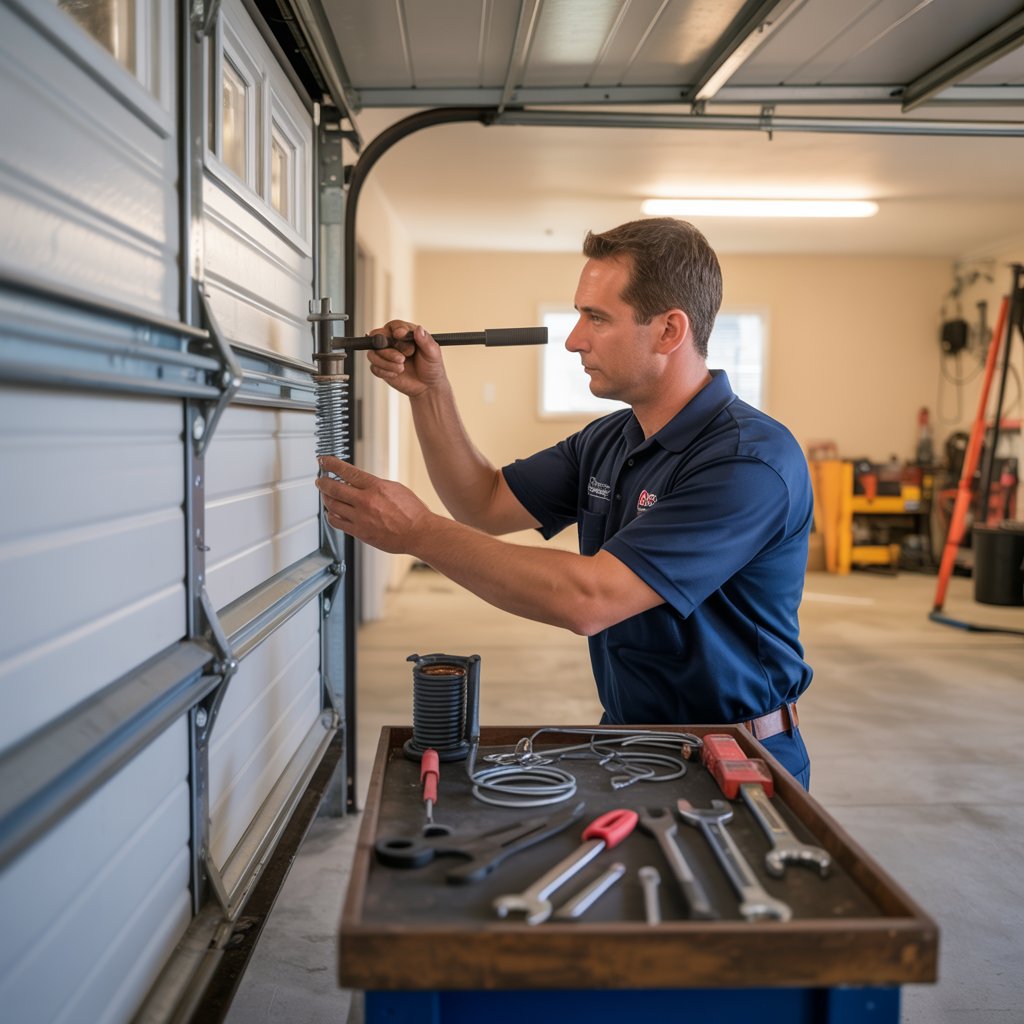
Garage doors speak through sound—and learning their language prevents costly repairs. Each noise type signals specific mechanical issues, from simple fixes to urgent warnings. Understanding these “sound signatures” helps you diagnose problems before they escalate.
Squeaking and squealing sounds typically indicate dry, unlubricated components. As rainbowgaragedoor.com explains, high-pitched “eee-eee” noises often come from friction where rollers meet tracks or dry hinges. Grinding noises (metal-on-metal “rrrrr” sounds) are serious warnings—usually signaling misaligned tracks, frozen rollers, or severe wear. Rattling and banging noises suggest loose hardware or an unbalanced door, while sudden popping or clunking often means broken springs—a definite safety hazard.
The table below decodes common noises, their causes, and urgency level:
| Noise Type | Common Cause | DIY Fix? | Urgency Level |
|---|---|---|---|
| High-pitched squeak/squeal | Dry rollers, hinges, or tracks | ✅ Yes | Medium – Fix within 2 weeks |
| Grinding/scraping | Misaligned tracks, worn rollers | ⚠️ Limited | High – Address immediately |
| Rattling | Loose nuts, bolts, or brackets | ✅ Yes | Medium – Fix within 1 week |
| Slapping | Loose chain hitting opener | ✅ Yes | Medium – Fix within 1 week |
| Popping/banging | Broken torsion spring | ❌ No | Critical – Stop use immediately |
| Clicking | Opener gear failure | ❌ No | High – Schedule service soon |
| Thumping/clunking | Worn rollers or misalignment | ⚠️ Limited | Medium-High – Investigate |
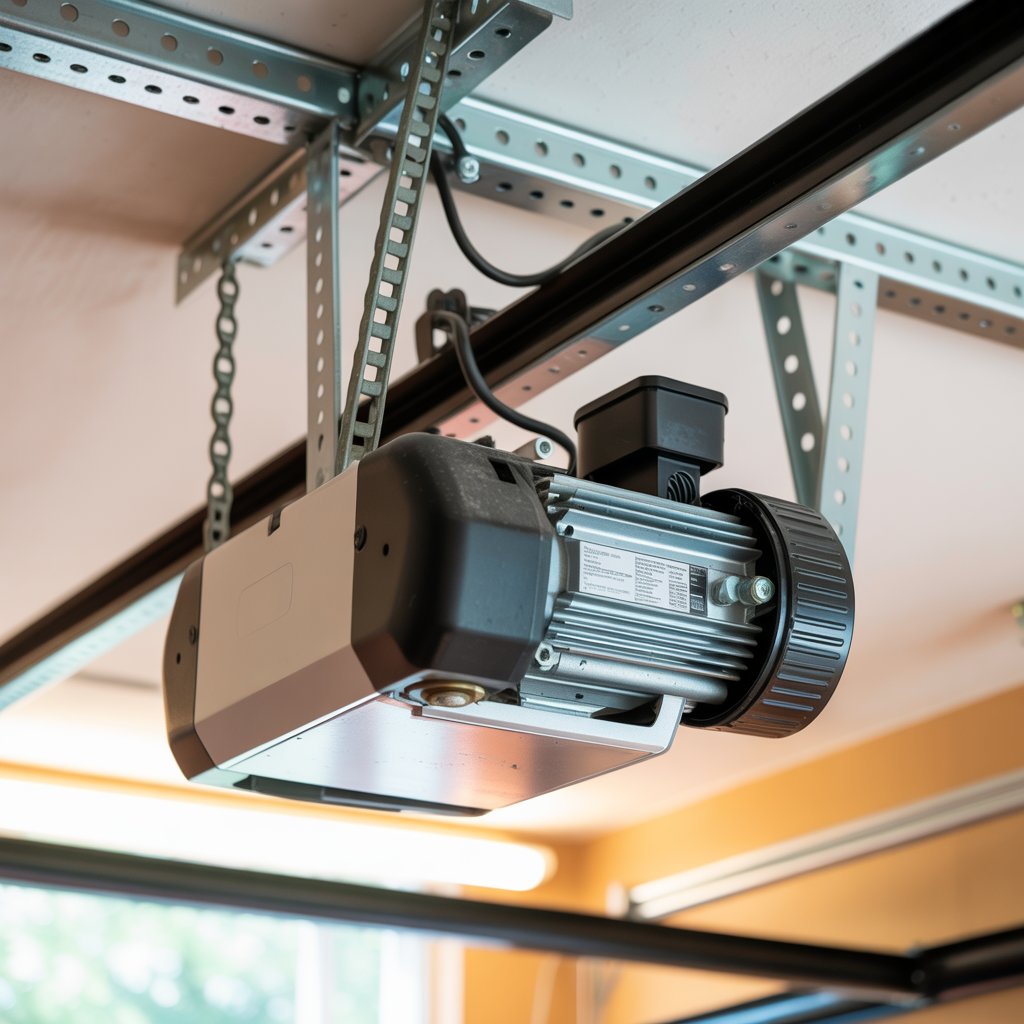
As Garage.com notes, “New or louder-than-usual sounds from your opener could either indicate a problem or a need for cleaning.” Recognizing these sounds early prevents minor issues from becoming major repairs—saving you money and keeping your family safe.
Safety First: Prep Steps Before Troubleshooting
Before touching any tools, prioritize safety—garage doors contain dangerous spring tension that can cause serious injury. Follow these non-negotiable safety rules:
- Disconnect power to the opener at the circuit breaker—never just unplug it
- Manually clamp the door using C-clamps on the track below the bottom roller to prevent accidental movement
- Wear safety glasses and gloves—metal fragments and lubricants can cause eye/skin irritation
- Never attempt torsion spring repairs—these store 200+ pounds of tension and require professional tools
- Keep children and pets clear of the work area during diagnosis and repairs
If your door shows any of these red flags, stop immediately and call a professional:
- Visible gaps in the torsion spring
- Door appears off-track or crooked
- Sudden loud bang followed by heavy operation
- Shaking or violent jumping during movement
As emphasized by Professional Garage Door, “Your garage doors weigh up to 400 pounds, making them the heaviest moving objects in your home.” Respect the system’s power to avoid preventable injuries.
Top 7 DIY Troubleshooting Fixes
Fix 1: Lubricate Moving Parts (120 words)
Tools needed: Silicone-based lubricant (not WD-40), clean rags, ladder
Why it works: Proper lubrication eliminates 60% of common garage door noises by reducing metal-on-metal friction. As Clopay warns, “skip WD-40 as a ‘first-line’ fix because it’s not a true long-term lubricant.”
Step-by-Step:
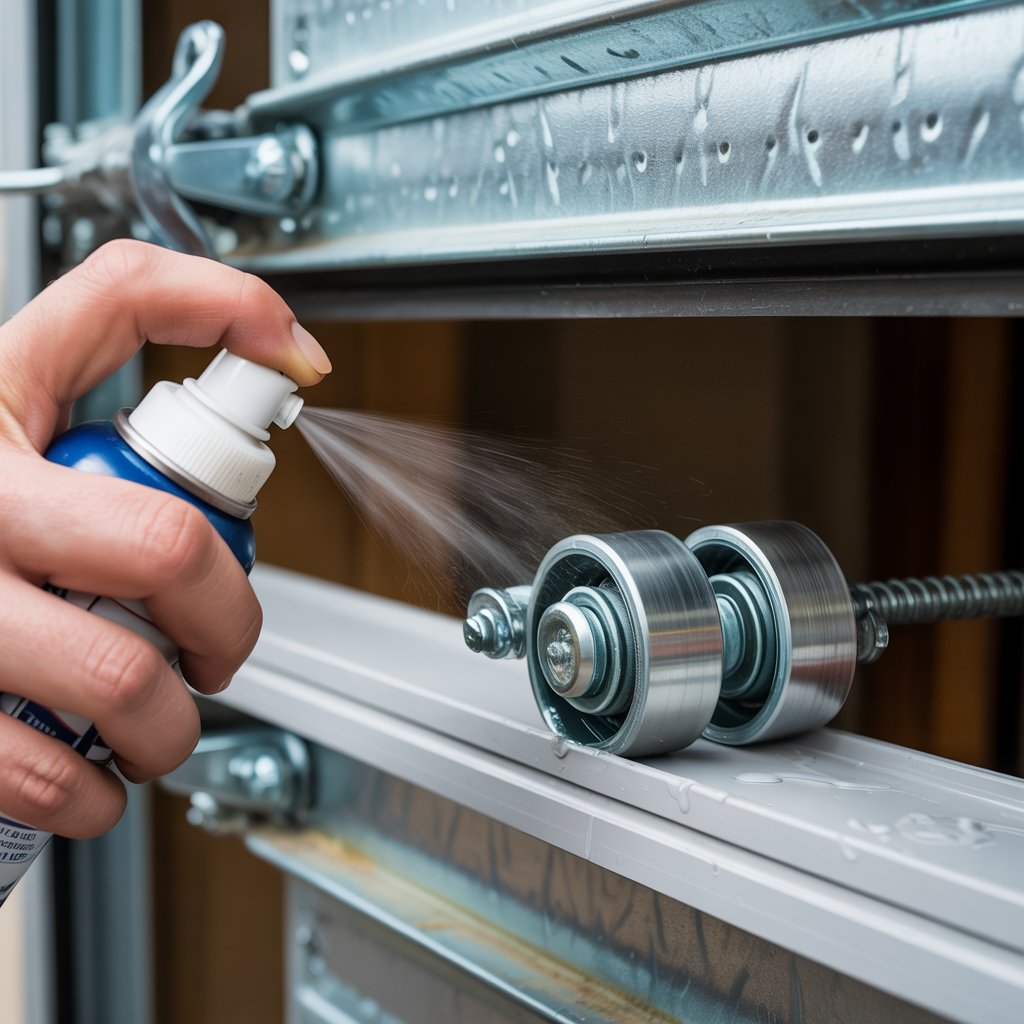
- Clean first: Wipe rollers, hinges, and tracks with a dry rag to remove dirt
- Apply lubricant: Spray silicone lubricant directly onto hinge pins and roller bearings (avoid nylon wheel surfaces)
- Work it in: Manually open/close the door 3-5 times to distribute lubricant
- Wipe excess: Remove drips to prevent attracting more dirt
Pro Tip: Focus on pivot points—roller stems, hinge knuckles, and spring coils. Lubricate every 6 months (or after pressure-washing). Before: Ear-splitting squeal during operation. After: Smooth, near-silent movement.
Fix 2: Tighten Loose Hardware (110 words)
Tools needed: Adjustable wrench, socket set, flashlight
Why it works: Vibration from daily use loosens critical hardware, causing rattles and misalignment.
Step-by-Step:
- Inspect systematically: Start at the top bracket and work down both sides
- Check critical points: Tighten all track bolts, roller brackets, and opener mounting hardware
- Test tension: Gently wiggle components—if they move, tighten further
- Recheck after operation: Run the door 3 times, then re-tighten any loosened hardware
Pro Tip: Don’t over-tighten—this can strip threads or bend tracks. Focus on the top 3 rollers and horizontal track sections where vibration is strongest. Before: Metallic rattling during operation. After: Solid, vibration-free movement.
Fix 3: Check and Replace Rollers (115 words)
Tools needed: Socket set, replacement rollers (nylon recommended), safety glasses
Why it works: Worn steel rollers create grinding noises and accelerate track damage. Nylon rollers operate 50% quieter with less vibration.
Step-by-Step:
- Inspect rollers: Look for cracks, flat spots, or excessive play in the bearing
- Remove old rollers: Loosen set screws while supporting the door section
- Install replacements: Slide in new nylon rollers with ball bearings
- Lubricate: Apply silicone lubricant to new roller stems
Pro Tip: Upgrade to 2-inch diameter nylon rollers—they distribute weight better than smaller steel ones. As Garage.com states, “Worn-out rollers, particularly metal ones, create persistent grinding sounds.” Before: Loud grinding during movement. After: Smooth, quiet gliding.
Fix 4: Balance the Door (110 words)
Tools needed: None (manual test), winding bars (for professional adjustment)
Why it works: An unbalanced door strains the opener and creates uneven operation noises.
Step-by-Step:
- Disconnect opener: Pull the emergency release cord
- Manual lift test: Raise door halfway—it should stay in place without drifting
- Check weight: A properly balanced door lifts with 10-15 pounds of force
- Professional adjustment: If unbalanced, call a technician for spring adjustment
Pro Tip: Never adjust torsion springs yourself—this requires specialized tools. As Professional Garage Door warns, “popping or banging noises signal a broken torsion spring.” Before: Door jerks upward or crashes down. After: Smooth, controlled manual operation.
Fix 5: Inspect and Align Tracks (115 words)
Tools needed: Rubber mallet, level, wrench, flashlight
Why it works: Misaligned tracks cause scraping noises and accelerate roller wear.
Step-by-Step:
- Clean tracks: Remove debris with a damp cloth
- Check alignment: Place a level against vertical and horizontal tracks
- Gentle realignment: Tap bent sections with rubber mallet (¼-inch max adjustment)
- Tighten mounting bolts: Secure tracks every 24 inches along the wall
Pro Tip: Focus on the curved transition section where vertical and horizontal tracks meet—this area commonly bends. As AAA Garage Door notes, “scraping noises indicate track misalignment.” Before: Grinding/scraping during movement. After: Silent, straight-line operation.
Fix 6: Adjust Opener Chain/Belt Tension (110 words)
Tools needed: Wrench set, tape measure
Why it works: Proper tension eliminates slapping and reduces motor strain.
Step-by-Step:
- Check sag: With door closed, measure chain/belt slack—it should have ½-inch deflection
- Adjust limit screws: Turn the “chain tension” screw clockwise to tighten
- Lubricate rail: Apply white lithium grease to the rail where the trolley travels
- Test operation: Run door 5 times, checking for smooth movement
Pro Tip: Belt drives need less maintenance than chain drives but still require occasional tension checks. Before: Slapping or clanking during operation. After: Quiet, consistent movement without slack noise.
Fix 7: Test and Clean Safety Sensors (110 words)
Tools needed: Soft cloth, alcohol wipes
Why it works: Dirty or misaligned sensors cause the opener to strain and make unusual noises.
Step-by-Step:
- Locate sensors: Find the small lenses near the floor on both track sides
- Clean lenses: Wipe with alcohol wipe to remove dirt/film
- Check alignment: Ensure LED lights on both sensors glow steadily (not blinking)
- Test function: Wave an object between sensors—they should immediately stop door reversal
Pro Tip: Misaligned sensors force the opener to work harder, creating strain noises. As Opple House explains, “if your door strains upon opening and closing, your garage may need more power.” Before: Clicking or straining sounds. After: Quiet operation with reliable safety function.
| Essential Tools Checklist |
|---|
| Silicone-based lubricant |
| Adjustable wrench set |
| Socket set |
| Rubber mallet |
| Safety glasses & gloves |
| Level |
| Flashlight |
| Alcohol wipes |
Advanced Issues: When DIY Won’t Cut It
Some garage door noises signal problems beyond safe DIY repair. Immediately stop using your door and call a professional if you notice:
- Popping or banging sounds – These often indicate broken torsion springs, which store dangerous levels of tension. As Professional Garage Door warns, broken springs require immediate professional attention.
- Grinding accompanied by door shuddering – This suggests severe track misalignment or failing drum assemblies
- Worn nylon gears in the opener – Creates loud grinding during operation and requires complete gear replacement
- Motor straining with burning smell – Indicates electrical issues or failing capacitor
Consider upgrading to a belt-drive opener if your current model is over 10 years old. Modern belt-drive systems operate 50% quieter than chain drives and include smart features like smartphone control. Typical repair costs range from $150-$400 for spring replacements or gear repairs, while new openers run $400-$800 installed. Remember: investing in professional garage door repair noisy openers service prevents costly emergency repairs down the line.
Preventive Maintenance Schedule
Regular maintenance prevents 90% of noise issues. Follow this simple schedule:
| Task | Frequency | Time Needed |
|---|---|---|
| Lubricate rollers, hinges, springs | Every 6 months | 20 minutes |
| Tighten all hardware | Every 3 months | 15 minutes |
| Check door balance | Every 6 months | 10 minutes |
| Clean tracks and sensors | Monthly | 5 minutes |
| Inspect rollers for wear | Annually | 15 minutes |
| Test reverse safety feature | Monthly | 2 minutes |
Lubrication is your #1 noise preventer—don’t skip this critical step. Apply silicone lubricant after pressure-washing or heavy rain/dust exposure as recommended by rainbowgaragedoor.com. Consistent maintenance extends your system’s life by 5-7 years and keeps operation whisper-quiet.
FAQs
Why is my garage door opener so loud suddenly?
Sudden noise increases often indicate broken components (like a snapped spring) or severe misalignment. Stop using the door and inspect for visible damage.
Can I fix a noisy garage door myself?
Yes for 80% of issues—lubrication, tightening hardware, and sensor cleaning are safe DIY tasks. Never attempt spring repairs.
What’s the best lubricant for garage doors?
Silicone-based spray or lithium grease—never use WD-40 as it attracts dust and washes away quickly.
How often should I lubricate my garage door?
Twice yearly, or after heavy rain/dust exposure. Consistent lubrication prevents most squeaks.
Why does my garage door make noise only in cold weather?
Metal contracts in cold temperatures, increasing friction. Lubricate with cold-weather rated grease before winter.
Should I replace my noisy opener?
Not necessarily—most noise comes from door components, not the opener itself. Diagnose thoroughly before replacing.
How much does professional garage door repair cost?
Typical repairs range $150-$400. Ignoring minor noises often leads to $500+ emergency repairs.
Is a noisy garage door dangerous?
Persistent grinding or banging can indicate failing safety components. Address serious noises immediately.
Conclusion
That annoying garage door noise doesn’t have to be your morning wake-up call. With these DIY fixes—especially proper lubrication and hardware tightening—you can silence 80% of common garage door repair noisy openers issues in under 30 minutes. Remember the golden rule: when in doubt, call a professional, especially for spring-related issues. Implement the preventive maintenance schedule to keep your system running smoothly for years. Try these solutions today and enjoy the peace of a quiet garage—your neighbors (and your eardrums) will thank you! Still hearing unsettling sounds after trying these fixes? Contact [Your Local Garage Door Pros] for same-day service. For more help, check out our guides on Garage Door Spring Replacement and Choosing the Quietest Garage Door Opener.