Ever opened your basement door to find a $5,000 water damage nightmare because you skipped gutter cleaning last fall? That’s exactly what happened to Sarah from Toronto when spring thaw brought her neglected gutters to a disastrous conclusion. She could’ve prevented it with just $150 of preventive maintenance. You’re not alone—homeowners across North America waste $48 billion annually on repairable issues according to HomeAdvisor data. With the median home value now exceeding $400,000, neglecting basic upkeep means potentially losing 10% of your home’s value—that’s $40,000 down the drain for the average homeowner.
A solid home maintenance checklist isn’t just helpful—it’s your financial lifeline. Regular care prevents small issues from becoming catastrophic failures, keeps warranty coverage intact, and ensures your home appreciates rather than depreciates. Most importantly, it transforms overwhelming responsibilities into manageable, scheduled tasks that take less time than your weekly grocery run.
In this guide, you’ll get a complete, printable home maintenance checklist covering every season, room, and system in your home. We’ve distilled years of contractor wisdom into simple DIY-friendly steps that save thousands while protecting your biggest investment. Ready to work smarter, not harder? Download your free printable home maintenance checklist PDF here and let’s transform how you care for your home.
Why Regular Home Maintenance Matters
Think of your home like a high-performance vehicle—skip the oil changes, and eventually, the engine seizes. The numbers don’t lie: preventive maintenance costs 10-20x less than emergency repairs according to DwellFile’s 2026 analysis. When you budget $1\%$ of your home’s value annually for upkeep (about $4,000 for a $400,000 home), you’re not spending money—you’re protecting equity. Well-maintained homes sell 17 days faster and for 1.5-3% more according to National Association of Realtors data, with buyers consistently overlooking cosmetic flaws when functional systems are in top condition.
| Task | Preventive Cost | Neglect Consequence |
|---|---|---|
| Gutter cleaning | $150 DIY | $2,000+ foundation damage |
| HVAC tune-up | $100 | $1,500+ system failure |
| Roof inspection | $200 | $8,000+ leak repairs |
| Foundation crack sealing | $300 | $10,000+ structural repair |
| Annual plumbing check | $150 | $5,000+ water damage |
Beyond financial benefits, regular maintenance ensures your family’s safety (preventing carbon monoxide leaks and electrical fires), improves energy efficiency (cutting utility bills by up to $200 annually), and preserves manufacturer warranties that often require documented maintenance. Most importantly, it eliminates the anxiety of unexpected breakdowns—because nothing ruins a weekend like a flooded basement at 2 a.m.
Monthly Home Maintenance Checklist
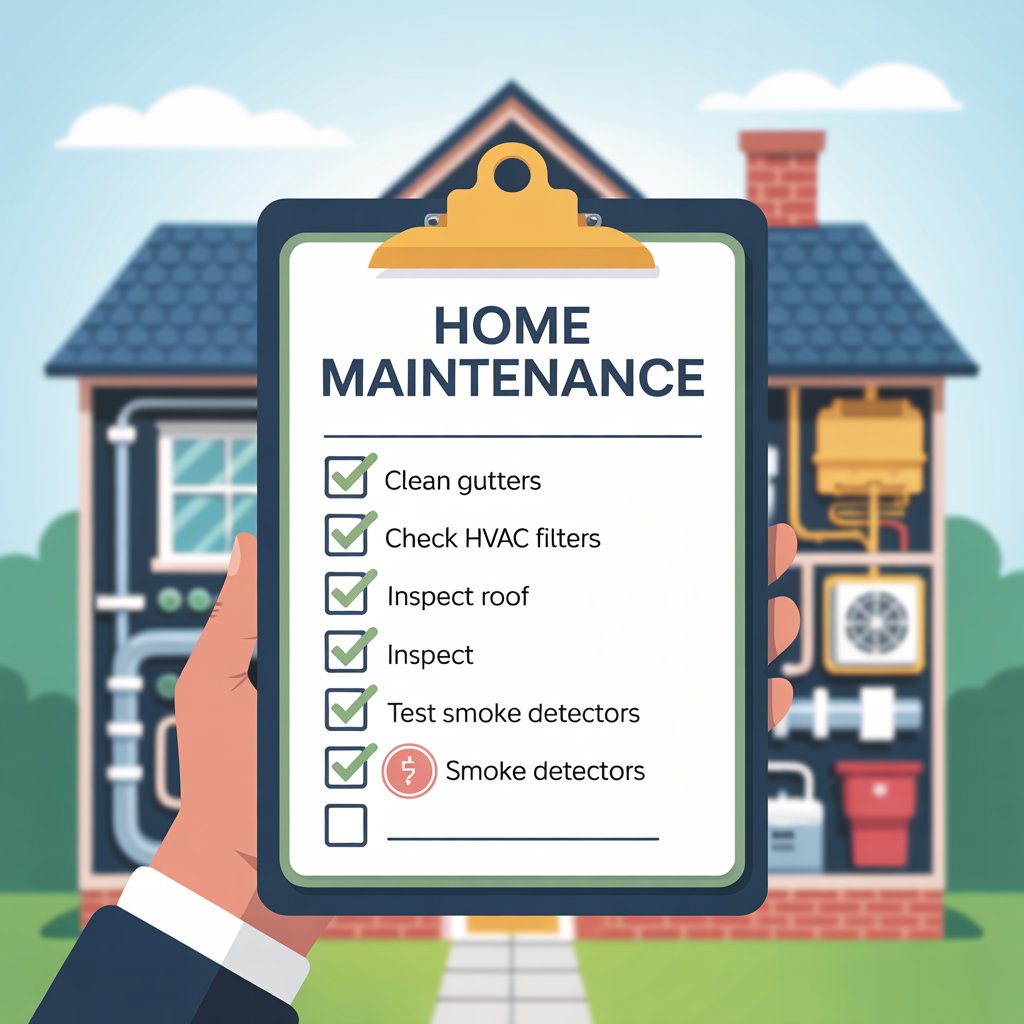
Your monthly routine should take less than 30 minutes but prevent 80% of common household emergencies. Here’s your stress-free monthly home maintenance checklist:
- Test smoke and carbon monoxide detectors ($2 batteries, 5 minutes): Press test buttons on all units, replace batteries if needed. Pro tip: Do this when changing clocks for daylight saving time.
- Replace HVAC filters ($15-25, 3 minutes): Slide out old filter, note direction arrow, insert new one. Dirty filters increase energy bills by $15 monthly.
- Check under sinks for leaks (0 cost, 7 minutes): Look for moisture, mold, or drips—catching a slow leak now prevents $3,000+ cabinet damage.
- Inspect faucets and showerheads (0 cost, 5 minutes): Wipe connections dry, check for drips. A single dripping faucet wastes 3,000 gallons yearly.
- Clean refrigerator coils ($0, 10 minutes): Unplug fridge, vacuum dust from coils—improves efficiency by 30%.
- Test sump pump ($0, 3 minutes): Pour bucket of water into pit to verify activation.
- Check fire extinguishers ($0, 2 minutes): Ensure pressure gauge is in green zone.
- Inspect electrical cords ($0, 5 minutes): Look for fraying or exposed wires—replace damaged cords immediately.
- Examine weatherstripping ($0, 5 minutes): Check door seals for gaps letting in drafts.
- Test garage door safety sensors ($0, 2 minutes): Wave object between sensors to verify auto-reverse function.
- Check attic access hatch insulation ($0, 3 minutes): Ensure proper sealing to prevent energy loss.
- Inspect basement for moisture ($0, 5 minutes): Look for damp spots or efflorescence on walls.
Pro Tip for Renters vs. Owners: Renters should document existing conditions with photos and report maintenance issues immediately (many leases require 48-hour notice). Owners should create a digital maintenance log—photos with dates are worth more than receipts when selling.
Seasonal Home Maintenance Schedules
Spring Home Maintenance Checklist
As snow melts and temperatures rise, focus on winter damage assessment and summer preparation. Start with a thorough roof inspection—winter ice and wind often loosen shingles and crack flashing, creating costly water entry points. Clean gutters and downspouts (a $150 DIY task prevents $2,000+ foundation damage) ensuring water flows at least 5 feet from your foundation. Service your air conditioning system before summer heat arrives; an annual tune-up improves efficiency by 5-15% and catches refrigerant leaks early. Check for foundation cracks widened by freeze-thaw cycles—small cracks cost under $300 to seal professionally but become major structural issues if ignored.
Inspect exterior caulking and weatherstripping around windows and doors—failed seals let moisture into wall cavities causing hidden rot. Test sump pump operation by pouring water into the pit. Inspect deck and patio surfaces for winter damage, tightening loose railings and replacing rotten boards. Service lawn equipment before the growing season, and check irrigation systems for broken heads. Finally, examine your home’s exterior walls for paint peeling or siding damage that needs attention before summer sun accelerates deterioration.

Summer Home Maintenance Checklist
Summer demands attention to cooling systems and outdoor living spaces. Check attic ventilation to prevent heat buildup that damages shingles and increases cooling costs—ensure soffit vents aren’t blocked by insulation. Clean dryer vents (a $100 DIY task prevents $1,500+ fire damage) as lint buildup causes 15,000+ home fires annually. Implement pest control measures—inspect for termites, ants, and rodents that thrive in warm weather. Test outdoor lighting and irrigation systems for efficiency, fixing broken sprinkler heads that waste 25% of water.
Inspect pool equipment if applicable, balancing chemicals and checking filters. Examine deck surfaces for splinters or warping from sun exposure. Clean window screens to improve airflow and replace torn ones. Check exterior paint for blistering or peeling that indicates moisture problems. Service ceiling fans to ensure they’re spinning counterclockwise for optimal cooling. Finally, inspect your home’s exterior for cracks in masonry or concrete that expand in summer heat.
Fall Home Maintenance Checklist
Fall is your last chance to winterize before freezing temperatures arrive. Clear gutters of leaves (critical in Canadian climates where ice dams form from clogged gutters) to prevent water backup under shingles. Insulate exposed pipes in unheated spaces with foam sleeves—burst pipes cause $5,000+ average damage. Seal gaps around windows and doors with weatherstripping or caulk to prevent drafts and save up to $200 on heating bills.
Schedule HVAC tune-ups for your furnace—most warranties require annual service. Drain and shut off outdoor faucets, disconnect hoses, and insulate spigots. Test fireplace and chimney functionality before first use; have a professional clean your chimney if needed. Trim trees and shrubs away from your house to prevent storm damage. Reverse ceiling fans to spin clockwise for optimal heat circulation. Inspect your roof for loose shingles before winter storms hit. Finally, check emergency supplies—flashlights, batteries, and generators—before winter weather isolates you.

Winter Home Maintenance Checklist
Winter maintenance focuses on damage control and preparation for spring. Remove heavy snow from your roof after major storms (more than 2 feet) to prevent ice dams and structural damage—use a roof rake from the ground, never climb onto a snowy roof. Check for icicles forming along eaves, which indicate poor attic insulation causing dangerous ice dams. Monitor indoor humidity levels (ideal 30-50%) to prevent window condensation that leads to mold growth.
Inspect your home for cold air infiltration around windows and doors—add temporary weatherstripping if needed. Check basement and crawl spaces for moisture issues exacerbated by frozen ground. Test emergency equipment like generators during power outages. Monitor your heating system for unusual noises or smells that indicate problems. Finally, keep an eye on plumbing in unheated areas—let faucets drip slightly during extreme cold snaps to prevent freezing.
Room-by-Room Home Maintenance Guide
Kitchen
- [ ] Descale dishwasher monthly with vinegar
- [ ] Check refrigerator door seals (dollar bill test)
- [ ] Clean range hood filters every 3 months
- [ ] Inspect under-sink plumbing for leaks
- [ ] Test garbage disposal functionality
- [ ] Check cabinet hinges and drawer slides
- [ ] Clean oven vents and exterior surfaces
Bathroom
- [ ] Replace shower curtain liners monthly
- [ ] Clean grout and caulk annually
- [ ] Check toilet flapper for leaks (food coloring test)
- [ ] Inspect under-sink for moisture damage
- [ ] Test GFCI outlets near water sources
- [ ] Clean hair from shower drains weekly
- [ ] Check for mold in tile grout and corners
Bedroom
- [ ] Vacuum baseboards and under furniture quarterly
- [ ] Test window locks and latches
- [ ] Check closet organization systems for stability
- [ ] Inspect smoke detectors near bedrooms
- [ ] Rotate mattresses every 3 months
Living Areas
- [ ] Dust ceiling fans monthly
- [ ] Vacuum HVAC vents quarterly
- [ ] Check window operation and locks
- [ ] Inspect fireplace and chimney before first use
- [ ] Test carbon monoxide detectors monthly
Exterior/Yard
- [ ] Trim trees and shrubs away from house
- [ ] Clean outdoor lighting fixtures
- [ ] Inspect deck railings and stairs
- [ ] Check fence posts for rot
- [ ] Clean and store outdoor furniture
- [ ] Test irrigation system before summer
- [ ] Power-wash siding annually
Basement/Attic
- [ ] Check for moisture and mold quarterly
- [ ] Inspect foundation walls for cracks
- [ ] Verify sump pump operation monthly
- [ ] Check insulation for damage or pests
- [ ] Test carbon monoxide detectors
- [ ] Inspect stored items for moisture damage
- [ ] Clean vents and ductwork annually
Advanced Tips and Common Mistakes to Avoid
Every homeowner needs these essential tools: a multi-tool kit ($50), sturdy ladder ($150), moisture meter ($30), and basic plumbing snake ($20). Know when to call professionals—red flags include persistent musty odors (hidden mold), flickering lights (electrical issues), or doors/windows sticking (foundation movement). Eco-friendly alternatives like vinegar-based cleaners and low-VOC paints protect both your home and the environment.
Home Maintenance Calendar (click to expand)
| Month | Key Tasks |
|---|---|
| January | Check heating system, inspect for ice dams |
| February | Test smoke detectors, check pipes for freezing |
| March | Inspect roof, clean gutters, service AC |
| April | Check foundation, test sump pump, inspect caulking |
| May | Service lawn equipment, inspect deck |
| June | Clean dryer vents, check attic ventilation |
| July | Test outdoor lighting, inspect pool equipment |
| August | Pest control check, inspect window screens |
| September | Clean gutters, insulate pipes, seal windows |
| October | HVAC tune-up, drain outdoor faucets, test fireplace |
| November | Trim trees, reverse ceiling fans, inspect roof |
| December | Check emergency supplies, monitor humidity |
The biggest mistake homeowners make? Ignoring small problems until they become emergencies. That $15 dripping faucet becomes $3,000 water damage. That minor crack in your foundation becomes $10,000 structural repair. Start small—pick three tasks from this home maintenance checklist to complete this weekend. Set calendar reminders for recurring tasks, and keep a simple log of what you’ve done. Your future self will thank you when selling your home or avoiding that midnight emergency call.
Conclusion
Regular home maintenance isn’t about perfection—it’s about consistency. By following this home maintenance checklist, you’ll protect your investment, prevent 90% of common household emergencies, and maintain your home’s value year after year. Remember: preventive care costs 10-20x less than emergency repairs, and well-maintained homes sell faster and for more money.
Download your free printable home maintenance checklist PDF here to keep these tasks organized throughout the year. Share your top maintenance hack in the comments below—what’s one small task that saved you from a major headache? For more homeowner wisdom, check out our guides to HVAC maintenance and DIY plumbing fixes. Your home is your sanctuary—treat it with the care it deserves, and it will reward you for decades to come.