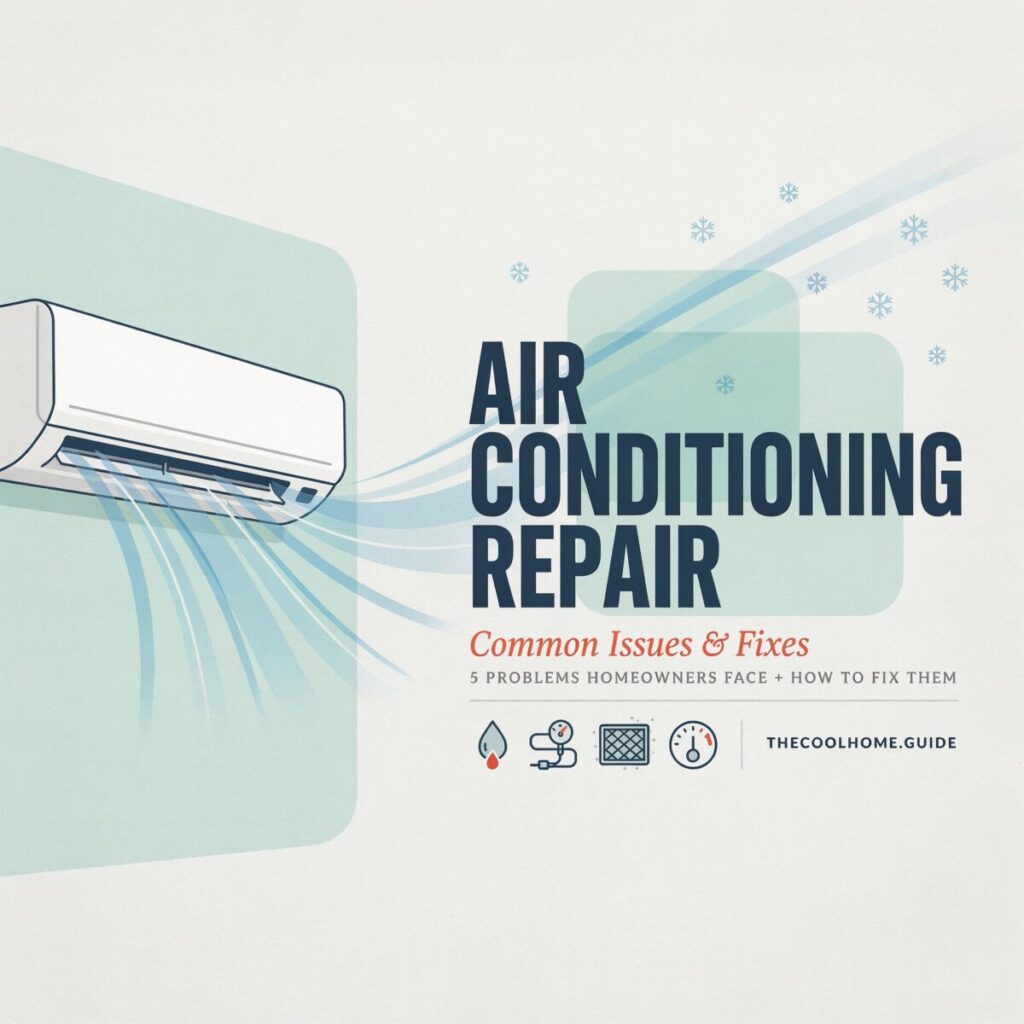
When summer temperatures climb, a working air conditioner is more than a comfort — it’s essential. If your home feels warm even while the AC runs, or if you hear strange noises from the outdoor unit, you can often troubleshoot a few common problems yourself. This guide walks you through the most frequent air conditioning repair issues, safe DIY checks you can do today, and clear signs that it’s time to call a licensed HVAC technician.
According to the U.S. Energy Information Administration (EIA), nearly 90% of U.S. households use some form of air conditioning, and cooling accounts for roughly 15% of total home energy use. Whether you rely on central air conditioning, a ductless mini-split, or a window unit, understanding how your system works — and what to do when it doesn’t — can save you money, protect your home, and keep your family comfortable all season long.
Why Timely AC Repair Matters
Ignoring a struggling air conditioner doesn’t make the problem go away. In fact, small issues often snowball into expensive emergencies. Here’s what’s at stake when you delay AC repair:
- Higher energy bills — A malfunctioning system works harder and draws more power.
- Accelerated wear and system failure — A clogged filter or low refrigerant can destroy a compressor, turning a $150 fix into a $2,000+ replacement.
- Poor indoor air quality — Excess humidity encourages mold growth and worsens allergy symptoms.
- Reduced comfort — Hot spots, uneven cooling, and excessive noise degrade your living environment.
Catching problems early is the single best way to keep air conditioner repair costs manageable and extend the life of your equipment.
7 Common AC Problems and How to Fix Them
Below are the most frequent common AC problems U.S. homeowners face, along with step-by-step troubleshooting and guidance on when to call an HVAC technician.
📋 Quick Pre-Call Troubleshooting Checklist — Try these 5 steps before scheduling a service call
- Check the thermostat — Confirm it’s set to “Cool” with the fan on “Auto,” and that the temperature is below the current room reading.
- Replace the air filter — A dirty filter is the #1 cause of airflow problems.
- Inspect the circuit breaker — Look for a tripped breaker in your electrical panel.
- Clear debris from the outdoor unit — Remove leaves, grass clippings, and vegetation within 2 feet of the condenser.
- Note any unusual noises or odors — Write down exactly what you hear or smell to share with your technician.
1. Why Your Air Conditioner Isn’t Cooling (and Quick Fixes)
This is the most common complaint homeowners have: the AC is running, but the air coming from the vents just isn’t cold.
Symptoms:
- Air blows from vents but feels lukewarm or room temperature
- Uneven cooling — some rooms are comfortable while others are warm
- System runs continuously without reaching the set temperature
Likely causes:
- Dirty or clogged air filter restricting airflow
- Blocked or dirty outdoor condenser coil
- Low refrigerant charge (indicating a refrigerant leak)
- Faulty compressor or capacitor
- Thermostat problems — miscalibrated or set incorrectly
Safe DIY checks:
| Step | Action |
|---|---|
| 1 | Replace the air filter (check monthly during peak cooling season). |
| 2 | Ensure all supply vents are open and unblocked by furniture or curtains. |
| 3 | Turn off power to the outdoor unit and gently hose off the condenser coils. |
| 4 | Verify the thermostat is in “Cool” mode with the fan set to “Auto.” |
| 5 | Check the circuit breaker panel for a tripped breaker. |
When to call a pro:
If you’ve gone through the checklist and the air conditioner is not cooling still, you likely have a refrigerant leak, a failing compressor, or an electrical component issue. Symptoms like a hissing sound, oily residue on refrigerant lines, or the compressor clicking without engaging all require a licensed technician. These are not safe DIY AC fixes — a properly certified HVAC pro has the tools and EPA certification to diagnose and repair them.
2. AC Won’t Turn On? Checklist Before You Call
Symptoms:
- Complete silence from the indoor unit and outdoor condenser
- No response when you adjust the thermostat
Likely causes:
- Tripped circuit breaker or blown fuse
- Dead thermostat batteries
- Faulty wiring or a disconnected control wire
- Failed capacitor or contactor
- Tripped safety float switch (if the condensate drain is clogged)
Safe DIY checks:
- Locate your electrical panel and look for any tripped breakers labeled “AC,” “HVAC,” or “A/C.” Flip it fully off and back on.
- Replace the batteries in your thermostat (many modern digital thermostats use AA or AAA batteries).
- Check the external disconnect switch — this is a small box mounted near the outdoor unit. Make sure it’s switched to “On.”
- Inspect the condensate drain pan near the indoor air handler. If the float switch is tripped due to standing water, clear the drain (see Problem 6 below) and reset the switch.
When to call a pro:
If the breaker trips again immediately, or you notice burning smells, scorched wiring, or buzzing sounds from the electrical panel, stop immediately and call an emergency AC repair service. Repeated breaker trips signal a serious electrical fault that poses a fire risk.
3. AC Short-Cycling: Why Your Unit Keeps Turning On and Off
Short-cycling is when your air conditioner starts up, runs briefly, shuts off, and repeats — often every few minutes.
Symptoms:
- Frequent on/off cycles (more than 3–4 times per hour)
- Inconsistent indoor temperatures
- Unusually high energy bills
Likely causes:
- Oversized system — an AC that’s too large for the home cools too quickly and shuts off before completing a full cycle.
- Low refrigerant charge
- Clogged air filter or blocked return vents
- Thermostat placed near a heat source (lamp, direct sunlight, kitchen)
- Failing compressor or control board
Safe DIY checks:
- Replace the air filter.
- Make sure all return air vents are unobstructed.
- Relocate or shield the thermostat if it’s near a heat source.
When to call a pro:
Short-cycling caused by refrigerant issues, compressor faults, or an improperly sized system requires professional diagnosis. A technician can perform a load calculation to verify whether your system is correctly sized for your home — a critical factor in both comfort and efficiency.
4. Frozen AC Coils: Causes, Thawing, and Prevention
If you spot ice on your indoor evaporator coil or on the copper refrigerant lines near the outdoor unit, your system has a serious airflow or refrigerant problem.
Symptoms:
- Visible ice or frost on indoor coil, refrigerant lines, or outdoor unit
- Reduced or no airflow from supply vents
- Warm air blowing from vents despite the system running
Likely causes:
- Severely clogged air filter
- Blocked or closed supply/return vents
- Dirty evaporator coil
- Blower motor failure
- Low refrigerant charge
Safe DIY steps:
- Turn the system off immediately — switch the thermostat to “Off” and set the fan to “On” to help the coil thaw (this may take several hours).
- Replace the air filter.
- Open all supply and return vents.
- Once thawed, turn the system back on and monitor.
⚠️ Safety note: Never chip or scrape ice off coils — you risk puncturing the refrigerant line, which is both dangerous and extremely costly to repair.
When to call a pro:
If the coil freezes again after thawing and replacing the filter, you likely have a refrigerant leak or a failing blower motor. Refrigerant is a regulated substance under EPA Section 608, and only certified technicians may handle it. Adding refrigerant without fixing the underlying leak is illegal and won’t solve the problem long-term.
5. Strange Noises from Your AC: What They Mean
Your air conditioner should produce a steady, low hum. Anything else deserves attention.
| Noise | Likely Cause |
|---|---|
| Buzzing | Electrical issue — loose wiring, failing contactor, or bad capacitor |
| Grinding or screeching | Worn motor bearings or a failing blower motor |
| Rattling | Loose panels, screws, or debris inside the condenser |
| Banging or clanking | Broken or loose internal component (fan blade, connecting rod) |
| Hissing or bubbling | Refrigerant leak in a line or coil |
Safe DIY checks:
- Turn the system off and inspect the outdoor unit for sticks, leaves, or debris caught in the fan or coil.
- Tighten any visible loose screws on access panels (only with power off).
- Keep vegetation trimmed at least 2 feet away from the condenser.
When to call a pro:
Grinding, banging, or persistent electrical buzzing are not DIY issues. These noises often indicate motor or compressor damage that, if left unchecked, can lead to total system failure. Shut the system off and schedule a same-day AC repair if possible.
6. Water Leaking from AC? How to Stop It
Central air systems produce a significant amount of condensation — normally, this water drains safely through a PVC condensate line to the exterior or a floor drain. When that pathway is blocked, trouble follows.
Symptoms:
- Water pooling around the indoor air handler or furnace
- Water stains on ceilings or walls (for attic-mounted units)
- Musty or mildew smell near the unit
- System shuts off unexpectedly (float switch trips)
Likely causes:
- Clogged condensate drain line
- Cracked or rusted drain pan
- Frozen evaporator coil (excess condensation when thawing)
- Failed condensate pump (if your system uses one)
Safe DIY fixes:
- Locate the condensate drain line (typically a white PVC pipe near the indoor unit).
- Use a wet/dry vacuum on the exterior end of the drain line to pull out algae and debris.
- Pour a mixture of warm water and white vinegar (or a small amount of bleach) down the drain access to kill algae buildup.
- Check the drain pan for cracks — if you find one, it needs replacement.
- Verify the condensate pump (if present) is operating — listen for a hum and check that it’s pumping water outside.
When to call a pro:
If the drain pan is cracked, water damage has occurred, or you see mold growth, call a technician. Persistent leaks may also indicate a refrigerant or airflow problem that’s causing the coil to freeze and overflow when it thaws.
7. High Energy Bills and Poor Efficiency
Sometimes the problem isn’t a dramatic failure — it’s a gradual decline in performance that shows up on your electric bill.
Symptoms:
- Noticeable spike in cooling costs compared to previous summers
- The system runs longer cycles than it used to
- Your home never quite reaches the temperature you set
Likely causes:
- Dirty condenser or evaporator coils
- Low refrigerant charge
- Ductwork leaks (the Department of Energy estimates that 20–30% of conditioned air is lost through leaky ducts in typical U.S. homes)
- Aging system losing efficiency
- Incorrect system sizing
- Poor home insulation or air sealing
Safe DIY checks:
- Replace air filters regularly (every 1–3 months).
- Inspect accessible ductwork in attics, basements, or crawl spaces for visible gaps, disconnected joints, or crushed flex duct.
- Ensure your thermostat is set efficiently — the DOE recommends 78°F when you’re home for optimal savings.
When to call a pro:
Schedule an AC maintenance tune-up for a thorough coil cleaning, refrigerant level check, and system inspection. A professional energy audit can also identify duct leaks and insulation gaps that are silently raising your bills.
Preventive Maintenance and Seasonal Tips
The best air conditioning repair is the one you never need. A consistent maintenance routine can extend your system’s lifespan by years and cut energy costs by up to 15–20%, according to ENERGY STAR.
🔧 Seasonal AC Maintenance Checklist
- [ ] Replace air filters every 1–3 months (monthly during peak summer).
- [ ] Clean the outdoor condenser — hose off coils and clear surrounding vegetation each spring.
- [ ] Schedule an annual professional tune-up in spring before cooling season begins.
- [ ] Inspect ductwork for visible leaks, disconnected sections, or damaged insulation.
- [ ] Check thermostat batteries and calibrate settings.
- [ ] Keep all supply and return vents clear of furniture, rugs, and drapes.
- [ ] Pour vinegar down the condensate line every few months to prevent algae buildup.
- [ ] Listen for unusual noises and note changes in cooling performance.
Estimated Tune-Up and Minor Repair Costs (U.S. Averages)
| Service | Typical Cost Range |
|---|---|
| Annual AC tune-up | $75 – $200 |
| Air filter replacement (professional) | $50 – $100 |
| Capacitor replacement | $150 – $350 |
| Contactor replacement | $150 – $300 |
| Refrigerant recharge (with leak repair) | $250 – $750+ |
| Evaporator coil cleaning | $100 – $400 |
| Condensate drain clearing | $75 – $250 |
Costs vary by region, system type, and accessibility. These are estimates — always request a written estimate before authorizing work.
When to Repair vs. Replace Your Air Conditioner
Not every aging system warrants another repair. Here are guidelines to help you decide:
Consider replacement if:
- Your system is over 10–15 years old (central AC lifespan is typically 15–20 years).
- Repair costs exceed 50% of the price of a new unit (the “50% rule”).
- Your system uses R-22 refrigerant (Freon), which has been phased out under EPA regulations — servicing it is increasingly expensive.
- You’re experiencing frequent breakdowns despite regular maintenance.
- Your energy bills are consistently climbing despite no change in usage.
Modern ENERGY STAR-certified systems can be 20–40% more efficient than models from a decade ago, making replacement a financially sound choice in many cases.
Choosing the Right HVAC Professional
When it’s time to call a pro, choosing the right HVAC technician is just as important as the repair itself.
What to look for:
- ✅ State and local licensing — HVAC licensing requirements vary by state. Verify your contractor holds a current license.
- ✅ EPA Section 608 certification — Required by federal law for anyone handling refrigerants.
- ✅ Insurance — Both liability and workers’ compensation coverage.
- ✅ Written estimates — Get at least two or three itemized quotes for major repairs.
- ✅ Reviews and references — Check Google, BBB, and Angi for recent customer feedback.
- ✅ Warranties — Reputable contractors stand behind their work with parts and labor warranties.
Before the service call, prepare:
- Note the make, model, and age of your system.
- Write down a timeline of symptoms and anything you’ve already tried.
- Record any error codes displayed on the thermostat or control board.
- Gather your maintenance and repair history.
A Note on Safety, Refrigerants, and Regulations
⚠️ Important Safety Disclaimer: Air conditioning systems involve high-voltage electricity and regulated refrigerants. Homeowners should never attempt to open refrigerant lines, recharge refrigerant, or perform internal electrical repairs. Under the EPA’s Section 608 regulations of the Clean Air Act, it is illegal for uncertified individuals to handle, vent, or purchase most refrigerants. Only EPA-certified HVAC technicians may perform refrigerant-related work. Always turn off power at the breaker before inspecting any component, and when in doubt, call a licensed professional.
Regional Considerations Across the U.S.
Air conditioning needs vary significantly by climate zone:
- Southeast (humid subtropical) — Systems must manage both temperature and humidity. Oversized units that short-cycle fail to dehumidify properly, leading to clammy interiors and mold risk. Consider a whole-home dehumidifier if your system struggles.
- Southwest (hot, dry) — Extreme heat puts maximum stress on condensers. Evaporative (“swamp”) coolers are also common in this region and have different maintenance needs.
- Northeast and Midwest (variable) — Systems may sit idle for months. Spring tune-ups are critical to catch issues from winter inactivity. Heat pump systems that provide both heating and cooling need biannual maintenance.
- Pacific Northwest — Milder summers mean less wear, but ductless mini-splits are popular and require their own filter and coil cleaning routines.
When searching for AC repair near me or air conditioning repair in [your city/state], look for contractors experienced with your climate zone’s specific demands.
Conclusion: Stay Cool, Stay Proactive
Most common AC problems — from clogged filters to tripped breakers — have straightforward solutions that homeowners can tackle safely. But when symptoms persist, involve refrigerant, or require electrical work, calling a qualified, licensed HVAC technician protects both your safety and your wallet.
Regular AC maintenance is the single most effective strategy for avoiding surprise breakdowns and keeping energy costs under control. A $100–$200 annual tune-up can prevent thousands in emergency repairs and add years to your system’s life.
🔧 Ready to Get Your AC Back in Shape?
- Schedule a seasonal tune-up with a licensed HVAC technician near you.
- Download our free AC Maintenance Checklist (PDF) to stay on top of filter changes, coil cleaning, and more.
- Need emergency AC repair? Our network of certified technicians offers same-day service with transparent pricing — book your inspection now.
“Not cooling? Book a same-day AC inspection — licensed technicians, transparent pricing.”
Suggested Internal Links
- HVAC Maintenance Checklist — A complete month-by-month guide to keeping your system in top shape.
- Choosing the Right Thermostat — Smart, programmable, and manual thermostat comparison for every budget.
- Duct Sealing and Insulation Tips — How to stop losing conditioned air (and money) through leaky ducts.
- When to Repair vs. Replace Your AC — An in-depth cost-benefit analysis with ROI calculator.
Sources and Further Reading
- U.S. Energy Information Administration (EIA) — Residential Energy Consumption Survey (RECS): Air Conditioning Usage
- ENERGY STAR — Central Air Conditioner Efficiency Guidelines and Maintenance Tips
- U.S. Environmental Protection Agency (EPA) — Section 608 Refrigerant Management Regulations
- Air Conditioning Contractors of America (ACCA) — HVAC Industry Standards and Best Practices
- U.S. Department of Energy — Energy Saver Guide: Tips on Saving Energy and Money at Home
Disclaimer: This article is intended for informational purposes only and does not constitute professional HVAC advice. Always consult a licensed, insured HVAC technician for diagnosis and repair. Local codes and regulations vary — verify requirements in your area before performing any work on your air conditioning system.