You flip the thermostat on the hottest July afternoon and nothing happens — or worse, a weak, lukewarm breeze that can’t keep the house comfortable. A few preventative checks each month could have prevented that emergency. An HVAC maintenance schedule is one of the smartest investments a homeowner can make. Regular care extends your system’s lifespan by years, cuts energy bills by up to 15–25%, and keeps indoor air fresher and healthier. Whether you’re dealing with Minnesota winters or Phoenix summers, this guide gives U.S. homeowners a simple, month-by-month plan to boost efficiency, improve comfort, and avoid costly breakdowns — no matter what the weather throws at you.
Why Regular HVAC Maintenance Pays Off
Many homeowners treat their HVAC system like it’s invisible — until it isn’t. But a neglected system doesn’t just break down at the worst possible time. It quietly drains your wallet and your health in the meantime. Here’s what a solid HVAC preventive maintenance routine actually does:
- Lower energy bills. A dirty filter or clogged coil forces your system to work harder. The Department of Energy estimates that HVAC efficiency tips applied consistently can trim heating and cooling costs by 15% or more.
- Longer system lifespan. A well-maintained air conditioner or heat pump can last 15–20 years; a neglected one may fail before year 10.
- Better indoor air quality. Dirty filters, leaky ducts, and microbial buildup recirculate dust, pollen, and allergens. Clean air ducts and fresh filters make a measurable difference for allergy and asthma sufferers.
- Fewer emergency repairs. Most breakdowns are preventable. A professional HVAC inspection catches small issues — a worn capacitor, a cracked heat exchanger, a low refrigerant charge — before they snowball.
- Warranty protection. Many manufacturers require documented annual service to keep warranties valid. Skip it and a $5,000 replacement could come out of your pocket.
- Safety. Gas furnaces and boilers can produce carbon monoxide if burners or heat exchangers fail. A carbon monoxide detector paired with seasonal furnace service is essential.
💡 Cost framing: small spend now vs. big spend later
| Item | Typical Cost |
|---|---|
| Annual HVAC tune-up | $70–$200 per visit |
| Emergency after-hours repair | $300–$800+ |
| Compressor replacement | $1,200–$2,500 |
| Full system replacement | $6,000–$15,000+ |
Overview: Monthly vs. Seasonal vs. Annual Tasks
Not all HVAC maintenance for homeowners requires a licensed technician. Think of your system’s care in three tiers:
- Monthly tasks — quick, DIY-friendly checks that take 5–10 minutes: HVAC filter replacement or cleaning, visual inspections, thermostat tweaks, and clearing clutter around indoor and outdoor units.
- Seasonal tasks — more thorough prep done at the start of each season. Spring gets your AC ready; fall gets your furnace or heat pump ready. Some of these are DIY-friendly; others benefit from a pro.
- Annual or biannual professional service — a certified technician performs deep cleaning, electrical testing, refrigerant checks, combustion analysis, and safety inspections. The industry standard is year-round HVAC maintenance: one tune-up for cooling in spring and one for heating in fall.
The HVAC seasonal checklist below organizes everything so nothing slips through the cracks.
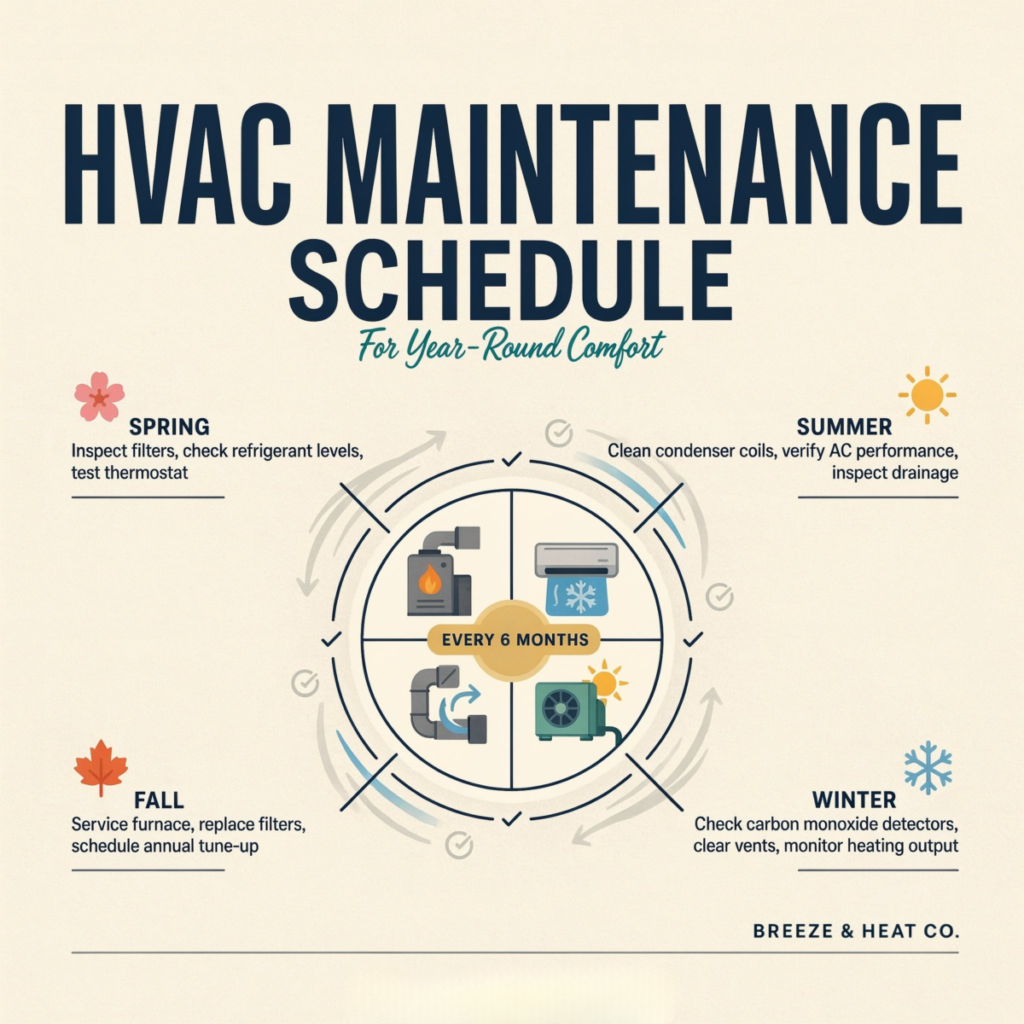
Spring HVAC Checklist (March–May)
Spring is your chance to wake your cooling system up after a long winter. In warmer southern states, you may already be running the AC by March; in the Northeast, you can wait until May.
Outdoor unit prep. Turn off power at the disconnect, remove leaves, twigs, and dirt from around the condenser, and trim any shrubs to at least 2 feet of clearance. Rinse the coils gently with a garden hose — never a pressure washer. DIY-friendly. Cost: $0–$20.
AC system check. Turn the system on and listen for unusual rattles or grinding. Feel the air from supply vents — it should be noticeably cooler than room temperature within 15 minutes. If it’s not, schedule an air conditioner maintenance schedule tune-up. Call a pro if issues appear. Cost: $75–$150.
Thermostat settings. Switch from “heat” to “cool,” test the schedule, and consider setting the fan to “auto” rather than “on” for better dehumidification. If you’re still using a manual thermostat, spring is a great time to upgrade to a smart model. DIY. Cost: $0–$250.
Condensate drain line. Pour a cup of distilled white vinegar down the condensate drain to prevent algae and mold clogs that can flood your attic or utility closet. DIY. Cost: $2.
Ductwork visual. In the basement or attic, check accessible ducts for disconnected joints, crushed flex duct, or obvious gaps. Seal small gaps with mastic or foil tape — never standard duct tape, which degrades quickly. DIY or call pro. Cost: $10–$300.
Summer Cooling Maintenance (June–August)
Summer AC maintenance is all about monitoring a system under peak load. The harder it works, the more likely small problems surface.
Filter checks (every 30 days). During heavy use, disposable filters clog faster. Check monthly and replace if dirty. Homes with pets, smokers, or allergy sufferers may need replacements every 3–4 weeks. DIY. Cost: $8–$25 per filter.
Airflow and hot spots. Walk room to room. Uneven cooling often signals blocked registers, leaky ducts, or low refrigerant. Move furniture away from return and supply vents. DIY or pro. Cost: $0–$500 depending on cause.
Refrigerant warning signs. Ice on the outdoor unit’s copper lines, hissing sounds, or cooling that gradually worsens usually means a refrigerant leak. Refrigerant work requires a licensed EPA-certified technician. Call a pro. Cost: $150–$500 to find and fix.
Emergency cooling tips. If AC fails during a heat wave, close blinds, run ceiling fans counterclockwise, use portable units in occupied rooms only, and consider short stays in air-conditioned public spaces. Keep your HVAC company’s emergency number saved.
Fall Furnace Prep (September–November)
Fall is the most critical season for northern climates. A furnace maintenance checklist done in October prevents the dreaded “first cold snap” breakdown.
Professional furnace tune-up. A technician will clean burners, test the heat exchanger for cracks, check the flue draft, lubricate motors, and measure combustion gases. This is the single most valuable annual service for gas-heated homes. Pro. Cost: $100–$200.
Ignition and pilot checks. Modern furnaces use hot-surface igniters or intermittent pilots; older units have standing pilots. If your pilot light keeps going out or your igniter glows but won’t fire, call a technician. Pro. Cost: $100–$300.
Duct inspection and cleaning. While full clean air ducts service isn’t needed yearly (EPA recommends it only when visibly dirty, after renovations, or with pest infestations), a visual inspection with a flashlight can catch issues early. DIY inspection / Pro cleaning. Cost: $0 / $300–$600.
Humidifier maintenance. Whole-home humidifiers need annual pad replacement and scale removal before heating season. Dry winter air damages wood floors and irritates respiratory passages. DIY or pro. Cost: $15–$75.
Smoke and CO detectors. Replace batteries on every unit. Install carbon monoxide detectors on each sleeping level and within 10 feet of every bedroom. Test monthly.
Winter Safety and Heating Tips (December–February)
Winter HVAC tips focus on keeping heat steady, safe, and efficient when your system is running nearly non-stop.
Carbon monoxide detector testing. Press the test button on each detector monthly. If any unit chirps or alarms, evacuate and call 911 — never ignore a CO alert. Replace detectors every 5–7 years. DIY. Cost: $20–$40 per unit.
Thermostat programming. Lowering the setpoint 7–10°F for 8 hours a day (while you sleep or are away) can save up to 10% on heating. Smart thermostats automate this and learn your habits. DIY. Cost: $0–$250.
Heat pump maintenance. If you have a heat pump, keep the outdoor unit clear of snow, ice, and fallen branches. A frozen coil is normal in very cold weather, but if ice builds up more than an inch thick or doesn’t defrost, call a technician. DIY clearing / Pro for issues. Cost: $0–$250.
Preventing frozen pipes. Insulate exposed water lines near the HVAC unit, especially in unheated crawlspaces. Keep cabinet doors open under sinks on exterior walls during extreme cold. Set the thermostat no lower than 55°F even when traveling. DIY. Cost: $10–$50 for insulation.
Monthly filter check. Heating systems run long hours in winter. Don’t skip your monthly HVAC maintenance filter swap — a clogged filter can overheat and crack a heat exchanger, a dangerous and expensive failure.
DIY Maintenance You Can Do Today
Here’s a safe, simple HVAC maintenance checklist most homeowners can complete in under 30 minutes total:
- Replace or clean the air filter (check the arrow — it points toward the blower).
- Clear a 2-foot radius around the outdoor unit: trim plants, remove debris, and sweep away mulch.
- Vacuum supply registers and return grilles; wipe down with a damp cloth.
- Pour 1 cup of white vinegar down the condensate drain line.
- Inspect visible ductwork for gaps, sagging, or damage.
- Check thermostat batteries and confirm the schedule is accurate.
- Test all smoke and carbon monoxide detectors.
- Make sure all supply vents are open — closing too many actually reduces efficiency.
Basic tools needed: screwdriver, flashlight, vacuum with brush attachment, garden hose, replacement filters (buy a year’s supply at once), distilled white vinegar, and a multimeter (optional for advanced DIYers).
Safety rules first. Always turn off power at the breaker or disconnect before touching any electrical components. Never open a gas furnace cabinet unless you know how to shut off the gas supply. When in doubt, stop and call a licensed pro.
When to Call an HVAC Professional
Even the best HVAC maintenance plan can’t catch everything. Call a certified technician immediately if you notice:
- Strange noises — banging, screeching, grinding, or booming from the furnace or air handler.
- Reduced airflow from vents despite a clean filter.
- Unusual odors — especially burning plastic, rotten eggs (gas leak: evacuate and call 911), or musty smells.
- Sudden spike in energy bills without a change in usage.
- Visible refrigerant leaks, ice on coils, or water pooling around the indoor unit.
- Short cycling — the system turns on and off every few minutes.
Recommended frequency: a professional HVAC inspection twice a year — spring for cooling, fall for heating. Homeowners in milder climates (coastal California, parts of the Southeast) may get by with annual service if the system is newer.
How to vet a contractor. Look for NATE (North American Technician Excellence) certification, a physical business address, at least 3–5 years in your area, written estimates, and references or verified Google reviews. Ask about HVAC maintenance near me options that include service agreements — these often bundle two annual tune-ups at a discount and give priority scheduling during peak season.
Energy-Saving Upgrades and Rebates
Once your system is well maintained, a few upgrades can push energy-saving HVAC tips even further:
- Smart thermostats like Ecobee, Nest, or Honeywell learn schedules and geofence your phone, saving 10–15% on heating and cooling. Many utilities offer $50–$150 rebates.
- Zoning systems give each floor or wing its own thermostat — ideal for two-story homes.
- Duct sealing with Aeroseal or professional mastic can recover 20–30% of lost conditioned air.
- Attic insulation upgrades (especially in homes built before 2000) often pay for themselves in 3–5 years.
- Federal tax credits. The Inflation Reduction Act provides up to $2,000 in tax credits for qualifying heat pump installations and $1,200 for certain high-efficiency HVAC upgrades through 2032. Check dsireusa.org for state-level programs.
Document every service, receipt, and upgrade. A well-kept maintenance log strengthens warranty claims and adds value when you eventually sell your home.
FAQs: HVAC Maintenance Questions Answered
How often should I replace HVAC filters? Standard 1-inch pleated filters last 60–90 days under normal use. Homes with pets, smokers, or allergy issues should swap every 30 days. Thicker 4–5 inch media filters can last 6–12 months.
What is a refrigerant leak, and is it dangerous? A refrigerant leak means the chemical that absorbs heat is escaping your system. In high concentrations it can displace oxygen and cause dizziness. Only a licensed technician should handle refrigerant work — it’s regulated by the EPA.
Is a tune-up necessary if my system seems fine? Yes. Many failures start as small, silent issues — a worn contactor, slightly low refrigerant, a dirty coil — that only a trained eye will catch. A $150 tune-up routinely prevents $1,500 repairs.
Should I get my air ducts cleaned every year? No. The EPA recommends duct cleaning only when there’s visible mold, vermin infestation, or substantial debris. Annual visual inspections are enough for most homes.
How do I find reliable HVAC maintenance near me? Start with NATE-certified companies, check your utility’s approved contractor list, read verified reviews, and ask neighbors in local Facebook or Nextdoor groups for referrals.
Your Next Step
Print the checklist above, stick it on your fridge or inside your furnace closet, and set calendar reminders for each seasonal milestone. Book your next professional HVAC inspection before peak season hits — spring and fall slots fill fast. If you’re ready to upgrade, look for current utility rebates and federal tax credits before you buy.
Have a maintenance question specific to your climate or system type? Drop it in the comments or share this guide with a neighbor who could use a reminder — a well-maintained HVAC system is the quietest, most reliable comfort upgrade any U.S. homeowner can make.