Before a guest ever rings your doorbell, they’ve already formed an impression of your home. So have the neighbors, the delivery driver, and—if you ever decide to sell—potential buyers. That first look happens outside, which is why landscaping services that boost curb appeal are one of the smartest upgrades a homeowner can make.
Curb appeal isn’t just a perfectly green lawn. It’s the walkway, plantings, driveway edges, lighting, trees, entryway, and the overall sense that someone cares for the property. Professional landscaping can help you create that polished look while solving practical problems like poor drainage, compacted soil, uneven irrigation, erosion, overgrown shrubs, and plants in the wrong places.
What Is Curb Appeal Landscaping?
Curb appeal landscaping is the coordinated use of visual design, plant selection, lawn care, hardscaping, lighting, and regular maintenance to improve how your home looks from the street.
The landscaping services that most improve curb appeal include lawn care, pruning, planting-bed design, mulch installation, walkway upgrades, landscape lighting, irrigation, and seasonal maintenance. The right combination depends on your home’s architecture, climate, property size, maintenance preferences, and budget.
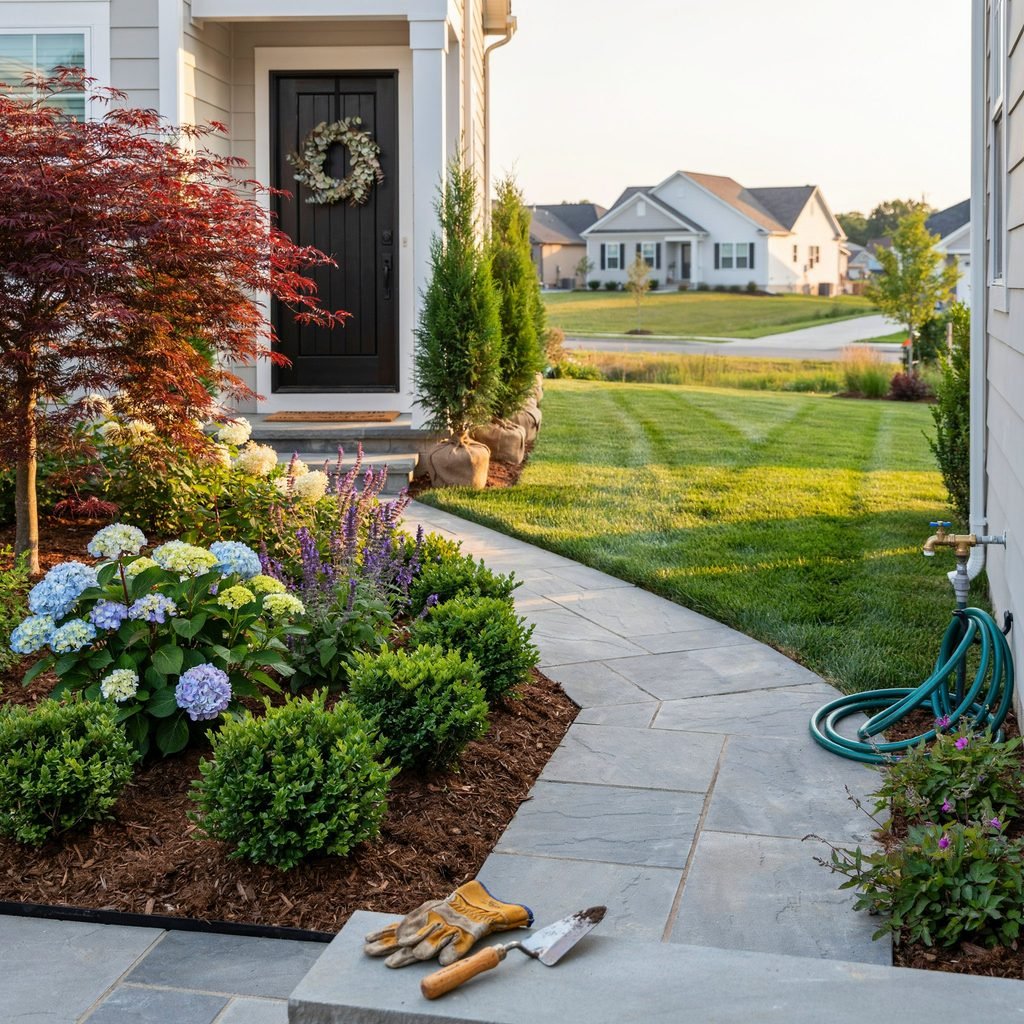
Attractive front yards usually share a few elements:
- A healthy, appropriately sized lawn
- Clean, defined edges along sidewalks, driveways, and beds
- Balanced foundation plants
- A clear, welcoming path to the front door
- Trees and shrubs sized properly for the property
- Seasonal color and year-round interest
- Well-maintained mulch, stone, or ground cover
- Exterior lighting for visibility and ambiance
- A tidy driveway, porch, and entry area
The Landscaping Services That Boost Curb Appeal Most
Not every project needs every service. Here are the most effective options and what each one adds to your front yard.
1. Professional Lawn Care Services
The lawn is typically the largest visible element of a front yard, so its condition shapes how the whole property looks. Professional lawn care commonly includes mowing at the correct height, crisp edging along sidewalks and driveways, fertilization, weed control, core aeration, overseeding, sod installation where turf is beyond repair, and pest and disease monitoring.
The best plan depends on grass type, soil condition, rainfall, sun exposure, climate, and how much time you want to spend outdoors. For example, cool-season grasses like Kentucky bluegrass and fescue, common in northern states, grow strongly in spring and fall but stress in summer heat. Warm-season grasses like Bermuda and zoysia, common across the South and Southwest, peak in summer and go dormant in winter. A care calendar that works in Ohio won’t fit Texas, so avoid copying a schedule from another region.
2. Front Yard Landscape Design
Adding plants one at a time without a plan often produces a cluttered, patchy yard. Landscape design services help you create a cohesive front yard instead. A designer typically evaluates your property’s size and layout, sun and shade patterns, soil and drainage, existing trees and structures, the home’s architecture, walkway and driveway placement, your maintenance preferences, budget, long-term goals, and local plant hardiness.
Good design applies principles like balance, repetition, scale, contrast, color, texture, focal points, and visual flow. A written plan also prevents costly mistakes: overcrowded beds, shrubs that block windows, plants that outgrow their space, and paths that don’t guide visitors naturally to the door.
3. Foundation Planting and Flower Beds
Foundation planting—the shrubs, perennials, ornamental grasses, and ground covers arranged around the base of the house—visually anchors your home to the lot. Well-designed beds frame the home, soften hard architectural lines, hide exposed foundations, add seasonal color, create depth, and smooth the transition between house and lawn.
Choose plants that match your site’s light, soil, moisture, and climate, and select them by mature size, not their size at the garden center. Leave adequate space around siding, windows, utility equipment, pathways, and the foundation. A shrub that looks cozy beside a window today may swallow it in five years—and large plants pressed against the house can trap moisture and invite pests.
4. Shrub, Hedge, and Tree Pruning
Few services change a front yard’s appearance as quickly as professional pruning. Routine trimming removes dead, damaged, or diseased branches, reshapes overgrown shrubs, reopens blocked windows and entryways, and keeps sidewalks and driveways clear. Structural pruning also helps young trees develop strong form and removes limbs that interfere with roofs, utility lines, or vehicles.
Routine shrub trimming is different from specialized tree pruning. For large trees, dangerous limbs, storm damage, or work near power lines, hire a qualified tree professional such as a certified arborist. And skip heavy “topping” or overly sculpted shapes—harsh cuts stress plants, invite disease, and look unnatural for years.
5. Mulch Installation and Landscape Borders
Fresh mulch is one of the fastest, most affordable ways to make beds look intentional. It delivers a clean, finished appearance, suppresses weeds, retains moisture, moderates soil temperature, and sharpens the line between lawn and garden. Common materials include shredded hardwood, bark, pine straw, compost, and decorative stone; the best choice depends on your style, local availability, slope, drainage, and plant needs.
Landscape borders—stone, brick, metal, concrete, or a cleanly spaded natural edge—create crisp lines and stop grass from creeping into beds. One caution: keep mulch a few inches away from tree trunks and siding. Deep “mulch volcanoes” trap moisture against bark and wood, encouraging rot and pests.
6. Walkways, Driveway Edging, and Hardscaping
Hardscaping—the non-living layer of the landscape—adds structure and function. Common curb appeal projects include paver walkways, natural stone paths, brick edging, driveway borders, small retaining walls, front steps, entry landings, decorative gravel, and low garden walls.
A well-designed walkway does more than keep shoes dry; it draws the eye toward the front door and makes the entrance feel inviting. Choose materials that complement your home’s architecture, exterior colors, roof, and siding. Practical factors matter just as much: slip resistance, proper grading, runoff and drainage, freeze-thaw cycles (especially in the Northeast and Midwest), accessibility, and local permits where applicable.
Not every property needs expensive hardscaping. A clearly defined path or crisp driveway edging can create a noticeable visual difference at a fraction of the cost of a full build.
7. Landscape Lighting
Outdoor lighting extends curb appeal past sunset while improving safety and navigation. Typical options include pathway lights, entry lighting, gentle uplighting for specimen trees, accent lighting for architectural features, driveway and step lighting, and energy-efficient low-voltage systems.
The key word is subtle. Lighting should highlight your home’s best features, not compete with a stadium. A good design avoids glare into your own windows, neighboring properties, and drivers’ sight lines. Professional installation helps with fixture placement, wiring, transformers, timers, energy efficiency, and weather protection—details that determine whether you love the system or rip it out in a year.
8. Irrigation, Drainage, and Water Management
Attractive landscaping depends on proper water management. Services in this category include sprinkler system installation and repair, drip irrigation, smart controllers with rain sensors, drainage improvements, downspout extensions, regrading, French drains where appropriate, rain gardens, and erosion control.
Standing water, muddy patches, mysteriously dying grass, and mulch that washes out after every storm usually point to drainage problems, not lawn care failures. Address water issues before installing new plants, mulch, or hardscape features—otherwise you may pay twice. Drainage solutions should be designed around your property’s slope, soil, and rainfall, plus local regulations.
9. Native and Low-Maintenance Landscaping
Native and low-maintenance designs can keep a front yard attractive while reducing ongoing work. Adapted to local conditions, native shrubs, perennials, ornamental grasses, and ground covers often need less water once established and support pollinators and other wildlife. Other options include drought-tolerant plantings, xeriscaping in arid regions, rain gardens in wet ones, and reduced-lawn designs.
Two honest caveats: native doesn’t mean maintenance-free—every landscape needs care, especially during establishment—and selection still must match your specific site. Homeowners in the arid Southwest may prioritize water-wise landscaping, while those in rainy regions may need plants and grading that tolerate persistent moisture.
10. Seasonal Landscaping and Yard Cleanup
Seasonal cleanup keeps a property looking cared for year-round: spring cleanup and bed preparation, leaf removal, fall pruning, mulch refreshing, storm debris removal, seasonal flower installation, and winter preparation, including snow and ice considerations in colder climates.
Many homeowners pair cleanups with a regular maintenance plan covering mowing, edging, pruning, weeding, fertilization, irrigation checks, and debris removal. Routine landscape maintenance isn’t glamorous, but it protects the investment you made in design and installation—and it’s exactly the “sense of care” that reads as curb appeal from the street.
Landscaping Costs and Budget Planning
Landscaping costs vary widely with project size, site accessibility, design complexity, local labor rates, plant and material choices, grading and drainage requirements, irrigation needs, hardscape construction, tree work, and local market conditions. Published 2026 estimates for landscape design, lawn care, hardscaping, and full yard renovations show broad ranges that shift with scope and location—so treat any single national figure as a rough reference, not a quote.
To control costs:
- Start with the areas most visible from the street
- Complete the project in phases
- Fix drainage and safety issues first
- Choose plants suited to your site
- Compare at least two or three written estimates from qualified local professionals
- Ask what’s included: materials, labor, cleanup, warranties, and follow-up care
- Avoid choosing a contractor on lowest price alone
A sample phased plan:
- Phase one: cleanup, pruning, edging, and fresh mulch
- Phase two: planting beds, shrubs, and seasonal color
- Phase three: walkway, lighting, irrigation, or drainage improvements
- Phase four: ongoing maintenance
One more planning note: local climate, HOA rules, municipal regulations, and water restrictions can all affect what you’re allowed to install, so check them before finalizing plans or signing a contract.
How to Choose a Landscaping Company
Use a consistent checklist when comparing companies:
- Verify licensing where applicable and confirm insurance coverage
- Review relevant experience and recent project photos
- Read reviews from multiple sources; request references for larger projects
- Ask for a written scope of work and clear payment schedule
- Confirm plant warranties, workmanship warranties, and maintenance terms
- Ask who will actually perform the work
- Check whether permits are needed, and confirm cleanup and debris removal
It also helps to know who does what. A lawn care provider handles mowing, fertilization, and weed control. A landscape designer creates the plan. A landscape contractor builds and installs it. An arborist specializes in tree health and pruning. An irrigation specialist focuses on sprinklers and drainage. Many full-service companies offer several of these roles in-house, while others specialize—either model can work, as long as the scope is clear in writing.
Common Mistakes to Avoid
Even well-intentioned projects go wrong. Watch for these frequent curb appeal missteps:
- Choosing plants for looks alone, or ignoring mature size
- Installing a lawn that doesn’t suit your climate
- Overusing annual flowers for color that fades in weeks
- Piling mulch against tree trunks and siding
- Blocking windows, walkways, or house numbers
- Creating poor drainage, or adding decorative upgrades before fixing structural problems
- Mixing too many unrelated materials
- Installing lighting that’s too bright
- Copying a design that doesn’t fit your property
- Skipping the written estimate
- Neglecting maintenance after installation
Curb Appeal Landscaping FAQs
1. What landscaping services improve curb appeal the most?
Lawn care, pruning, fresh mulch, and defined edges deliver the fastest visual gains, followed by walkway upgrades, lighting, and irrigation.
2. How can I improve my front yard on a limited budget?
Start with cleanup, edging, pruning, and mulch. Then add shrubs or perennials in one focal bed, and phase in bigger projects later.
3. Is professional landscaping worth the cost?
Often, yes—it saves time, reduces plant loss, and creates a cohesive result. Value depends on your budget, schedule, and how long you’ll stay.
4. What plants are best for front yard landscaping?
Ones matched to your site’s light, soil, and climate—often evergreen shrubs for structure, perennials for color, and ornamental grasses for texture.
5. How often should a front yard be professionally maintained?
Typically weekly or biweekly mowing in season, plus two to four seasonal visits for pruning, cleanup, and mulch, adjusted to your standards.
6. Does landscaping increase home value?
It can influence it. Curb appeal shapes first impressions, buyer interest, and marketability, but the effect depends on your neighborhood, property condition, design quality, and local market—no specific increase is guaranteed.
7. How much does front yard landscaping cost?
It depends on location, property size, materials, labor, and complexity. Cleanup and mulch are relatively affordable; design, planting, and hardscaping cost more. Get written local estimates.
8. Should I choose native or drought-tolerant plants?
They often overlap. Native plants suit local conditions and wildlife; drought-tolerant plants suit dry climates and water restrictions. Match choices to your site’s moisture and sun.
9. What is the difference between softscaping and hardscaping?
Softscaping is the living layer—lawn, trees, shrubs, flowers, mulch. Hardscaping is the built layer—walkways, walls, edging, gravel.
10. When is the best time to hire a landscaping company?
Late winter or early spring for planning, before schedules fill. Planting timing varies by region; maintenance can begin anytime.
Final Thoughts: A Polished First Impression Starts Outside
Improving curb appeal doesn’t require a complete yard renovation. Thoughtfully chosen landscaping services that boost curb appeal—lawn care, pruning, planting beds, mulch, pathway improvements, lighting, irrigation, and seasonal maintenance—each make a measurable visual difference on their own, and together they transform how your home presents to the street.
Start by walking your property the way a visitor would, note the most visible issues, set a realistic budget, and contact a reputable local company for a property evaluation and written estimate.
Ready to give your home a more polished first impression? Contact a trusted local landscaping professional to discuss your goals, review your property, and create a curb appeal plan that fits your home, climate, lifestyle, and budget.