Why Wobbly Kitchen Cabinets Happen
Every time you grab a quick snack, load the dishwasher, or reach for your morning coffee mug, your kitchen cabinets endure a massive amount of physical stress. Over time, this relentless daily wear and tear inevitably takes a toll on your kitchen’s infrastructure. When you start noticing shaky drawers, misaligned panels, or doors that simply refuse to close properly, it is time to seriously explore effective cabinet repair fixes for wobbly kitchens.
Most wobbly cabinets result from a combination of loose hinges, worn hardware, stripped screw holes, insidious moisture damage, naturally uneven floors, or just normal aging. Fortunately, you do not always need to invest in a costly, disruptive full kitchen remodel to solve these issues. Many of these annoying problems are actually simple DIY projects that you can easily tackle over a single weekend. This comprehensive guide covers exactly how to diagnose the root cause of the wobble and provides step-by-step, actionable solutions to restore rock-solid stability to your kitchen cabinetry.
How to Diagnose the Source of a Wobbly Cabinet
Before grabbing your toolbox and unscrewing random panels, you need to identify exactly where the instability is coming from. A wobble might be isolated to a single door, or it might indicate a much larger structural issue with the entire cabinet box or the wall it is mounted to. Perform a thorough physical inspection of your cabinet doors, hinges, drawer slides, cabinet frames, wall anchors, and toe kicks. Look closely at the back panels of the cabinets and check if the countertop overhang is putting uneven pressure on the boxes.
Use this quick diagnostic checklist to pinpoint the exact problem:
- Does the door wobble specifically at the hinge when you open or close it?
- Are the mounting screws loose, missing, or visibly stripped?
- Is the door sagging, rubbing against the frame, or visually misaligned?
- Does the entire cabinet box shake when you apply downward pressure to the countertop?
- Is the floor uneven beneath your base cabinets, causing them to rock back and forth?
- Are the drawer slides or tracks loose, bent, or disconnected from the side walls?
Fix 1: Tighten Loose Cabinet Hinges
The absolute most common culprit behind a shaky cabinet door is simply loose hardware. Over time, the repetitive motion of opening and closing causes screws to slowly back out of their holes, creating a noticeable rattle and wobble.
Steps to tighten cabinet hinges safely:
- Open the problematic door and support its weight firmly with one hand to remove stress from the hinges.
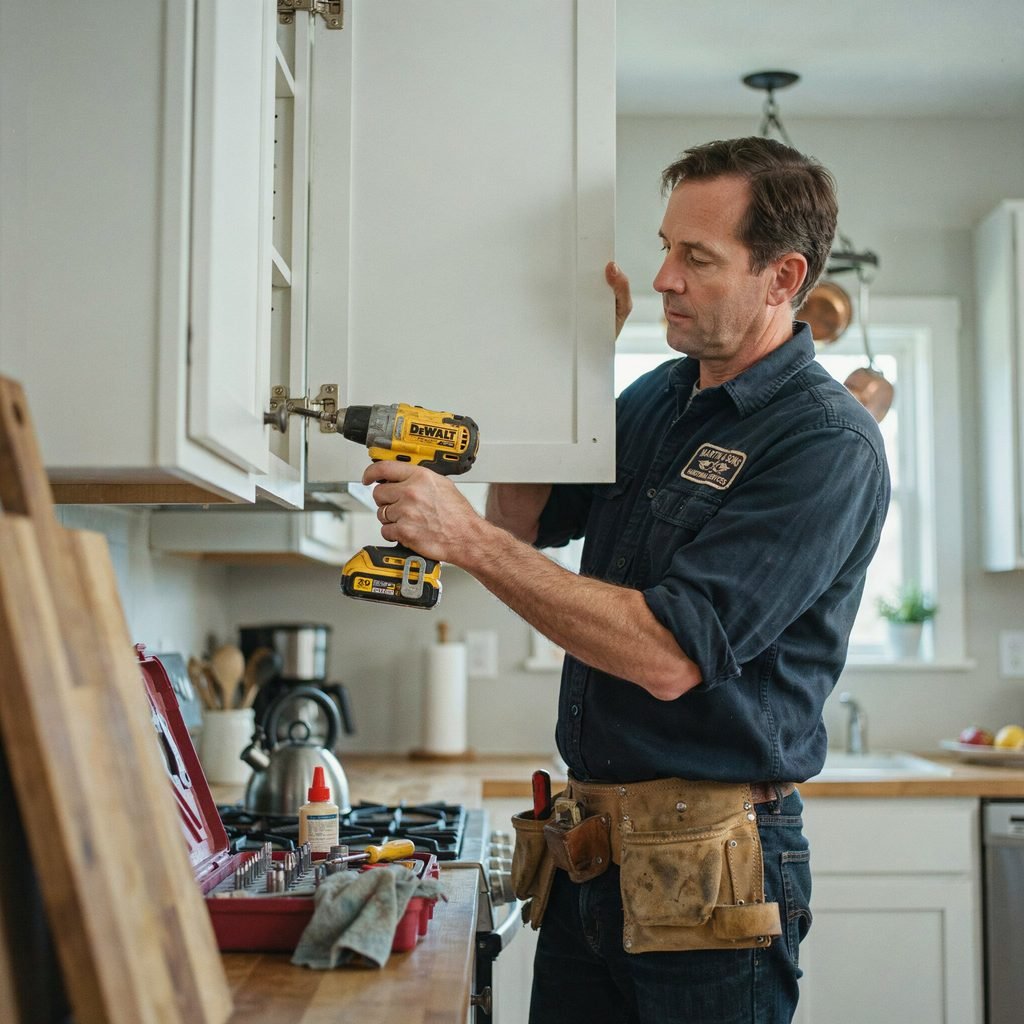
- Use a manual screwdriver or a cordless drill on a very low torque setting to tighten the screws connecting the hinge to the cabinet frame and the door itself. Ensure you are using the correct size Phillips bit (usually a #2) to prevent stripping the screw head.
- Check the mounting plate screws on the interior wall of the cabinet as well.
Safety Note: Be extremely careful when working with particleboard or MDF (medium-density fiberboard) cabinets, which are incredibly common in modern US builder-grade homes. Overtightening can easily strip the soft composite material or crack the delicate laminate finish. Stop turning the screw the exact moment you feel firm resistance.
Fix 2: Repair Stripped Cabinet Screw Holes
If you try to tighten a screw and it just keeps spinning endlessly, you are dealing with a stripped hole. This happens when the fragile wood fibers inside the hole tear away, leaving absolutely nothing for the metal screw threads to grip. A reliable stripped screw hole cabinet repair requires filling the void to create a new, solid grip.
Method 1: Wood Glue and Toothpicks
This is the most popular wood glue cabinet repair trick among DIYers. Dip wooden toothpicks, matchsticks (with the striking heads cut off), or even wooden golf tees into high-quality wood glue. Jam them tightly into the stripped hole until it is completely packed. Wipe away excess glue and let it dry for at least 24 hours. Once fully cured, snap off the protruding wood flush with the surface, and drive the screw back in.
Method 2: Wooden Dowels and Epoxy
For larger, heavily damaged holes, drill the stripped hole out to a standard size (like 1/4 inch). Coat a hardwood dowel in wood glue or two-part epoxy, tap it into the hole, and let it cure overnight. Trim it flush with a utility knife before redrilling a pilot hole.
Method 3: Longer or Wider Screws
If the hole is only slightly enlarged, swapping the original hardware for a screw with a wider gauge or slightly longer length can sometimes bypass the damaged wood and bite into fresh material deeper in the frame.
Fix 3: Adjust Sagging or Uneven Cabinet Doors
If your doors are physically intact but look crooked or won’t latch, you likely need a sagging cabinet door fix. Most modern US kitchens use concealed European-style hinges, which feature built-in adjustment screws for highly precise cabinet door alignment.
How to perform a kitchen cabinet hinge adjustment:
- Height Adjustment: Loosen the vertical adjustment screws on the mounting plate. Slide the door up or down to fix uneven cabinet doors, then retighten securely.
- Side-to-Side Adjustment: Turn the horizontal screw (usually the middle screw on the hinge arm). This moves the door left or right, ensuring consistent, even gaps between adjacent doors.
- Depth Adjustment: Turn the screw located at the back of the hinge arm. This moves the door closer to or further from the cabinet box, ensuring it sits perfectly flush when closed.
Troubleshooting Table: Cabinet Door Alignment
| Symptom | Likely Cause | Adjustment Needed |
|---|---|---|
| Door rubs against the adjacent door | Gap is too narrow | Side-to-side adjustment |
| Door sits higher or lower than neighbors | Hinge slipped on plate | Height adjustment |
| Door bows outward or won’t latch | Hinge pushed too far back | Depth adjustment |
| Door sags heavily when opened | Loose hinge or stripped hole | Tighten screws or repair hole |
Fix 4: Replace Worn or Broken Cabinet Hinges
Sometimes, loose cabinet hinges simply cannot be saved. If you notice cracked hinge cups, bent metal arms, severe rust, or a mounting plate that has completely torn away from the wood, cabinet hardware replacement is absolutely necessary.
Before buying new hinges, remove an old one and take it to your local hardware store to ensure a perfect match. Pay close attention to the overlay (how much the door covers the frame—full, half, or inset), the bore size (usually 35mm or 1 3/8 inches for standard US cup hinges), and the specific mounting style. Replacing broken hinges is a straightforward cabinet door repair that instantly restores function, safety, and visual appeal to your kitchen space.
Fix 5: Repair a Wobbly Base Cabinet Box
If the door is perfectly fine but the entire cabinet shakes, you need wobbly base cabinet repair. Base cabinets bear the immense weight of heavy countertops, built-in appliances, and stacks of heavy dishware. If they are not securely attached to the wall studs, they will pull away and wobble dangerously.
Check the L-brackets or long screws securing the top rail of the cabinet to the wall. If they are loose, tighten them directly into the wooden wall studs, not just the drywall. If the cabinet frame itself has separated at the corner joints, apply wood glue to the gaps, clamp the frame tightly, and secure it with finishing nails or metal corner gussets.
Safety Note: If you are dealing with upper cabinets, especially those mounted above a stove or supporting heavy stone countertops, do not risk a catastrophic collapse. If the wall anchors are actively pulling out of the drywall, contact a professional immediately.
Fix 6: Stabilize Cabinets on Uneven Floors
Older US homes are notorious for settling over the decades, leading to sloping or uneven floors. When a base cabinet rests on an unlevel surface, it will rock every single time you open a drawer or lean against the counter.
To fix this, use wooden or composite cabinet shims. Slide the shims under the low corners of the cabinet base until the rocking completely stops. Use a long spirit level across the countertop and the cabinet face to ensure everything is perfectly plumb and level. Once level, score the exposed shim with a sharp utility knife and snap it off flush. This simple step prevents long-term stress on the cabinet joints and stops doors from swinging open on their own due to gravity.
Fix 7: Fix Loose Cabinet Drawers and Slides
Wobbly drawers are incredibly frustrating and can easily lead to items falling out or metal tracks bending under pressure. A thorough cabinet drawer repair starts with inspecting the slides.
Pull the drawer out completely and check the screws securing the tracks to both the drawer box and the cabinet interior. Tighten any cabinet screws loose in the tracks. If the drawer box itself is falling apart at the dovetail or butt joints, inject wood glue into the seams and clamp it overnight. If the metal tracks are bent, heavily worn, or the plastic rollers are shattered, it is time to replace the slides entirely. Upgrading to soft-close, full-extension drawer slides is a highly recommended modernization upgrade that drastically improves daily kitchen functionality.
Fix 8: Reinforce a Loose Toe Kick or Cabinet Face Frame
The toe kick (the recessed board at the bottom of base cabinets) and the face frame (the front trim of the cabinet box) provide vital structural rigidity. If these elements are loose, the whole cabinet can feel flimsy and unstable.
For toe kick repair, check the metal clips or wooden cleats holding the decorative board in place. Re-secure them with small trim screws or a pneumatic brad nailer. Note that toe kicks often suffer from water damage due to frequent mopping; seal the bottom edge with caulk to prevent future rot. If the face frame is separating from the cabinet box, apply wood glue to the seam, clamp it tightly, and drive finish nails through the frame into the side panels to permanently bond the cabinet frame repair.
Tools and Materials Needed for DIY Cabinet Repair
Having the right equipment on hand makes any DIY project significantly easier and safer. To successfully tackle these home improvement projects, gather the following supplies:
- Screwdriver set (Phillips and flathead) or a cordless drill
- High-quality wood glue
- Wooden toothpicks, matchsticks, golf tees, or hardwood dowels
- Replacement cabinet screws and hardware
- Assorted replacement hinges
- Wooden or composite shims
- Spirit level (torpedo and 2-foot levels)
- Tape measure
- Sandpaper (120 and 220 grit)
- Wood filler and putty knife
- Bar clamps or quick-grip clamps
How to Prevent Kitchen Cabinets from Becoming Wobbly Again
Proper kitchen cabinet maintenance goes a very long way in preventing future repairs and extending the lifespan of your kitchen.
- Routine Checks: Inspect and tighten hinge screws every 6–12 months to catch issues early.
- Gentle Use: Avoid slamming doors and drawers; upgrade to soft-close hinges if you have heavy-handed family members or young children.
- Moisture Control: Repair plumbing leaks immediately to prevent water from swelling and destroying particleboard frames.
- Clean Hardware: Wipe down hinges and tracks to prevent grease and grime buildup, which can degrade moving parts.
- Weight Management: Avoid overloading deep drawers with heavy cast-iron pans or excessive canned goods, which bends slides and strains joints.
DIY Cabinet Repair vs Hiring a Professional
Knowing when to tackle DIY cabinet repair versus calling an expert saves both time and money. Simple fixes like tightening screws, shimming base cabinets, or adjusting European hinges are perfect for beginners and require minimal investment.
However, you should hire a professional for extensive water damage, structural cabinet failure, custom cabinetry restoration, or when dealing with heavy wall-mounted units. Regarding the kitchen cabinet repair cost, US homeowners can expect to pay between $150 and $450 for a handyman to repair a run of wobbly cabinets, depending on regional labor rates and the extent of the damage. Custom hinge replacements, structural reframing, or fixing water-damaged subfloors can push costs higher, but professionals ensure the work meets local building codes and safety standards.
Frequently Asked Questions
Why is my kitchen cabinet door wobbling?
The most common causes are loose mounting screws, worn hinge mechanisms, or stripped screw holes in the cabinet frame or door material.
How do I fix a loose cabinet hinge?
Support the door, remove the loose screw, pack the hole with wood glue and toothpicks, let it dry, and then drive the screw back into the newly reinforced wood.
Can I repair a stripped screw hole in a cabinet?
Yes. The wood glue and toothpick method is highly effective for particleboard and MDF, while hardwood dowels work best for solid wood frames.
How do I stop a cabinet door from sagging?
Adjust the vertical height screws on the European hinge mounting plate. If the hinge is bent or the hole is severely stripped, you will need to replace the hinge or repair the hole.
Why does my base cabinet shake when I open it?
The cabinet box is likely not securely anchored to the wall studs, or the floor beneath it is uneven, causing the entire structure to rock.
How much does kitchen cabinet repair cost in the US?
Minor DIY repairs cost less than $20 in materials. Hiring a professional handyman typically ranges from $150 to $450, while extensive custom restorations can exceed $1,000.
When should I replace cabinets instead of repairing them?
If the cabinet boxes are severely water-damaged, crumbling, or structurally compromised beyond simple joint repair, full replacement is the safer, more cost-effective option. Furthermore, if you are planning to sell your home soon, brand-new modern cabinetry often yields a much higher return on investment than repeated patchwork repairs.
Conclusion: Mastering Cabinet Repair Fixes for Wobbly Kitchens
Dealing with shaky kitchen fixtures is incredibly frustrating, but implementing these proven cabinet repair fixes for wobbly kitchens will completely restore safety, function, and beauty to your home. Start with the simplest solutions: inspect your hardware and tighten those loose screws. If you encounter stripped holes or misaligned doors, use the wood glue tricks and adjustment techniques outlined above. Regular maintenance will keep your cabinetry functioning smoothly for decades to come. Your kitchen is the heart of your home, and it deserves to feel sturdy and secure. For more home improvement tips, download our free cabinet maintenance checklist today, or if your cabinets suffer from severe structural damage, do not hesitate to schedule a professional cabinet inspection to protect your investment.