Your gutters do one unglamorous but critical job: they catch every gallon of rain that rolls off your roof and steer it safely away from your foundation, siding, and landscaping. When they work, you never think about them. When they fail—or were never installed correctly—you’re staring at cracked basement walls, rotting fascia boards, and thousands in repairs.
With labor costs climbing and YouTube packed with step-by-step tutorials, it’s tempting to grab a ladder and handle gutter installation yourself. But is DIY gutter installation truly the smart move, or does the risk outweigh the savings?
This guide walks US homeowners through everything you need to decide: real 2026 cost breakdowns, material comparisons, safety realities, skill requirements, and clear decision criteria. By the end, you’ll know whether to pick up a drill or pick up the phone and hire professional gutter installers.
Why Gutters Matter for US Homes
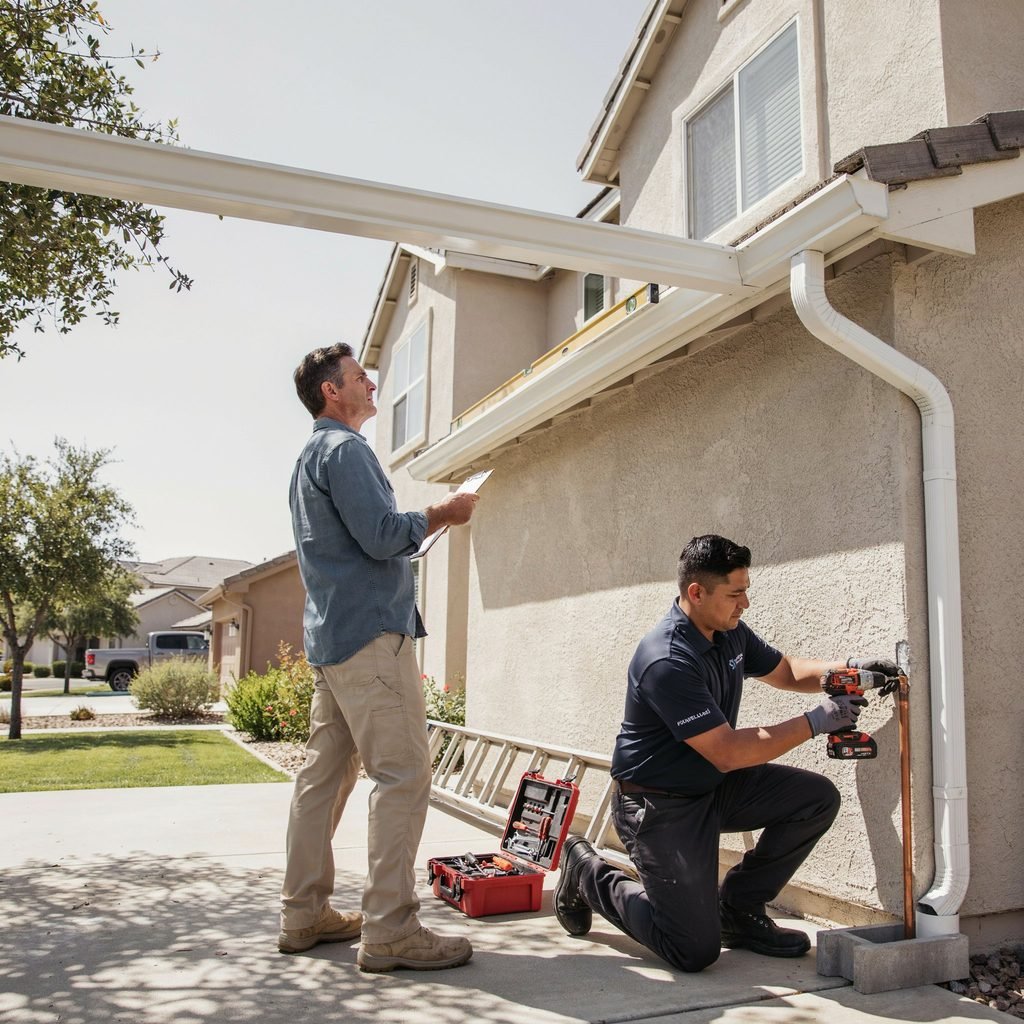
A properly designed gutter system isn’t optional—it’s your home’s first line of defense against water damage. And the stakes shift depending on where you live.
Heavy rain zones like the Pacific Northwest and Gulf Coast see 40–60+ inches of annual rainfall. Without adequate gutters and downspouts, that water pools around your foundation, seeps into basements, and erodes landscaping within a single season.
Snow and ice regions in the Northeast and Upper Midwest face a different threat. Poorly sloped or undersized gutters contribute to ice dams—ridges of ice that trap meltwater under shingles, leading to interior leaks and structural rot. Proper slope (about ¼ inch per 10 feet) and sufficient downspout capacity are non-negotiable here.
High-wind areas along the coasts and through Tornado Alley demand secure attachment and durable materials. Gutters that pull away from the fascia board during a storm become projectiles and leave your roofline unprotected.
Across all climates, the risks of poorly installed or clogged gutters are the same: foundation cracks, basement flooding, mold growth, and rotting fascia and soffit. Adding gutter guards installation to your project can reduce clogs and cut maintenance frequency, but it doesn’t fix a bad installation underneath.
DIY Gutter Installation: What It Really Involves
Skills and Tools You’ll Need
Before you watch a single tutorial, honestly assess your comfort level. DIY gutter installation requires:
- Measuring and planning: Calculating linear feet along your roof perimeter, determining the number and placement of downspouts (generally one per 30–40 feet of gutter), and marking a consistent slope of roughly ¼ inch per 10 feet toward each downspout. Learning how to measure gutters for house dimensions accurately is step one.
- Basic carpentry: Drilling into the fascia board, cutting metal or vinyl channels to length, joining sections, and sealing every seam.
- Ladder confidence: You’ll be 10–25 feet up for hours. Ladder safety for gutter work isn’t optional—it’s the difference between a weekend project and an ER visit.
Essential tools include:
- 25-foot tape measure, chalk line, and 4-foot level
- Power drill/driver with appropriate screws and hidden hangers or spike-and-ferrule sets
- Tin snips or a power metal shear (for aluminum or steel)
- Sealant and caulk gun
- 24–28-foot extension ladder with a ladder stabilizer or stand-off
- Fall protection gear (harness and anchor for roofs above one story)
Remember the 4:1 ladder angle rule (one foot out for every four feet up), maintain three points of contact, and never lean past the ladder’s side rails.
Step-by-Step Overview
- Measure and plan. Walk the roofline, note corners and downspout locations, and sketch your layout.
- Choose your gutter type. Sectional gutters (10- or 20-foot lengths) are the DIY standard. True seamless gutter installation requires a truck-mounted forming machine, making it a pro-only job.
- Mark slope and hanger positions. Snap a chalk line along the fascia showing the correct pitch.
- Cut sections and attach hangers. Space hangers every 24–36 inches (closer in snow country).
- Hang gutters, join sections, seal seams. Use manufacturer-recommended connectors and gutter sealant.
- Attach downspouts and extensions. Direct water at least 4–6 feet from the foundation. Test with a garden hose.
Mistakes in slope, hanger spacing, or seam sealing are the top causes of leaks, sagging, and overflow. There’s no undo button once you’ve drilled into the fascia.
Cost Breakdown: DIY vs Professional Gutter Installation
Typical US Cost Ranges (2026)
The average single-family home has roughly 150–200 linear feet of gutter. Here’s what you can expect to pay:
DIY material-only costs (per linear foot):
| Material | Cost per Linear Foot |
|---|---|
| Vinyl (PVC) | $3–$6 |
| Aluminum (sectional) | $4–$9 |
| Steel (galvanized) | $8–$15 |
| Copper | $25–$40+ |
Example: 200 linear feet of sectional aluminum gutters runs about $800–$1,800 in materials, plus $100–$200 for hangers, sealant, downspouts, and misc. hardware.
Professional installation costs (materials + labor, per linear foot):
- Standard seamless aluminum: $8–$18/ft installed
- Steel: $12–$30/ft installed
- Copper gutter installation: $25–$45+/ft installed
For 200 linear feet of seamless aluminum, expect a total gutter installation cost of roughly $1,600–$4,000. Copper or custom systems on larger homes can reach $5,000–$10,000+.
Labor typically adds $1–$5 per linear foot on top of materials. The average cost to install gutters 2026 varies by region—urban coasts skew higher, rural Midwest skews lower.
Hidden Costs and Long-Term Value
The sticker price isn’t the whole story:
- Time: A novice DIYer may spend 1–3 full days. A professional crew finishes most homes in 1–2 days.
- Rework risk: Improper slope or poorly sealed seams can mean water damage repairs costing $500–$3,000+ within a year.
- Warranties: Most pro installers back their work with 5–10-year workmanship warranties. DIY offers zero labor warranty.
- Liability: Professional gutter installers carry liability insurance. If you fall off a ladder during DIY, your homeowner’s policy may not fully cover medical bills, and you have no recourse for installation errors.
Quick scenario: Homeowner A saves $1,200 going DIY but spends two weekends, risks a ladder fall, and discovers a slow leak at a seam six months later—no warranty applies. Homeowner B pays $1,200 more for a pro, gets a 10-year workmanship warranty, verified slope, and factory-sealed seams. Over 20 years, Homeowner B often comes out ahead.
Gutter Materials: Which Are Best for DIY vs Pro?
Choosing the best gutter materials for homes depends on climate, budget, and who’s doing the install. Here’s the aluminum vs vinyl vs steel gutters breakdown, plus copper.
Vinyl (PVC) Gutters
- Cost: ~$3–$6/ft (materials only)
- Pros: Ultra-lightweight, snaps together easily, no corrosion, cheapest option.
- Cons: Becomes brittle below 20°F, can warp in sustained heat over 95°F, lifespan 10–20 years.
- Best for: Budget DIY in moderate climates (Southeast, mid-Atlantic). Avoid in heavy-snow or extreme-heat regions.
Aluminum Gutters
- Cost: ~$6–$12/ft sectional; $8–$18/ft seamless (pro-installed)
- Pros: Rust-resistant, lightweight, available in 20+ colors, 20–30-year lifespan.
- Cons: Dents from ladders or hail; expands/contracts in temperature swings.
- Best for: Most US homes. Sectional aluminum is the most DIY-friendly metal option. Seamless gutter installation is pro-only due to the on-site forming machine.
Steel Gutters (Galvanized or Stainless)
- Cost: ~$8–$30/ft
- Pros: Extremely strong, handles heavy snow loads and debris, 20–40-year lifespan.
- Cons: Heavy, harder to cut, can rust if the protective coating is scratched.
- Best for: Upper Midwest, mountain regions, high-wind zones. Usually better left to professionals.
Copper Gutters
- Cost: ~$25–$45+/ft installed
- Pros: 50+ year lifespan, beautiful natural patina, elevates curb appeal.
- Cons: Very expensive, soft metal requires skilled handling, specialized soldering.
- Best for: Luxury, historic, or architectural homes. Almost always a hire professional gutter installers situation.
| Material | $/ft Installed | Lifespan | DIY-Friendly? | Best Climate |
|---|---|---|---|---|
| Vinyl | $3–$6 | 10–20 yrs | ★★★★★ | Moderate |
| Aluminum | $6–$18 | 20–30 yrs | ★★★★☆ (sectional) | Most US regions |
| Steel | $8–$30 | 20–40 yrs | ★★☆☆☆ | Snow/wind zones |
| Copper | $25–$45+ | 50+ yrs | ★☆☆☆☆ | Any (luxury) |
Safety Considerations: When DIY Becomes Too Risky
Height and Ladder Risks
Falls from ladders are among the leading causes of home-improvement injuries in the US. Most single-family rooflines sit 10–25 feet off the ground—more than enough for a serious or fatal fall.
Key gutter installation safety tips:
- Use an extension ladder rated for your weight plus tools (Type IA or I).
- Follow the 4:1 angle rule and keep three points of contact at all times.
- Attach a ladder stabilizer or stand-off so you’re not resting the ladder against the gutters or fascia.
- Never work alone on a roof above one story; have a spotter hold the ladder base.
- Wear non-slip shoes and consider a fall-protection harness for any roofline above 15 feet.
Roof and Structural Risks
Misdriven hangers can split the fascia board or puncture soffit vents. Incorrect slope creates standing water that breeds mosquitoes, accelerates corrosion, and—up north—feeds ice dams. On steep roof pitches (8/12 or greater), simply accessing the gutter line safely becomes a challenge.
When to Absolutely Hire a Pro
Skip DIY and call a contractor if any of these apply:
- Your home is two stories or higher with a steep roof pitch
- The roofline has multiple valleys, dormers, turrets, or complex angles
- You live in a heavy-snow, high-wind, or high-rainfall-intensity region where precise slope and hanger spacing are critical
- You’re uncomfortable at height or lack proper fall protection gear
- The project calls for copper, zinc, or oversized commercial-style gutters
Knowing when to hire a gutter contractor can save you from a costly—or dangerous—mistake.
Pros and Cons: DIY vs Professional Gutter Installation
DIY Gutter Installation
Pros:
- Lower upfront cost (no labor markup)
- Full control over materials, colors, and schedule
- Satisfying hands-on project for handy homeowners
- Feasible for single-story homes with simple, straight rooflines
Cons:
- 1–3 days of physical labor, most of it on a ladder
- Higher risk of leaks, sagging, or improper slope
- No workmanship warranty; all future repairs are out-of-pocket
- Safety risk increases with height and roof complexity
- No access to seamless gutter installation equipment
Hire Professional Gutter Installers
Pros:
- Fast, precise installation with commercial-grade tools
- Access to seamless gutters, custom profiles, and premium materials
- 5–10-year workmanship warranties standard
- Liability insurance covers on-site accidents
- Proper handling of local building codes, drainage requirements, and complex rooflines
Cons:
- Higher upfront gutter installation cost
- Must vet contractors (check licenses, reviews, proof of insurance)
- Scheduling depends on contractor availability (spring/fall are peak seasons)
Decision Framework: How to Choose for Your Home
Questions to Ask Yourself
- How many stories is my home, and how high is the roofline?
- How complex is the roof—multiple angles, valleys, dormers?
- What’s my realistic budget: am I saving $800–$1,500, or prioritizing 20-year reliability?
- Am I genuinely comfortable working on a ladder for several hours?
- Do I own the tools and have a helper for a 1–3-day project?
- What does my local climate demand—high rainfall intensity, heavy snow, or hurricane-force winds?
Simple Rules of Thumb
Consider DIY if:
- You have a single-story home with simple, straight rooflines
- You’re comfortable on ladders and have basic handyman skills
- You’re using sectional aluminum or vinyl gutters
- Saving money matters more than a warranty, and you accept some risk
Hire a pro if:
- Your home is two stories or higher, has a steep pitch, or a complex layout
- You want seamless gutters, copper, or another premium material
- You live in a region with heavy snow, high winds, or intense rainfall
- You value workmanship warranties, liability insurance, and long-term peace of mind over saving on labor
When in doubt, get 2–3 written quotes and compare total gutter installation cost, materials, timeline, and warranty terms side by side.
FAQs About Gutter Installation
1. How much does it cost to install gutters on an average US home?
For a typical 150–200 linear foot home, expect $1,200–$4,000 for seamless aluminum installed by a pro. Costs vary by region, material, and roof complexity.
2. Can I install gutters myself and still get a warranty?
Material manufacturers may honor product warranties, but there’s no labor warranty for DIY. If a seam leaks or a hanger pulls out, the repair cost is yours.
3. Are seamless gutters a realistic DIY project?
No. True seamless gutter installation requires a truck-mounted roll-forming machine. DIYers are limited to sectional gutters joined with connectors and sealant.
4. How long does gutter installation take?
DIY: 1–3 days for a novice. Professional crews typically complete an average home in 1–2 days.
5. Do I need a permit for gutter installation?
Generally no for standard residential replacement. However, some HOAs or local building codes may have material or color restrictions—always check before you start.
6. Should I add gutter guards when installing new gutters?
Gutter guards installation ($7–$15/ft added) reduces cleaning frequency and minimizes clogs. They’re not 100% maintenance-free, but they’re a smart add-on in wooded areas.
Conclusion: Protect Your Home the Right Way
Gutter installation is one of those projects where the cheapest option upfront isn’t always the cheapest over 20 years. DIY gutter installation can save you $800–$1,500 in labor, but it demands real skill, proper safety gear, and a tolerance for risk. Hire professional gutter installers, and you pay more on day one but gain speed, precision, seamless options, workmanship warranties, and liability coverage.
For many US homeowners—especially those with multi-story homes, complex rooflines, or climates that punish installation errors—hiring a pro is the smarter long-term investment.
Your next step: Use this guide to honestly assess your skills, roof, climate, and budget. If you’re still on the fence, get 2–3 local quotes, compare materials and warranties, and choose the option that best protects your home for the next two decades. Your foundation will thank you.