
Paint has the power to transform a room, altering its mood, perceived size, brightness, and overall resale appeal. As we look ahead, the interior painting trends for 2026 homes are shifting dramatically. Homeowners are moving away from the sterile, bright white walls and cool, institutional grays that dominated the last decade.
Instead, 2026 interiors are becoming warmer, more personal, and deeply connected to nature. The focus is now on softer neutrals, grounded earth tones, expressive accent colors, and immersive room designs. However, it is important to remember that trends should serve your lifestyle, architecture, lighting, and existing décor rather than being followed blindly.
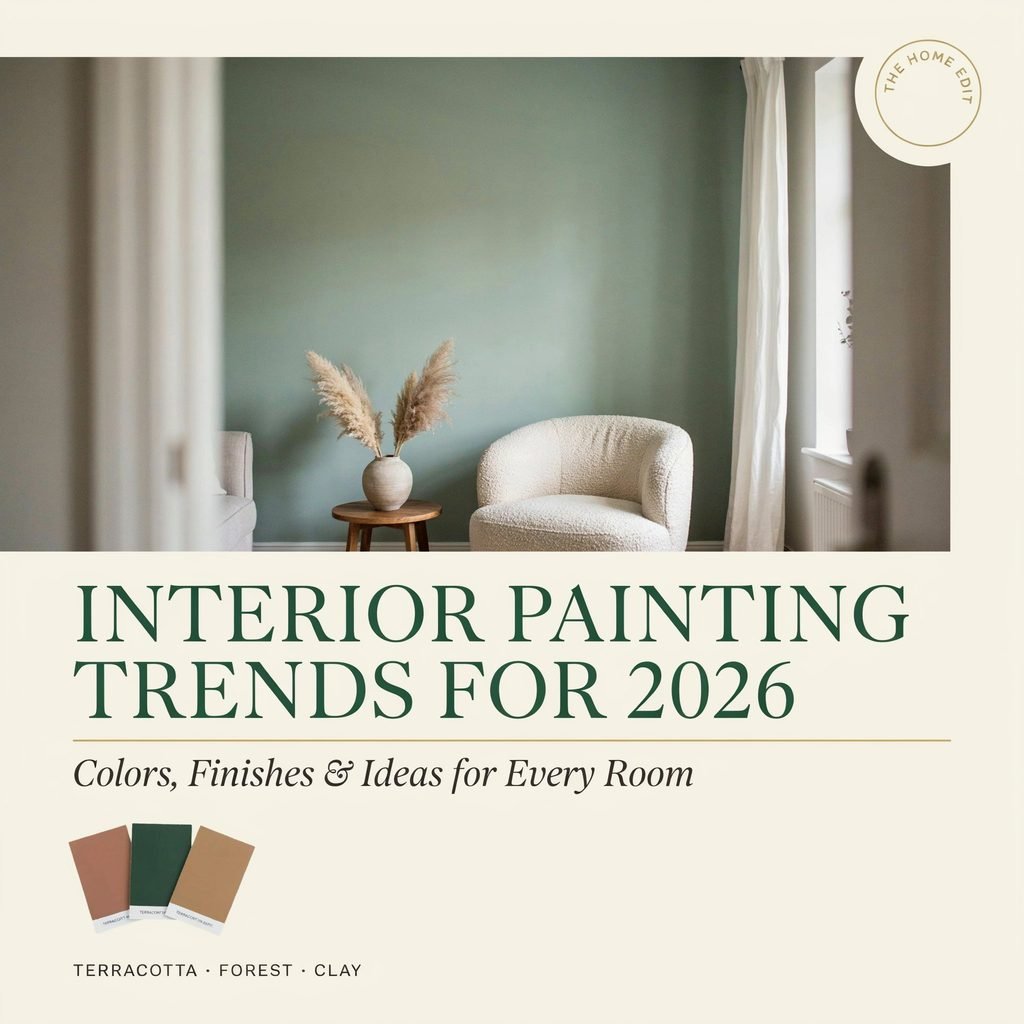
The Biggest Interior Painting Trends for 2026 Homes
What are the major shifts defining the 2026 interior paint trends? The overall theme is a return to comfort and livability.
Here are the most significant directions shaping home paint colors for 2026:
- Warm neutrals replacing cool gray.
- Earthy greens inspired by nature.
- Blue-green and smoky teal shades.
- Creamy whites and soft off-whites.
- Rich browns and espresso-inspired colors.
- Terracotta, clay, and muted red tones.
- Soft blue and atmospheric blue shades.
- Dusty pastels with more sophisticated undertones.
- Color drenching from walls to trim and ceilings.
- Painted ceilings and unexpected color placement.
- Two-tone walls and architectural color blocking.
- Low-VOC, washable, and more durable paint products.
While major paint-brand forecasts differ in their individual selections, many 2026 palettes share an emphasis on warmth, nature, comfort, and livability. Current design coverage highlights warm khaki, creamy neutrals, blue-greens, smoky jade, terracotta, and deep brown shades as standout choices.
Warm Neutral Paint Colors for a Comfortable Home
Warm neutral paint colors are quickly becoming the foundation of American homes. These shades provide a cozy, inviting backdrop that cool grays simply cannot match. Popular choices include warm greige, mushroom, taupe, oatmeal, almond, camel, soft beige, creamy ivory, and warm off-white.
These versatile colors work beautifully in open-concept living spaces, hallways, bedrooms, kitchens, and dining rooms. They are also excellent choices for rental properties and homes being prepared for sale, as they appeal to a wide range of tastes.
When choosing between warm white, beige, greige, taupe, and mushroom, consider your natural light, flooring, cabinetry, and furniture. North-facing rooms often benefit from warmer undertones to counteract chilly natural light, while south-facing rooms can easily tolerate slightly cooler or more balanced neutrals.
Earthy Greens and Nature-Inspired Interior Colors
Nature-inspired paint colors continue to thrive, with sage, olive, moss, eucalyptus, fern, and forest green acting as incredibly versatile choices for 2026 interiors. Green paint strongly supports biophilic interior design, helping to bring the calming essence of the outdoors inside.
These earthy paint colors pair exceptionally well with natural wood, rattan, woven textures, linen, brass hardware, cream upholstery, stone surfaces, and indoor plants.
Here are a few room-specific recommendations:
- Sage green interior walls for peaceful bedrooms and spa-like bathrooms.
- Olive green paint for grounded kitchens and welcoming dining rooms.
- Moss green for focused home offices and cozy libraries.
- Deep forest green for dramatic powder rooms, custom built-ins, and bold accent wall ideas.
Keep in mind that darker greens make a room feel sophisticated and intimate, but they require adequate lighting and balanced lighter furnishings to avoid feeling cavernous.
Blue-Green, Teal, and Smoky Jade Walls
Blue-green paint colors masterfully combine the calming qualities of blue with the organic, grounding character of green. Smoky jade and muted teal shades are particularly popular for adding depth without overwhelming a space.
These shades are highly adaptable and work well on living room accent walls, in dining rooms, powder rooms, home offices, kitchen islands, built-in shelving, and bedroom walls.
Because blue-green shades can vary significantly depending on their undertones, testing is crucial. Always paint large sample boards and observe them in morning, afternoon, and evening light before making a final decision.
Creamy Whites and Soft Off-Whites
Homeowners are increasingly moving away from stark, high-contrast white toward warmer whites with cream, beige, or subtle gray undertones. Creamy white paint colors create a bright but comfortable atmosphere that feels much more inviting than sterile hospital white.
These soft shades work seamlessly with traditional, transitional, modern, and farmhouse interiors. They complement wood floors, highlight natural materials, make small spaces feel more open, and provide a flexible background for colorful furniture and artwork.
However, not every warm white looks the same. Undertones can appear yellow, pink, beige, or gray depending on the lighting and nearby surfaces, so careful sampling is essential.
Moody Browns, Espresso, and Rich Dark Paint Colors
Deep brown interior walls, espresso, chocolate, charcoal-brown, and cocoa-inspired paint colors are experiencing a massive resurgence. These moody paint colors add instant warmth, drama, depth, and sophistication, often creating a library-like or boutique-hotel feeling.
Rich dark colors are highly recommended for dining rooms, home libraries, offices, media rooms, entryways, accent walls, built-ins, interior doors, and trim.
To avoid a cramped or overly dark appearance, layered lighting is essential. Incorporate reflective décor, keep ceilings lighter, and use contrasting textiles to balance the visual weight of the dark walls.
Terracotta, Clay, and Muted Red Interior Paint
Terracotta interior paint, along with cinnamon, clay, brick, rust, and softened red shades, brings a distinct warmth and artisanal quality to modern interiors.
To use these colors without overwhelming a room, consider painting just one feature wall. Terracotta looks stunning in a dining room, a cozy breakfast nook, or a small powder room. It pairs beautifully with cream, walnut, black, or natural stone, and can even be applied to a kitchen island or built-in cabinetry.
Muted and earthy versions of these colors are generally much easier to live with than highly saturated, bright orange-red paint.
Room-by-Room Interior Paint Ideas for 2026
Applying trending paint colors for 2026 requires a room-by-room approach. Here are practical recommendations for the most important spaces in your home.
Living Room
Living room paint trends 2026 favor adaptable, welcoming shades. Consider warm greige, soft blue paint colors, creamy white, muted olive, mushroom, or warm pinky-neutral shades. Coordinate your wall colors with your sofas, rugs, wood flooring, fireplaces, and natural light. Soft blues and warm neutrals are particularly adaptable, while earthy shades create a more layered atmosphere.
Kitchen
For kitchen paint color ideas, lean toward warm white walls paired with sage or olive green cabinets. Blue-green kitchen islands, mushroom or taupe cabinetry, and terracotta accents are also highly sought after. In large kitchens, painted ceilings can add unexpected charm. Always ensure your paint coordinates with countertops, backsplash tile, flooring, appliances, and cabinet hardware.
Bedroom
Bedroom paint color trends focus on restful, low-contrast palettes. Dusty blue, sage green, muted lavender, warm beige, oatmeal, deep blue-green, and soft clay colors promote relaxation. Matte or eggshell finishes are ideal here, as they reduce glare and contribute to a calm, soothing atmosphere.
Bathroom
Bathroom paint colors 2026 lean toward spa-like blue-green, soft sage, creamy white, pale blue, and warm taupe. For a bolder look, try moody jewel-toned accent walls. Always use moisture-resistant bathroom paint and ensure the room has proper ventilation to protect your finish.
Home Office
Home office paint colors should support focus and look great on video calls. Olive green, deep blue, smoky jade, warm taupe, muted clay, and sophisticated gray-green are excellent choices. These colors influence concentration and provide a professional, visually comfortable background.
Dining Room and Powder Room
These smaller spaces are perfect for bolder choices. Consider espresso brown, deep green, terracotta, plum, burgundy-inspired shades, or dramatic blue. Smaller rooms are the perfect place to experiment with color drenching or darker, moodier shades.
Color Drenching, Painted Ceilings, and Creative Techniques
Color drenching involves using a similar or matching color across the walls, trim, doors, molding, and sometimes the ceiling. This modern interior paint technique creates a highly cohesive appearance, makes architectural details feel intentional, and produces a comforting cocooning effect. It can make small rooms feel more designed and significantly reduces visual interruptions.
Other creative techniques gaining traction include painted ceilings, half-painted walls, two-tone walls, architectural color blocking, painted arches, door and trim accents, accent niches, and built-in shelving in contrasting colors. Monochromatic color schemes are also incredibly popular. For example, pairing warm taupe walls with a slightly deeper taupe ceiling and trim creates a beautifully layered, sophisticated look.
Interior Paint Finishes Trending in 2026
Selecting the right sheen is just as important as picking the color. The best paint finish for walls depends on the room’s function and traffic.
| Finish | Recommended Use |
|---|---|
| Flat or matte | Ceilings, low-traffic areas, bedrooms, hiding minor wall imperfections |
| Eggshell | Living rooms, bedrooms, dining rooms, and general walls |
| Satin | Kitchens, bathrooms, hallways, doors, and areas needing easier cleaning |
| Semi-gloss | Trim, baseboards, cabinets, doors, and high-moisture areas |
| High-gloss | Small accents, furniture, architectural details, and dramatic trim |
When choosing interior paint finishes, consider washability, durability, glare, wall condition, moisture, and foot traffic. Today’s market offers highly durable interior paint, scrubbable wall paint, and washable paint that maintains a low-sheen look. For specific projects, look for specialized cabinet paint, trim paint, and moisture-resistant paint to ensure long-lasting results.
How to Choose the Right 2026 Paint Color
Learning how to choose interior paint colors can save you time and money. Follow this step-by-step process:
- Identify the room’s primary purpose and desired mood.
- Study the natural and artificial lighting throughout the day.
- Examine existing flooring, countertops, furniture, and textiles.
- Determine the room’s fixed undertones (warm vs. cool).
- Select three to five sample colors that fit your criteria.
- Paint large sample boards rather than relying on tiny paper swatches.
- Check the samples at different times of day and under artificial light.
- Consider how the color flows visually into adjoining rooms.
- Choose the appropriate paint finish for the surface.
- Calculate the exact amount of paint required for the square footage.
- Prepare the walls properly before applying the first coat.
Remember that online images and small store cards can be highly misleading due to screen settings and lighting variations.
Practical Interior Painting Tips for U.S. Homeowners
Proper house painting preparation is the secret to a flawless finish. Start by repairing nail holes and cracks, and thoroughly cleaning the walls to remove dust and grease. Sand any glossy surfaces to help the new paint adhere, and apply a high-quality primer when making drastic color changes or covering stains.
Use reliable painter’s tape to protect trim, and cover floors and furniture with drop cloths. Invest in quality brushes and rollers, maintain a wet edge while rolling to avoid lap marks, and allow proper drying time between coats. Always improve ventilation by opening windows and using fans.
Follow product labels carefully and check local disposal rules for leftover paint. Keep in mind that older U.S. homes may require additional preparation, especially when dealing with peeling paint, water stains, textured walls, or uncertain previous coatings.
Should You Hire a Professional Interior Painter?
While DIY painting is great for small accent walls, hiring a professional residential painting contractor is often worthwhile for larger projects. Professional interior painting is highly recommended for multi-room projects, high ceilings, stairwells, extensive wall repairs, cabinet refinishing, complex color changes, and historic homes.
Professionals are also essential if you have lead-paint concerns, tight deadlines, or are managing rental turnover projects. When hiring, always compare written estimates, confirm insurance coverage, ask about their preparation work, review past projects, and clarify whether paint and materials are included in the quote.
Avoid expecting exact project prices upfront, as interior painting costs vary widely according to room size, wall condition, local labor rates, paint quality, number of coats, trim details, ceilings, and geographic location.
Common Mistakes to Avoid
Even experienced DIYers can fall into common traps. Avoid these frequent missteps:
- Choosing a color without testing it on the actual wall.
- Ignoring the underlying undertones of the paint and the room.
- Using the exact same paint finish everywhere in the house.
- Skipping primer when it is absolutely needed for adhesion or coverage.
- Selecting a dark color for a poorly lit room without a supplemental lighting plan.
- Painting over damaged, peeling, or dirty walls.
- Choosing trend colors that simply do not suit your home’s architecture.
- Forgetting to paint ceilings, trim, doors, and adjoining spaces for a cohesive flow.
- Buying insufficient paint, leading to mismatched dye lots.
- Failing to properly protect floors, hardware, and furniture.
- Expecting a single coat of paint to perfectly cover every surface.
Conclusion
Ultimately, the best interior painting trends for 2026 homes are not just about chasing fashionable colors. They are about making homes feel warmer, more comfortable, more personal, and better connected to natural materials and everyday living.
Begin your project by evaluating the room’s lighting, function, architecture, and existing furnishings. Take your time sampling colors and exploring different finishes. When you are ready to transform your space, test your favorite sample colors on the walls, or reach out to a qualified local interior painting professional to bring your 2026 vision to life.
Frequently Asked Questions
1. What are the most popular interior paint colors for 2026?
The most popular interior paint colors for 2026 shift away from cool grays toward warm, nature-inspired tones. Trending shades include creamy off-whites, warm greige, earthy sage and olive greens, smoky blue-greens, muted terracotta, and rich, moody espresso browns. These colors create cozy, livable, and personalized environments.
2. Are warm neutrals replacing gray paint?
Yes, warm neutrals are rapidly replacing cool gray paint in American homes. Homeowners are favoring shades like warm beige, mushroom, taupe, and oatmeal because they create a more inviting, comfortable atmosphere. These colors pair beautifully with natural wood and organic textures, supporting a softer, more grounded aesthetic.
3. What paint colors make a small room look bigger?
Light, reflective colors like creamy whites, soft off-whites, and pale oatmeal shades help bounce light around a small room, making it feel more open. Additionally, using a monochromatic color scheme—where the walls, trim, and ceiling are painted in similar light tones—blurs the boundaries of the room, visually expanding the space.
4. Is color drenching still popular in 2026?
Yes, color drenching remains highly popular in 2026. This technique involves painting the walls, trim, baseboards, doors, and sometimes the ceiling in the same color or very closely related shades. It creates a cohesive, custom look, minimizes visual clutter, and produces a highly comforting, cocooning effect in both large and small rooms.
5. What is the best paint finish for high-traffic areas?
For high-traffic areas like hallways, kitchens, and mudrooms, satin or semi-gloss finishes are the best choices. Satin offers a soft sheen with excellent scrubbability and moisture resistance, while semi-gloss provides even greater durability and is ideal for trim, baseboards, and doors that endure frequent touching and cleaning.