You wake up to the drip-drip-drip of water in a bucket beneath a spreading brown stain on your ceiling. Outside, rain hammers your roof in the Pacific Northwest gloom or Ontario’s spring thaw. Panic sets in—roofers charge $300 just for an inspection, and emergency repairs can hit $1,500+. But before you call a pro, take a breath: 80% of roof leaks are fixable with DIY methods according to roofing experts at Northwest Roof Maintenance. That leaky spot? It’s likely caused by something simple: a missing shingle from last week’s storm, cracked flashing around your chimney, or clogged valleys trapping ice dams. Even the National Roofing Contractors Association warns that ignoring minor leaks causes structural damage within weeks—but rushing to pros wastes hard-earned cash when you could save $500-$1,200 with basic tools.
Roof leak repair isn’t just for contractors. Homeowners in rainy climates like Seattle or Toronto face these issues yearly, and temporary fixes buy critical time until permanent solutions. But safety first: Steep slopes, electrical hazards, or structural damage mean call a pro immediately. If your roof’s pitch exceeds 6:12 (that’s 26.5°—check with a $10 angle finder app), skip DIY. Yet for most minor leaks? You’ve got this. I’ve patched my own 30-year-old asphalt roof through ice storms and monsoons using techniques I’ll share here. In this guide, you’ll learn exactly how to fix roof leak yourself—from leak detection to shingle replacement—without risking your safety or wallet. Ready to stop that drip and keep $1,000 in your pocket? Let’s dive in.
Tools and Materials You’ll Need
Before climbing a ladder, gather these essentials. Skimping on gear risks failed repairs or injuries—this isn’t where to cut corners. Below is your battle-tested toolkit, with budget vs. pro-grade options:
| Item | Budget Pick | Pro Pick | Price Range |
|---|---|---|---|
| Tarp | 10×12 ft poly tarp | Genuine Joe Heavy-Duty Tarp | $10-$50 |
| Roofing Cement | Henry 208 | Sikaflex 221 | $5-$25 |
| Caulk Gun | Husky Basic | Milwaukee Fuel | $8-$60 |
| Shingle Nails | 1¼” galvanized | 1¼” stainless steel | $3-$15 |
| Safety Harness | Budget strap system | DBI-SALA Full Body Harness | $25-$120 |
Must-haves for every DIYer:
- 24-ft extension ladder (with standoff stabilizers)
- Pry bar/roofing claw ($12 on Amazon)
- Roofing sealant (minimum 1 tube per leak)
- Matching replacement shingles (buy extras!)
- 4-mil plastic sheeting for interior work
- Non-slip shoes (think Vibram soles)
- Critical: Fall arrest harness anchored to roof structure
Pro tip: Store a “leak emergency kit” in your garage—tarp, bucket, gloves, and sealant. When storms hit, you’ll act fast instead of waiting for a roofer. Never risk a fall for a $200 fix—use that harness every time.
Safety First: Essential Precautions
Roof work causes 500+ U.S. home deaths yearly (CDC data)—most from falls. Protect yourself with these non-negotiable rules:
- Check weather religiously: Zero wind/rain. Wet shingles = ice rink. Wait 24 hours after storms.
- Ladder at 4:1 angle: For every 4 ft of height, move base 1 ft out (θ=tan−1(1/4) ≈ 14°).. Secure with ladder hooks.
- Buddy system: One person stabilizes ladder, watches for hazards (power lines!), and calls 911 if needed.
- Avoid electrical lines: Stay 10+ ft from service drops—carbon-fiber ladders aren’t worth the risk.
Real talk: If your heart races on a step ladder, skip DIY. Roofing isn’t worth paralysis. But for low-slope roofs (<6:12) in dry conditions? With these precautions, you’re safer than mowing your lawn.
Step 1: Diagnose the Roof Leak
Finding the leak’s source is 90% of the battle—water travels 5+ ft along rafters before dripping! Follow this detective process:
In your attic (flashlight essential):
- Look for dark streaks on roof decking (not just ceiling stains)
- Feel insulation: Wet spots feel heavier and clump together
- Trace moisture upward along rafters—leaks often enter near chimneys or valleys
Water hose test (two-person job):
- Have a helper watch the attic with phone cam
- Spray roof section by section starting at the top
- When water appears inside, you’ve found the culprit!
Pro tricks:
- Buckled shingles? Ice dam evidence (common in Ontario winters)
- Stains near vents? Failed rubber boot flashing
- Thermal imaging: FLIR One smartphone camera ($200) shows moisture via temperature differences

Water often enters far from the visible stain—follow the trail upward!
“The visible wet spot may not be directly below the source” warns Northwest Roof Maintenance. Always inspect the entire roof plane above the drip.
Step 2: Prepare Your Work Area
Skip prep = failed repair. Dedicate 20 minutes to set up right:
- Clear debris: Scoop leaves from gutters near the leak (clogged gutters force water under shingles)
- Tarp the ground: Lay plastic below work zone to catch nails and shingle debris
- Secure ladder: Use roof ladder hooks or have buddy “heel” the base
- Gather tools: Rope them to your belt so you don’t drop essentials
Checklist before climbing:
- [ ] Weather dry/calm
- [ ] Ladder angle verified
- [ ] Buddy on-site
- [ ] Tools in bucket (no pockets—nails fall out!)
This prep prevents accidents and wasted trips up/down. Trust me—dropping your pry bar mid-repair while balancing on shingles? Not fun.
Step 3: Temporary Fix for Immediate Protection
When rain’s pouring, a temporary patch stops $1,000 in water damage. Here’s how to buy time:
For small cracks (under 2″):
- Dry area with towel
- Apply roofing tape (peel-and-stick butyl) over crack
- Press firmly for 60 seconds
For larger holes (or storm emergencies):
- Nail 2x4s along roof edges (parallel to ridge)
- Stretch heavy-duty tarp over hole
- Secure tarp to 2x4s with bungee cords (not rope—it stretches!)
- Weigh edges with sandbags
| Method | Best For | Duration | Cost |
|---|---|---|---|
| Roofing tape | Hairline cracks | 1-2 weeks | $5 |
| Tarp + bungees | Major holes | 1-2 months | $20 |
| Interior patch | Attic leaks | Until pro | $0 |
Critical: Never use duct tape—it fails in UV exposure. And never climb a wet roof for temporary fixes. If rain’s falling, contain interior damage with buckets and towels first.
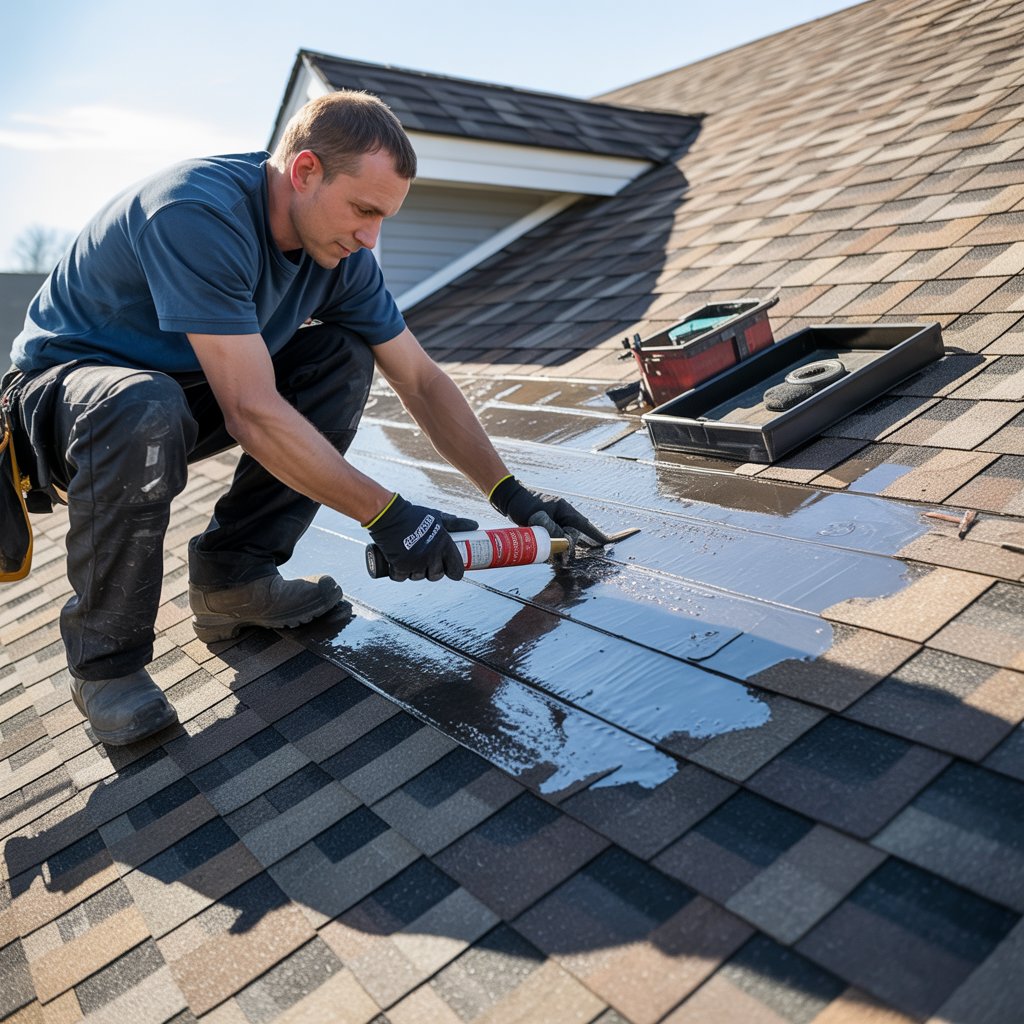
Step 4: Permanent Shingle Roof Leak Repair
Time for the real fix! This 6-step process works for 95% of asphalt shingle leaks (80% of U.S./Canadian roofs). Skip if your roof is metal, tile, or over 20 years old—call a pro.
Core Steps:
- Remove damaged shingle:
- Lift edges of surrounding shingles with pry bar
- Pull nails with roofing claw (save nails for reuse)
- Slide out old shingle
- Prep the deck:
- Scrape off old cement with putty knife
- Dry area with towel + fan (moisture = mold risk)
- Apply $5 roofing primer if wood’s rotted
- Apply underlayment:
- Brush ¼” thick roofing cement over bare deck
- Pro tip: Use a notched trowel for even coverage
- Install new shingle:
- Slide replacement shingle into slot
- Nail 1″ above cutouts (see diagram)
- Nail pattern: 4 nails total—2 per side, 6″ apart, 1″ from edges
   [Shingle Diagram]
   ---------------------
   |  o        o      |  ← Nails (1" from edge, 6" apart)
---------------------- Seal edges:
- Apply cement over nail heads
- Press overlapping shingle edges down firmly
- Test: Hose-test for 10 minutes—no leaks? You nailed it!
Troubleshooting:
- New leak after repair? You over-nailed—shingles need flexibility.
- Water seeping under edges? Apply extra cement along sides.
- Mismatched shingles? Buy “architectural” replacements—they hide repairs better.
For metal roofs: Use butyl tape + screws with rubber washers. Tile roofs often require pro help—don’t risk breaking $20 tiles!
Step 5: Fix Flashing, Vents, and Chimney Leaks
Flashing failures cause 30% of leaks (per Protect Preserve Roofing). These targeted fixes stop them:
Chimney flashing:
- Remove old caulk with putty knife
- Clean metal with vinegar solution
- Apply Sikaflex 221 sealant in “bead” along edges
- Press flashing down firmly—re-nail only if loose
Vent pipe leaks:
- Cut old rubber boot with utility knife
- Slide new boot under shingles (overlap upward)
- Seal edges with roofing cement
- Best product: IKO ProBoot ($15 on Amazon)
Skylight leaks:
- Re-caulk all four sides with polyurethane sealant
- Tighten mounting screws evenly (don’t crack glass!)
Warning: Never use silicone caulk—it shrinks and cracks. Stick with rubberized asphalt or polyurethane.
Step 6: Interior Cleanup and Prevention
Your roof’s dry—but hidden damage lurks inside. Do this now:
- Dry attic thoroughly: Run fans/dehumidifier 48+ hours
- Kill mold: Spray 1:3 vinegar-water solution on affected areas (bleach damages wood)
- Replace insulation: If soaked >50%, remove and replace—wet insulation loses R-value
Annual prevention checklist:
- [ ] Clean gutters pre-winter (clogs cause 25% of leaks)
- [ ] Trim tree branches 6+ ft from roof
- [ ] Inspect flashing after major storms
- [ ] Check attic quarterly for stains
Pro tip: Install gutter guards—they pay for themselves in prevented leaks. As Anawalt Lumber notes, “Pooled water is a recipe for leaks.”
Conclusion
You’ve just mastered roof leak repair that saves $500-$1,500 per incident—money better spent on family vacations than contractor fees. By diagnosing leaks early, applying temporary patches, and executing permanent shingle fixes, you’ve protected your home’s structure and air quality. Remember: DIY works for 80% of leaks, but call a pro for flat roofs, structural damage, or if you’re uneasy on ladders. Your roof’s lifespan? Proper maintenance adds 5-10 years (asphalt shingles last 20-30 years!).
Final pro tip: Document repairs with photos—future-you will thank present-you during the next storm. Now, share your DIY win below! Did you fix a stubborn leak? What tripped you up? Subscribe for our free “Roof Maintenance Calendar”—your seasonal checklist to prevent leaks before they start. Stay dry, stay safe, and remember: every dollar saved on repairs is a dollar earned.