Imagine coming home on a bitter Midwest January evening, cranking up the heat, and settling in—only to spend the next hour coughing, sneezing, and wondering why your home feels stuffier than the outside air you just escaped. Or picture a family in Atlanta in mid-April, windows sealed tight against the pollen count, and still waking up each morning with itchy eyes and a scratchy throat. The culprit isn’t always what you can see. More often than not, it’s lurking inside the one system your home depends on every single day: your air ducts.
Ductwork contamination is one of the most underestimated threats to household health in America. Your HVAC system quietly cycles the same air through your home dozens of times each day. Along the way, that air picks up dust mite allergens, mold spores, pet dander, bacteria, rodent debris, and even volatile organic compounds (VOCs) off-gassing from your furniture, paints, and cleaning products. All of it gets deposited inside your ducts, where it accumulates, multiplies, and recirculates directly into the air you breathe.
Professional duct cleaning services are a proven game-changer for indoor air quality improvement, with studies from the National Air Duct Cleaners Association (NADCA) showing allergen reduction of up to 90% following a thorough cleaning. The Environmental Protection Agency (EPA) estimates that poor indoor air quality contributes to roughly 50% of illnesses in the United States—a statistic that’s gained fresh urgency in the post-COVID era, when Americans now spend more time indoors than ever before.
If you’ve never scheduled a professional duct cleaning, or if it’s been more than five years since your last one, read on. The science-backed duct cleaning benefits you’re about to discover may well change how you think about the air in your home.
The Hidden Dangers of Dirty Air Ducts
Your air ducts are invisible, out of reach, and almost never thought about—which is exactly why they become a breeding ground for some of the most harmful indoor allergens and pollutants known to public health researchers.
Think of your ductwork as the cardiovascular system of your home. When those “arteries” are clogged with years of biological and chemical buildup, every room in your house suffers. A single HVAC system can accumulate up to 10 pounds of dust, debris, and biological contaminants per year—none of which you’ll see until symptoms start to appear.
Common Ductwork Contaminants and Their Health Risks
| Pollutant | Health Risk | US Prevalence |
|---|---|---|
| Mold Spores | Allergies, respiratory distress, neurological effects | Found in 70% of homes (EPA) |
| Dust Mite Allergens | Asthma attacks, chronic rhinitis | Present in 80% of US bedrooms |
| VOCs (Volatile Organic Compounds) | Headaches, liver damage, cancer risk (long-term) | Detected in 90%+ of US households |
| Pet Dander | Skin reactions, eye irritation, breathing difficulty | 67% of US homes have pets |
| Pollen & Outdoor Allergens | Seasonal allergy flares | Especially severe in TX, GA, FL, and the Pacific Northwest |
| Rodent Droppings & Debris | Hantavirus, Salmonella exposure | Common in older homes and rural areas |
| Construction Dust | Silica exposure, lung inflammation | Present in any home renovated in the past 5 years |
Mold in air ducts is a particular concern in humid Southern states like Louisiana, Florida, and Georgia, where warm, moisture-rich air creates perfect conditions for spore growth inside cooling systems. Wildfire smoke particles—loaded with toxic particulate matter—are increasingly infiltrating California and Pacific Northwest duct systems during fire season, compounding the need for professional air pollutants removal.
The CDC reports that over 25 million US adults currently live with asthma, and dirty ducts are a well-documented trigger for attacks. Children and elderly individuals face even greater risk because their immune and respiratory systems are more sensitive to sustained exposure.
One critical warning: avoid DIY duct cleaning risks. Home vacuuming and off-the-shelf sprays often push debris deeper into the duct system or disperse mold spores that would otherwise remain contained. Professional duct cleaning services use specialized containment and extraction methods—something no box-store kit can replicate.
How Duct Cleaning Services Work: The Science Behind Cleaner Air
Professional HVAC duct cleaning isn’t a simple vacuuming job. It’s a systematic, multi-stage process designed to achieve true source removal—meaning contaminants are extracted from the system entirely rather than simply disturbed or masked.
Here’s how a certified duct cleaning technician approaches the job:
Step 1: Visual Inspection for Ductwork Contamination Technicians use cameras and specialized lighting to assess the interior of your supply, return, and exhaust ducts. They look for mold colonies, debris accumulation, pest activity, and compromised duct sections. This diagnostic step determines the correct cleaning protocol.
Step 2: System Isolation and Negative Pressure Creation A high-powered vacuum—typically truck-mounted and equipped with HEPA filtration—is connected to the main trunk of the duct system. This creates negative pressure inside the entire network, ensuring that loosened contaminants flow toward the vacuum rather than into your living space.
Step 3: Mechanical Agitation Technicians feed rotary brush systems, air whips, or compressed air tools through the duct branches to dislodge stubborn debris clinging to duct walls. This is the step that makes the biggest difference in air pollutants removal—without it, biofilm and compacted dust stay stuck regardless of vacuuming.
Step 4: HEPA-Filtered Vacuuming As debris is loosened, the negative pressure system draws it into the HEPA-equipped vacuum, capturing particles as small as 0.3 microns—smaller than most mold spores and bacteria. This is why professional equipment is essential; standard shop vacs cannot achieve this level of filtration.
Step 5: Antimicrobial Sanitization (When Applicable) For ducts with confirmed or suspected mold growth, EPA-registered antimicrobial treatments are applied after cleaning. These products inhibit future mold and bacterial growth without leaving harmful residue.
Step 6: System Reassembly and Final Inspection Access panels are resealed, the HVAC system is restarted, and airflow is tested to confirm even distribution throughout the home.
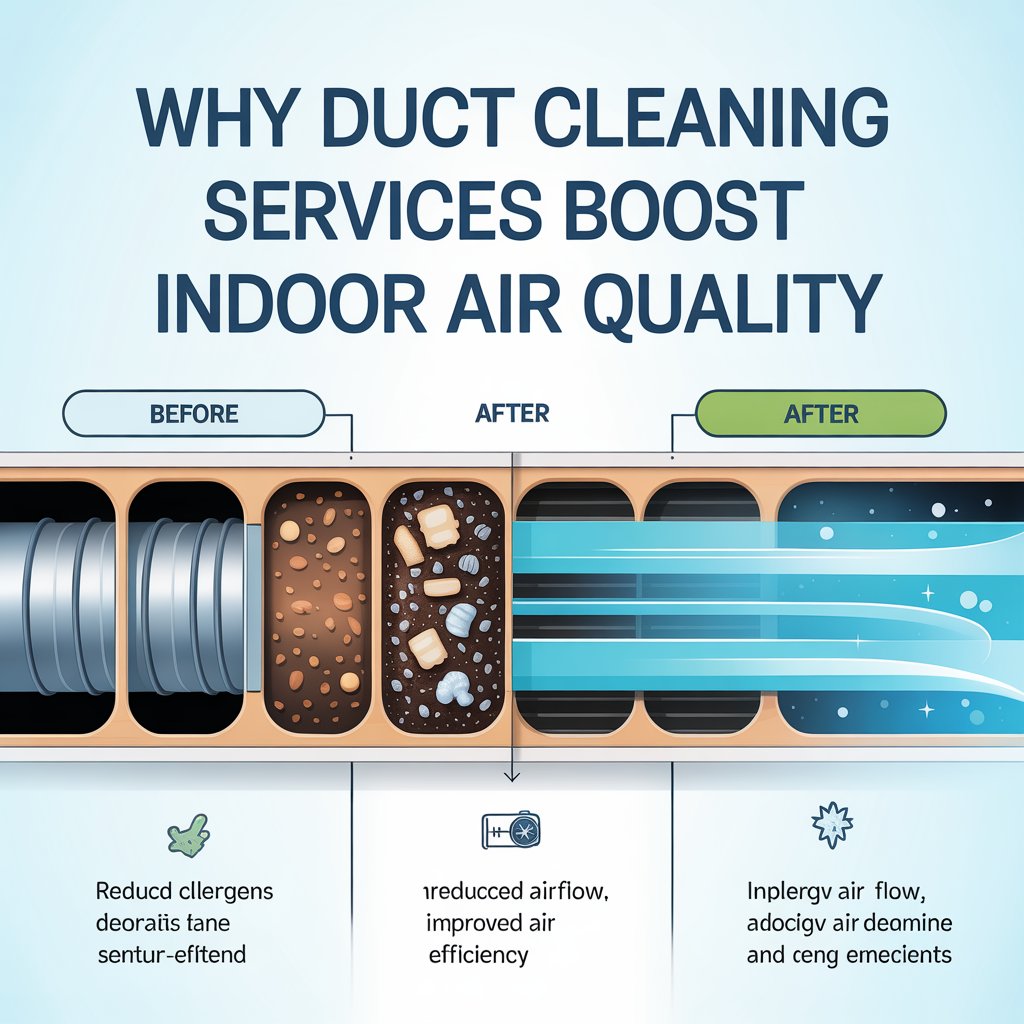
Clean ducts directly boost air filtration efficiency. According to NADCA, HVAC systems with clean ductwork operate 20–40% more efficiently than those with significant buildup—because airflow is no longer obstructed. The EPA recommends professional duct cleaning every 3–5 years under normal conditions, with more frequent service after flooding, fire, pest infestation, or major renovation.
Proven Duct Cleaning Benefits for Health and Home
The case for professional duct cleaning services isn’t just anecdotal—it’s backed by growing bodies of clinical and environmental research. Here’s what the data shows.
Dramatic Allergen Reduction
Multiple peer-reviewed studies have found that professional duct cleaning reduces airborne allergen concentrations by 60% or more in treated homes. For the 80 million Americans who suffer from seasonal or perennial allergies, this translates directly into fewer symptomatic days, reduced antihistamine use, and measurably better sleep quality—since most allergy attacks peak at night when recirculated air is most concentrated.
A family in Reston, Virginia documented a 70% drop in their youngest child’s nighttime asthma inhaler use in the three months following a full professional duct cleaning. Their NADCA-certified technician discovered a significant mold colony in the return duct directly behind the child’s bedroom wall—entirely invisible from the outside, yet pumping spores into the room 24 hours a day.
Respiratory Health Benefits
For households with elderly members, infants, or anyone managing chronic respiratory conditions like COPD, bronchitis, or asthma, indoor air quality improvement is not a luxury—it’s a medical priority. Clean ducts reduce the concentration of airborne particulates that aggravate lung tissue and inflame airways, delivering respiratory health benefits that compare favorably with standalone HEPA air purifiers, especially because duct cleaning addresses the source rather than just filtering output air after the fact.
Volatile Organic Compound (VOC) Reduction
VOCs from paints, adhesives, synthetic carpets, cleaning products, and building materials accumulate in duct systems over time. Professional cleaning—particularly when combined with HEPA filtration upgrades—measurably reduces the concentration of volatile organic compounds (VOCs) recirculating through your home, lowering risk of the headaches, dizziness, and long-term health effects associated with chronic VOC exposure.
Energy Savings and HVAC Longevity
Beyond health, clean ducts mean real money back in your pocket. The US Department of Energy estimates that 25–40% of HVAC energy is wasted due to system inefficiency—with dirty ductwork being one of the primary causes. Homes that maintain clean duct systems see an average of 15% reduction in monthly heating and cooling costs. Clean systems also suffer fewer breakdowns and last significantly longer, protecting your investment in one of your home’s most expensive mechanical components.
Summary of Key Benefits
- Indoor air quality improvement that rivals standalone HEPA purifiers—but works system-wide
- Allergen reduction of up to 90% for dust mites, pet dander, pollen, and mold spores
- Respiratory health benefits for asthma sufferers, children, and seniors
- Volatile organic compound (VOC) reduction from off-gassing household materials
- 15% average energy savings through improved airflow efficiency
- Fresher, odor-free air by removing the microbial sources of musty smells
- Extended HVAC system lifespan, reducing costly repair and replacement cycles
- Healthy home air especially critical in regions prone to wildfire smoke (CA, OR, WA) and high humidity (FL, LA, TX)
Myths vs. Facts: Duct Cleaning Debunked
Myth: “My ducts self-clean as air moves through them.” Fact: Airflow has the opposite effect—it carries particles into ducts and deposits them on interior surfaces, where they accumulate undisturbed. NADCA estimates the average home generates 10 pounds of ductwork contamination per year.
Myth: “I only need cleaning if I can see dust coming from the vents.” Fact: By the time dust is visibly blowing from registers, the contamination is severe. Mold, bacteria, and dust mite colonies thrive in the dark interior of duct systems long before any visible signs emerge.
Myth: “New homes don’t need duct cleaning.” Fact: New construction is one of the top reasons for an immediate cleaning. Construction dust, drywall debris, sawdust, and adhesive particles routinely enter duct systems during the building process and remain there until professionally removed.
Myth: “A filter change is enough.” Fact: Filters catch particulates at the point of intake, but they cannot remove what’s already deposited inside the duct network. Filters and professional duct cleaning services are complementary, not interchangeable.
When to Schedule Duct Cleaning Services
You don’t have to wait for a health crisis to act. Watch for these clear signals that your duct system needs attention:
- Visible dust or debris blowing from supply registers when the HVAC runs
- Musty or stale odors that persist even after cleaning the home
- Uneven temperatures between rooms (a sign of airflow restriction)
- Worsening allergy or asthma symptoms that correlate with HVAC use
- Unexplained increase in energy bills without a change in usage habits
- Visible mold near vents, registers, or on the air handler unit
Recommended frequency: Every 3–5 years for average households; annually for homes with pets, smokers, immunocompromised occupants, or in high-pollen/high-humidity regions. Always schedule immediately following a flood, fire, major renovation, or confirmed pest infestation.
Cost, ROI, and Finding a Reliable Pro
Professional duct cleaning services in the US typically range from $300 to $1,000, depending on home size, duct system complexity, and regional labor rates. Most single-family homes fall in the $400–$700 range. Additional services like mold remediation or dryer vent cleaning carry separate costs.
The return on this investment is substantial: reduced medical costs from allergy and asthma management, lower monthly energy bills, and a longer lifespan for your HVAC equipment—which costs $5,000–$12,000 to replace.
How to find a trustworthy provider:
- Look for NADCA-certified technicians (search the NADCA member directory at nadca.com)
- Request a written scope of work before any service begins
- Avoid companies offering whole-home cleaning for under $99—this is a hallmark of bait-and-switch scams
- Get at least two quotes via platforms like Angi, HomeAdvisor, or Thumbtack
- Ask specifically about their vacuum system (truck-mounted with HEPA filtration is the gold standard)
Conclusion: Breathe Easier, Live Better
The air inside your home should be a refuge—not a source of illness, fatigue, or chronic discomfort. Duct cleaning services deliver one of the most comprehensive indoor air quality improvements available to homeowners, addressing the problem at its source rather than masking symptoms. From allergen reduction and VOC mitigation to energy savings and respiratory health benefits, the science is clear and the benefits are measurable.
Whether you’re managing a family member’s asthma in Chicago, combating mold in a humid Houston home, or recovering from wildfire smoke infiltration in Sacramento, a certified professional duct cleaning is one of the smartest investments you can make in your home and your health.
Don’t wait for symptoms to make the call. Search “duct cleaning services near me” or visit the NADCA directory to find a certified pro in your area today. Your lungs—and your energy bill—will thank you.
Frequently Asked Questions
How often should I schedule duct cleaning services? The EPA and NADCA recommend every 3–5 years for most homes. Increase frequency to every 1–2 years if you have pets, smokers, allergy sufferers, or live in high-humidity or high-pollen areas.
Does duct cleaning help with pet allergies? Yes. Pet dander is one of the most common allergens trapped in duct systems. Professional HVAC duct cleaning removes accumulated dander from the duct interior, resulting in significant allergen reduction for pet owners.
Is duct cleaning safe for people with asthma? Absolutely. In fact, it’s especially recommended. The CDC links 25 million US asthma cases to airborne triggers—many of which originate in contaminated ductwork. Occupants with asthma should plan to spend a few hours away from home during the service to avoid any temporarily disturbed particles.
How long does a professional duct cleaning take? Most residential cleanings take 3–5 hours. Larger homes or systems with significant contamination may require a full day.
Can I tell if my ducts have mold without calling a pro? Sometimes. A persistent musty odor when the HVAC runs is the most common sign of mold in air ducts. However, mold colonies often grow in sections of ductwork that are not visible without camera inspection. When in doubt, schedule a professional assessment.
Will duct cleaning reduce my energy bills? Yes. NADCA data shows that clean duct systems improve HVAC efficiency by 20–40%, which translates to roughly 15% in monthly energy savings for the average US household.
What’s the difference between duct cleaning and an air purifier? Air purifiers filter air as it passes through a standalone unit—they don’t clean the duct system itself. Duct cleaning removes the contaminant source from the HVAC network. For best results, use both: clean ducts ensure the air being pushed through your home starts clean, and a HEPA air purifier provides an additional layer of filtration.