You hosted the Super Bowl party. Everyone cheered, someone knocked over a full glass of red wine, and Fido chose that exact moment to have an accident on the living room rug. Now you’re staring at a carpet that looks like a crime scene and wondering: do you grab that rental machine from Home Depot, or do you finally call in the professionals?
It’s one of the most common dilemmas American homeowners face. According to the EPA, indoor air can be two to five times more polluted than outdoor air — and carpets act as a primary trap for allergens, bacteria, pet dander, dust mites, and mold spores. In fact, roughly 80% of homes harbor hidden allergens deep within carpet fibers, many of which regular vacuuming simply can’t touch.
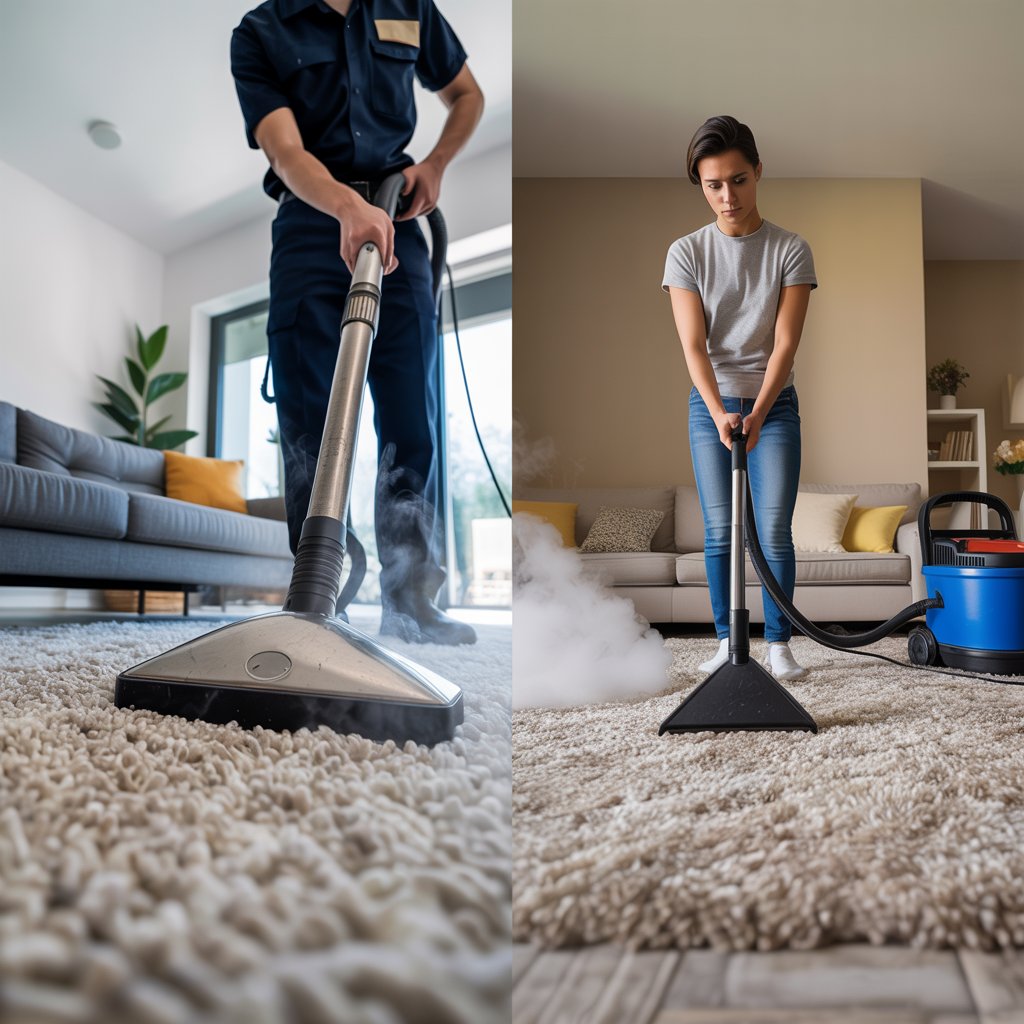
So when it comes to professional carpet cleaning vs. DIY methods, which approach actually wins? The short answer: while DIY saves money in the short term, professional carpet cleaning services deliver significantly deeper results for long-term carpet health, air quality, and even your home’s resale value. This guide walks you through both worlds — the tools, the costs, the trade-offs — so you can make the smartest call for your home.
Understanding Your Carpet Challenges
Before you pick up a brush or dial a carpet cleaning company, it helps to understand what you’re actually dealing with. American homes face a unique combination of carpet threats: muddy boots tracked in from a Midwest winter, Southern humidity breeding mold and mildew, pet hair woven deep into fibers, pollen surges during allergy season, and the relentless foot traffic of busy family life.
Carpets are not flat surfaces — they’re complex, layered systems. Most residential carpets are made from nylon, polyester, or wool, each with different fiber structures. Nylon (the most common) is durable but tends to trap fine particles between its twisted fibers. Polyester resists stains well on the surface but can hold oily residues deep down. Wool, while luxurious, is the most sensitive and requires specialized rug cleaning methods to avoid shrinkage or damage.
Where Dirt Hides: Surface vs. Embedded
| Dirt Type | Location | Impact |
|---|---|---|
| Surface debris (crumbs, hair, dust) | Top fiber layer | Removed by regular vacuuming |
| Embedded particles (pollen, dander, fine soil) | Mid-fiber layer | Requires agitation or shampooing |
| Deep contamination (bacteria, mold spores, urine) | Backing and subfloor | Requires hot water extraction or professional treatment |
Effective carpet maintenance means addressing all three levels. Most DIY methods handle the top one or two. Professional carpet cleaners work all the way down.
DIY Carpet Cleaning Methods: Pros, Cons, and How-Tos
DIY carpet cleaning has never been more accessible. Entire aisles at Target and Home Depot are dedicated to it, and YouTube tutorials will walk you through every step. Here’s an honest breakdown of what each approach can — and can’t — do.
Vacuuming and Spot Cleaning
Your first line of defense is a good vacuum. Brands like Bissell, Dyson, and Shark offer HEPA-filter models that trap fine particles instead of recirculating them. Regular vacuuming (2–3 times per week in high-traffic areas) removes surface debris and prevents soil from working its way deeper into fibers.
For fresh spills, spot cleaning with a clean cloth and a quality enzyme-based cleaner can be remarkably effective — especially on organic stains like food or pet accidents. The key is to blot, never rub, and work from the outside of the stain inward.
Pros: Fast, affordable, no equipment rental required. Cons: Only addresses surface-level dirt; does nothing for deep-seated allergens or bacteria; improper spot cleaning can permanently set stains.
Carpet Shampooing and DIY Carpet Cleaner Machines
Renting a machine like a Rug Doctor from Home Depot (typically $35–$50/day) or buying a consumer carpet cleaner like the Bissell ProHeat 2X gives you access to what many call steam cleaning carpets — though it’s more accurately hot-water shampooing.
The process involves applying a cleaning solution, scrubbing it into the fibers with rotating brushes, and then extracting the dirty water. It’s more effective than vacuuming alone and can lift many mid-level stains. Here’s a basic how-to:
- Vacuum thoroughly before starting.
- Pre-treat visible stains with a targeted carpet stain removal product.
- Fill the machine with hot water and the recommended cleaning solution.
- Work in slow, overlapping passes.
- Do a final pass with clean water only to remove detergent residue.
- Allow 6–12 hours of drying time with windows open or fans running.
The biggest risk: over-wetting. Consumer machines have far less suction power than professional equipment, which means carpets can stay damp for 24 hours or more. That moisture in the backing and padding is a prime environment for mold growth — one of the very problems you were trying to solve.
Natural Rug Cleaning Methods and Eco-Friendly Carpet Cleaning
For eco-conscious homeowners — particularly in California or the Pacific Northwest — natural cleaning solutions have real appeal. Baking soda is excellent for deodorizing: sprinkle it generously, let it sit for 15–30 minutes, and vacuum thoroughly. White vinegar diluted with water (1:1 ratio) works well as a mild disinfectant and can help neutralize pet odors.
These approaches shine as part of a regular carpet maintenance routine and for very light staining. They fall short on deep stains, heavy soiling, or any situation requiring genuine carpet sanitizing.
DIY Method Cost and Effectiveness Comparison
| Method | Estimated Cost | Time Required | Effectiveness (1–10) |
|---|---|---|---|
| Vacuuming | $0 (vacuum owned) | 20–45 min/room | 4 — surface only |
| Spot cleaning | $10–$25 (products) | 10–30 min/stain | 5–7 — stain-dependent |
| Rented shampooer | $35–$75/day + solution | 2–4 hours/room | 6 — mid-level clean |
| Owned consumer cleaner | $150–$400 (machine) | 2–4 hours/room | 6 — similar to rental |
| Natural/baking soda | $5–$15 | 30 min + dry time | 3–5 — maintenance only |
Professional Carpet Cleaning Services: The Gold Standard
Professional carpet cleaners arrive with truck-mounted equipment, industry-grade chemicals, and the training to use both safely and effectively. The results are not incremental improvements over DIY — they’re in an entirely different category.
Hot Water Extraction (Truck-Mount)
Hot water extraction — often marketed as steam cleaning carpets — is the gold standard method endorsed by the Carpet and Rug Institute (CRI) and recommended by most carpet manufacturers for maintaining warranties. Here’s how it works at the professional level:
A truck-mounted unit heats water to 200–230°F and injects it into carpet fibers at high pressure, dislodging embedded dirt, bacteria, allergens, and debris. A powerful vacuum system (generating 10–15 times more suction than consumer machines) immediately extracts the water along with everything it loosened. The result is a deep carpet cleaning that reaches the backing, removes up to 98% of allergens, and leaves carpets damp — not soaking — with typical dry times of 1–4 hours.
This method is particularly effective for allergen removal from carpets, making it the top recommendation for households with asthma sufferers, young children, or heavy pet traffic.
Dry Cleaning and Carpet Sanitizing
For situations where minimal moisture is critical — offices, commercial spaces, or rooms that can’t be vacated for long — low-moisture dry cleaning methods offer a practical alternative. Professionals apply an absorbent compound or encapsulation chemical that binds to soil particles, which are then vacuumed away. Carpets are ready for use within 30–60 minutes.
While not as thorough as hot water extraction for deep carpet cleaning, dry methods are excellent for maintenance cleans between full extractions and are highly effective for carpet sanitizing — killing surface bacteria without the drying wait.
Specialized Treatments
This is where professional carpet cleaners genuinely separate themselves from anything DIY can offer. Specialized treatments include:
- Pet odor and stain neutralization: Enzyme-based treatments that chemically break down urine crystals embedded in backing and padding — the source of that persistent smell no consumer product fully eliminates.
- Allergen treatments: Tannic acid-based solutions that denature dust mite proteins, dramatically reducing allergic reactions.
- Protective coating (Scotchgard/fabric protection): Applied after cleaning, these treatments repel future spills and make routine maintenance far easier.
According to the Institute of Inspection, Cleaning and Restoration Certification (IICRC), IICRC-certified professional carpet cleaners extend carpet life by up to 50% compared to DIY maintenance alone. And with quality carpet costing $3–$7 per square foot installed, that longevity translates directly to dollars saved.
Professional Method Comparison
| Factor | Professional (Truck-Mount) | Consumer Machine | Natural DIY |
|---|---|---|---|
| Cleaning depth | Fiber + backing | Mid-fiber | Surface only |
| Allergen removal | Up to 98% | ~45–60% | Minimal |
| Dry time | 1–4 hours | 12–24 hours | N/A |
| Stain success rate | ~95% | ~60–70% | ~30–50% |
| Equipment quality | Commercial grade | Consumer grade | Household items |
| Warranty protection | Often required | Sometimes voids | Voids most |
| Mold risk | Low | Moderate | Low |
Head-to-Head: Professional vs. DIY
Let’s put both approaches side by side on the metrics that matter most to US homeowners.
According to the Carpet and Rug Institute, professional hot water extraction achieves approximately 95% better stain removal outcomes compared to consumer equipment — and that gap widens significantly on older or set-in stains. For allergen removal from carpets, professional extraction removes roughly double what a rented machine can achieve, a critical factor for the 25 million Americans with asthma and 67 million with seasonal allergies.
Cost Comparison
| DIY (per room) | Professional (per room) | |
|---|---|---|
| One-time cost | $50–$100 | $100–$300 |
| Equipment wear | Adds up over time | Included |
| Carpet lifespan impact | Shortens (if over-wet) | Extends up to 50% |
| Allergen reduction | Moderate | High |
| True long-term value | Lower | Higher |
At first glance, DIY wins on price. But factor in the carpet replacement cost DIY mistakes accelerate, and professional cleaning frequently pays for itself. Add Zillow’s research suggesting professionally cleaned and well-maintained carpets can boost home sale value by 2–5%, and the math shifts even more clearly toward the pros.
When DIY is enough: Light surface dirt, routine between-professional-clean maintenance, quick spill response, and homes with low allergy concerns.
When to call professional carpet cleaners near me: Heavy soiling, pet accidents with embedded odors, allergy or asthma sufferers in the home, pre-sale home preparation, post-renovation cleanup, or any stain that has sat for more than 24 hours.
Real US Homeowner Stories and Expert Tips
Dallas, TX — Wool Rug Rescue: A mother attempted to clean her heirloom wool area rug with a rented shampooer after a child’s birthday party. The rug shrank nearly two inches along one edge and the dyes bled. A professional specializing in rug cleaning methods was able to partially restore it, but the damage from over-wetting was permanent on one corner. Lesson: wool always goes to the pros.
Chicago, IL — Dog Owner Wins: After three years of using consumer enzyme sprays for her two golden retrievers’ accidents, a homeowner finally booked a professional extraction service. The technician used a UV light to locate all previous accident sites — including several she hadn’t known about. One professional treatment eliminated odors that years of DIY spraying had only masked.
Sacramento, CA — Smart Hybrid Approach: An eco-conscious homeowner uses baking soda and vinegar for weekly freshening and spot treatment, vacuums with a HEPA filter three times a week, and books a professional hot water extraction service once a year. Her 12-year-old carpet still looks new.
Pro Tips: Most carpet manufacturers recommend professional cleaning once every 12–18 months for average households, and every 6–12 months for homes with pets or allergy sufferers. Between professional visits, vacuum high-traffic areas 2–3 times weekly, address spills within minutes, and use doormats at every entrance to reduce tracked-in soil by up to 85%.
Conclusion: Which Method Wins?
For the vast majority of American homes — especially those with kids, pets, allergy sufferers, or carpets that see heavy daily traffic — professional carpet cleaning services are the clear winner on every metric that matters: cleaning depth, allergen removal, stain success rates, carpet longevity, and long-term cost value.
DIY methods earn their place as a vital part of a year-round carpet maintenance routine. Vacuuming, eco-friendly spot treatments, and quick spill response are all practices every homeowner should have in their toolkit. But they’re best understood as maintenance between professional cleans, not a replacement for them.
Ready to take action? Search “professional carpet cleaners near me” to find IICRC-certified technicians in your area, or request a free quote — many companies offer them with no obligation. If you’re in between professional visits, start with a solid HEPA vacuuming routine and keep an enzyme cleaner on hand for spills.
Frequently Asked Questions
Is steam cleaning carpets safe for pets? Yes — professional hot water extraction uses heat and suction rather than harsh chemicals, and certified technicians can use pet-safe solutions. Always keep pets off carpets until fully dry (1–4 hours with professional equipment).
How often should I have carpets professionally cleaned? The IICRC recommends every 12–18 months for average households, every 6–12 months for homes with pets or allergy sufferers, and every 6 months for commercial or high-traffic residential spaces.
Can DIY carpet cleaning void my carpet warranty? It can. Many carpet warranties (Shaw, Mohawk, etc.) require professional hot water extraction at regular intervals. Always check your warranty documentation before choosing a cleaning method.
What’s the best eco-friendly carpet cleaning approach? For routine maintenance, baking soda deodorizing and diluted white vinegar spot treatment work well. For deep cleaning, look for professional services that use Green Seal–certified or plant-based cleaning solutions.
How do I find a reputable professional carpet cleaner? Look for IICRC certification, read Google and Yelp reviews, ask for a written quote before work begins, and check whether they use truck-mounted equipment for best results.