After a long winter or a busy summer of barbecues, your outdoor space inevitably collects dust, pollen, food spills, grease, mud, and stubborn leaf stains. Before spending hundreds of dollars hiring a professional or buying expensive commercial chemicals, you can tackle the mess using practical patio cleaning hacks using household items. Many highly effective solutions are likely already sitting in your kitchen cabinets or laundry room.
However, the correct method heavily depends on your specific patio material and the type of stain you are facing. In this guide, we will explore affordable DIY patio cleaners, essential preparation steps, crucial safety precautions, and long-term maintenance tips. Whether you are preparing for a spring gathering or doing a late-season patio deep cleaning, these outdoor cleaning hacks will help you restore your space safely and effectively.
What You Need Before Cleaning a Patio
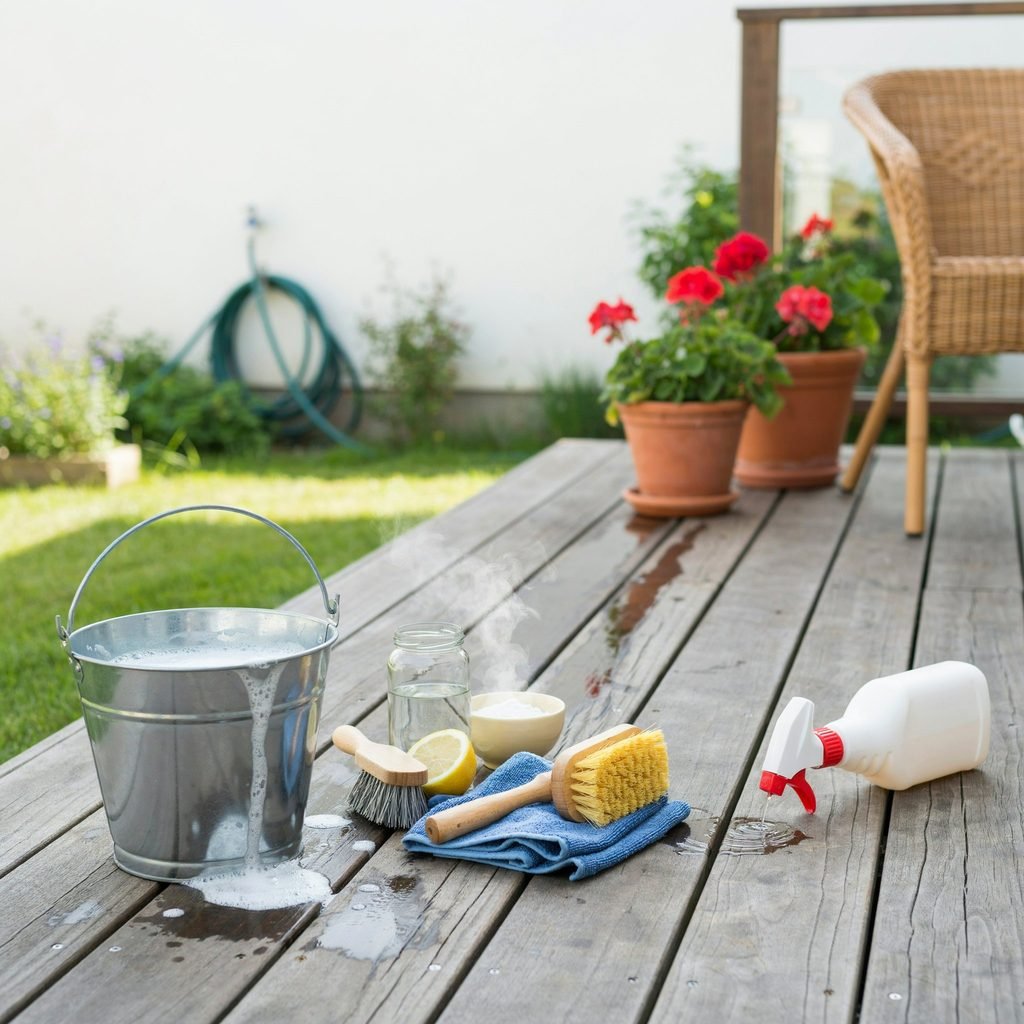
Before you begin, gather your supplies and clear the workspace. A successful spring patio cleaning or routine wash requires a few basic tools:
- Garden hose or buckets of water
- Outdoor broom or stiff-bristle brush
- Grease-cutting dish soap
- Baking soda and white vinegar
- Hydrogen peroxide
- Clean microfiber cloths or old towels
- Spray bottle and plastic scraper
- Old toothbrush or grout brush
- Rubber gloves and safety glasses
- Garden kneeling pad
- Plastic sheeting or towels to protect nearby plants
Remove all patio furniture, toys, cushions, planters, grills, and decorations. Next, perform a thorough dry sweep. Removing dry leaves, dirt, and dust first is crucial because wetting them creates a muddy residue that makes the job much harder. Start sweeping, then work in small sections for the most effective results.
Check Your Patio Surface First
Household cleaning methods are not universally suitable for every surface. Identifying your patio material is the first step toward safe patio deep cleaning.
Concrete
Concrete is porous and easily absorbs grease, food spills, and organic stains. Mild dish soap and water are usually a safe starting point for general dirt, but avoid letting strong cleaning mixtures dry on the surface.
Brick and Concrete Pavers
Pavers often feature joint sand, protective sealants, or textured finishes. Aggressive scrubbing or high-pressure water can easily disturb these elements, causing shifting or damage.
Natural Stone
Materials like limestone, sandstone, slate, travertine, and marble are highly sensitive. Acidic products like vinegar can permanently etch or discolor these beautiful stones.
Wood Decking
Wood requires a gentle touch. It should never be oversaturated or scrubbed aggressively with a hard wire brush, which can splinter the grain.
Composite Decking
Always check the manufacturer’s care instructions before applying any homemade cleaners to composite materials.
Always patch-test any DIY patio cleaner on a small, hidden area and let it dry completely before treating the entire space.
Start With Warm Water and Dish Soap
For everyday dirt, dust, pollen, and light grime, a simple dish soap patio cleaner is the safest general-purpose method. If you are wondering how to clean a patio without harsh chemicals, this is your best starting point.
- Sweep the patio thoroughly to remove loose debris.
- Mix warm water with a small amount of grease-cutting dish soap in a large bucket.
- Wet a small patio section with a garden hose patio cleaning rinse.
- Apply the soapy patio cleaning solution with a stiff brush or sponge.
- Scrub in overlapping, circular motions.
- Rinse the section completely with clean water.
- Repeat the process section by section until the patio is clean.
- Allow the surface to dry completely before replacing furniture.
When learning to clean outdoor concrete, use only a small amount of dish soap. Excessive suds can leave a slippery, sticky film and may run off into your garden beds, harming plants. Working in small, manageable sections prevents the soapy water from drying on the surface before you can rinse it away. Using a stiff nylon brush and controlled rinsing is a highly effective way to remove dirt from patio surfaces, serving as a practical alternative to immediately reaching for a power washer.
Use Baking Soda for Grease and Food Stains
Baking soda is an excellent, mildly abrasive homemade concrete cleaner that helps absorb fresh grease and lift mild stains from compatible surfaces. It is particularly useful if you need to clean barbecue grease stains near the grill.
Baking Soda Absorption Method
- Blot fresh grease spills immediately with paper towels.
- Cover the damp stain generously with dry baking soda.
- Let it sit for 15 to 30 minutes to absorb the oil.
- Sweep or brush away the powder.
- Wash the area with dish soap and warm water.
Baking Soda Paste
- Mix baking soda with a small amount of water to create a thick paste.
- Apply it directly to the stain.
- Leave it for approximately 15 minutes.
- Scrub gently with a nylon brush.
- Rinse thoroughly.
As a baking soda patio cleaner, this powder is best for light to moderate spills. It may not remove grease from concrete patio surfaces if the oil is deeply embedded and old; multiple applications might be necessary. Never use excessive scrubbing force on painted, sealed, polished, or delicate surfaces. Always test first, especially on decorative finishes, before attempting to remove food stains from patio areas.
Try White Vinegar Carefully for Mineral Deposits
Diluted white vinegar can help dissolve certain mineral deposits, hard-water marks, and light organic residue on acid-resistant surfaces. A vinegar and water patio cleaner is a popular natural patio cleaning solution for tackling efflorescence or sprinkler spots.
- Mix equal parts white vinegar and water in a spray bottle.
- Apply a small amount to an inconspicuous test area.
- Allow it to sit briefly (no more than a few minutes).
- Scrub gently with a soft or medium-bristle brush.
- Rinse thoroughly with clean water.
Warning: Never use a white vinegar patio cleaner on limestone, marble, travertine, or other acid-sensitive natural stones. The acid will etch, dull, and permanently damage the surface. For delicate stone, stick to plain water and a pH-neutral cleaner.
Furthermore, never mix vinegar with bleach, ammonia, or other commercial chemicals. Homemade solutions should be used one at a time and rinsed away completely before applying another product to prevent dangerous chemical reactions. This method is a great way to remove hard-water stains from patio stones and clean patio without pressure washer equipment.
Use Hydrogen Peroxide for Organic Stains
Standard household hydrogen peroxide (3%) can help lighten certain organic stains, including mildew marks, plant residue, and some food spills. However, results vary greatly depending on the patio material and the age of the stain.
To use it safely:
- Apply standard hydrogen peroxide to a small, hidden test area first.
- Let it sit for a short period (5 to 10 minutes).
- Scrub gently with a nylon brush.
- Rinse the surface completely with a hose.
- Keep children and pets away from the area until it is fully rinsed and dry.
Never mix hydrogen peroxide with vinegar, bleach, or other cleaning products, as this can create harmful compounds. Avoid using this solution on sealed, painted, or colored surfaces without thorough testing, as it possesses mild bleaching properties.
While it may lift light discoloration, do not rely on hydrogen peroxide as a guaranteed mildew or algae remover. For heavy organic growth, persistent black spots, or dangerously slippery surfaces, you should use a labeled outdoor cleaner specifically formulated to remove mildew from patio materials safely.
Remove Weeds, Moss, and Algae Between Pavers
Moisture, shade, fallen leaves, and poor drainage frequently encourage weed and algae growth in the cracks of your outdoor space. Proper patio weed removal and joint maintenance are essential for longevity.
Manual Cleaning Process:
- Pull visible weeds entirely by hand, ensuring you extract the roots.
- Use an old toothbrush, a specialized grout brush, or a narrow plastic scraper to loosen debris from the cracks.
- Sweep away all loosened dirt and organic matter.
- Scrub the paver surfaces with warm water and a small amount of dish soap.
- Rinse using a controlled, gentle stream of water.
- Let the joints dry fully before adding new polymeric sand if necessary.
When trying to clean algae from pavers or remove moss from patio joints, avoid aggressively blasting the area with a pressure washer. High-pressure water will wash out the vital joint sand, shift the pavers, and actually create deeper pockets for future weeds to grow. If you must pressure wash, use low pressure and angle the nozzle carefully to clean paver joints safely.
To prevent moss on patio surfaces and minimize outdoor mold and mildew cleaning, adopt a few proactive habits:
- Sweep fallen leaves regularly.
- Improve yard drainage.
- Trim overhanging tree branches to increase sunlight.
- Refill missing joint sand promptly.
- Arrange patio furniture to allow proper airflow.
Treat Rust, Leaf, and Mud Stains
Different messes require targeted approaches to effectively remove stains from patio surfaces.
Leaf Stains
Wet, decaying leaves release tannins that leave stubborn brown marks. To clean leaf stains from patio concrete, remove leaves immediately. Sweep the area and wash with mild dish soap and warm water. If the tannins have penetrated porous concrete, you may need a specialized commercial cleaner.
Mud Stains
Do not rub wet mud into the pores of the stone. Allow heavy mud to dry completely, then sweep away the loose, crusted material. Finally, wash the area with water and mild soap to safely remove mud from pavers.
Rust Stains
Rust stain patio cleaning is notoriously difficult with ordinary household items. Do not experiment with harsh, undocumented acids on natural stone or sealed patios. Check the surface manufacturer’s instructions and use a commercial rust remover specifically labeled for your patio material.
Pet Stains
For pet stains on concrete, promptly remove solid waste and rinse the area heavily with water. Scrub with mild soap and rinse thoroughly. While this helps with odor control, it may not completely disinfect the porous surface.
Clean Patio Furniture With Household Items
True outdoor maintenance extends beyond the floor. Knowing how to clean outdoor furniture ensures your entire entertaining space is inviting. Dust, pollen, mildew, and food residue accumulate rapidly on chairs and tables.
- Plastic Furniture: Wash with warm water, mild dish soap, and a soft-bristle brush. Rinse thoroughly and let dry in the sun.
- Metal Furniture: Use soapy water and gentle scrubbing to avoid scratching protective coatings. Rinse well and dry completely with a microfiber cloth to prevent flash rusting.
- Glass Tabletops: Spray with diluted dish soap or a standard glass cleaner and wipe with a lint-free microfiber cloth for a streak-free shine.
- Wood Furniture: Use minimal water and a gentle brush. Avoid saturating the wood, dry it thoroughly, and follow up with manufacturer-approved sealants or oils.
- Outdoor Cushions: Always follow the care label. Remove covers when possible and wash them on a gentle cycle. Ensure the foam inserts are completely dry before reassembling to prevent trapped moisture, which encourages mildew and unpleasant odors. Avoid using harsh bleach solutions unless the fabric tag explicitly permits it.
Patio Cleaning Mistakes to Avoid
Even with the best natural patio cleaning ideas, simple errors can damage your outdoor space or surrounding landscaping. Avoid these common pitfalls:
- Skipping the initial sweep: Wetting dry leaves and dust creates a stubborn, muddy paste.
- Using too much dish soap: Excess suds leave a slippery, dirt-attracting film.
- Applying vinegar to natural stone: Acids will permanently etch limestone, marble, and travertine.
- Mixing chemicals: Never mix vinegar with bleach or ammonia; this creates toxic fumes.
- Using wire brushes on sealed surfaces: Abrasive tools will scratch and strip protective sealants.
- Letting solutions dry: Always rinse homemade cleaners before they dry in the sun.
- Using excessive pressure: High-pressure washing blows out paver joint sand and damages wood grain.
- Ignoring nearby plants: Runoff from concentrated cleaners can kill grass and shrubs.
- Cleaning in intense sunlight: Direct sun causes cleaning solutions to evaporate too quickly, leaving streaks and residue.
- Skipping safety gear: Always wear gloves and eye protection.
Protect your landscaping by wetting nearby plants with plain water before you start, covering vulnerable shrubs with plastic sheeting, and controlling your runoff.
Patio Cleaning Safety Tips
Prioritizing safe patio cleaning methods protects you, your family, and your property. Follow these essential safety guidelines:
- Always wear rubber gloves and safety glasses to protect against splashes and debris.
- Keep children and pets indoors or away from the work area until the patio is fully rinsed and dry.
- Work outdoors with adequate airflow, and keep doors and windows closed if strong odors or spray might drift into the home.
- Read all product labels, even for everyday household items.
- Never mix different cleaning products.
- Test all homemade solutions in a hidden location first.
- Wear slip-resistant footwear, as wet concrete and pavers become incredibly slippery.
- Rinse the patio thoroughly to remove all chemical residue.
If your patio features extensive black mold, deep chemical etching, structural cracking, unstable pavers, or severe drainage problems, stop DIY efforts and consult a professional restoration or masonry expert.
How to Keep a Patio Clean Longer
Implementing consistent patio maintenance tips reduces the need for heavy scrubbing later. Regular light cleaning is vastly easier and safer than waiting until dirt and grease become deeply embedded.
- Sweep the patio once or twice a week during high-use seasons to remove abrasive dirt and pollen.
- Wipe up food and drink spills as soon as they happen.
- Remove wet, decaying leaves immediately to prevent tannin stains.
- Place high-quality mats near exterior doors to trap indoor dirt.
- Keep grills situated on a suitable, heavy-duty protective mat to catch grease.
- Trim back plants and branches that overhang the patio.
- Improve yard drainage to prevent pooling water.
- Wash and dry furniture before storing it for the winter.
- Inspect paver joints after heavy rain and refill sand as needed.
- Consider applying a high-quality sealer to compatible concrete or pavers after a thorough cleaning and drying period.
Household Patio Cleaning Comparison
| Household Item | Best For | Use Caution On |
|---|---|---|
| Dish soap and warm water | General dirt, pollen, and light grime | Avoid using excessive soap to prevent slippery residue |
| Baking soda | Fresh grease and mild food stains | Painted, polished, or delicate finishes |
| White vinegar and water | Mineral deposits on acid-safe surfaces | Limestone, marble, travertine, and sealed surfaces |
| Hydrogen peroxide | Organic stains and mildew marks | Colored, sealed, or untested surfaces |
| Garden hose | Rinsing loosened dirt and cleaner | Avoid forcefully washing out paver joints |
| Nylon brush | Concrete, pavers, and outdoor furniture | Delicate or easily scratched finishes |
Frequently Asked Questions
What is the best homemade cleaner for a patio?
Warm water mixed with a small amount of grease-cutting dish soap is the most practical starting point for general dirt. However, the best solution always depends on your specific patio surface material and the type of stain you are treating.
Can I clean my patio with baking soda?
Yes, baking soda effectively lifts light grease and food stains. It works exceptionally well as a dry absorbent powder for fresh oil spills or as a gently abrasive paste for localized spot cleaning.
Is vinegar safe for concrete patios?
Diluted vinegar may be suitable for removing mineral deposits on some unsealed, acid-resistant concrete. However, always patch-test first, and strictly avoid using vinegar on acid-sensitive natural stones like limestone, marble, or travertine.
How do I clean a patio without a pressure washer?
Achieve excellent results by thoroughly sweeping the area, applying warm soapy water, scrubbing with a stiff nylon brush, and performing a thorough rinse with a standard garden hose.
How often should I clean my patio?
Aim to do light sweeping weekly during the spring and summer. Schedule a deeper, wet cleaning at the start of the season, at the end of the season, or whenever noticeable stains, algae, or heavy grime buildup occur.
What should I never mix when cleaning a patio?
Never mix bleach, vinegar, ammonia, hydrogen peroxide, or commercial drain cleaners. Always use one product at a time, and rinse the surface thoroughly with plain water before switching to a different cleaning method.
Conclusion
Effective outdoor maintenance does not require expensive machinery or harsh industrial chemicals. By utilizing practical patio cleaning hacks using household items like dish soap, baking soda, and a sturdy brush, you can easily tackle everyday grime. Remember to identify your patio material first, choose the gentlest suitable method, and always protect nearby landscaping. While specialty cleaners have their place for severe issues, simple ingredients paired with thorough rinsing and proper drying will keep your outdoor oasis beautiful, safe, and ready for your next barbecue.