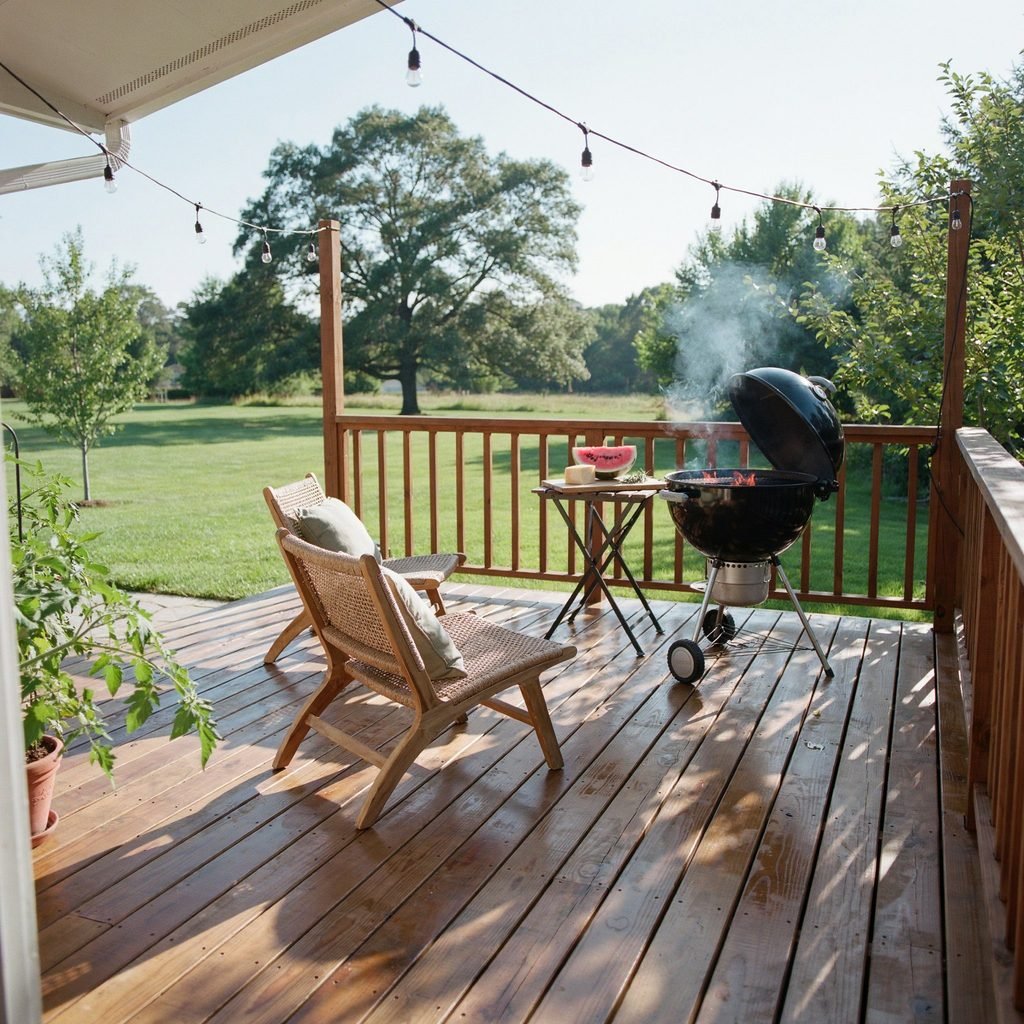
When the weather warms up, the deck becomes the center of outdoor living at your home. It’s where burgers sizzle, kids chase fireflies, and friends linger long after the last plate is cleared. But the same small problems you’ve been ignoring all spring—loose boards, wobbly railings, splinters, and worn stairs—can become real safety risks once the deck is crowded with guests. That’s why smart homeowners schedule deck repair projects for summer BBQs well before the first invitations go out.
Regular summer deck repair and wood deck maintenance do more than boost curb appeal. They extend your deck’s service life, protect your investment, and create a safer outdoor entertaining space for family and friends. Some fixes are approachable DIY wins, while others require a licensed contractor. This guide walks you through inspecting, repairing, cleaning, and protecting your deck so it’s truly BBQ-ready. Think of it as backyard BBQ preparation that pays off all season long.
1. Start With a Complete Deck Inspection
Before you grab tools, you need a clear picture of what needs attention. A thorough deck inspection checklist helps you catch small issues before they become expensive repairs, and it’s the smartest first step of deck maintenance before a BBQ.
Clear the deck completely before you start. Move furniture, rugs, planters, the grill, and toys so you can see the actual walking surface, stairs, and railings.
The Deck Inspection Checklist
Work through this list slowly with a notepad in hand:
- Rotten, cracked, warped, or split deck boards
- Loose nails, popped screws, and corroded fasteners
- Wobbly railings, posts, and balusters
- Sagging areas or unusual movement underfoot
- Damaged stairs, stringers, and stair treads
- Soft spots near the house
- Water pooling and poor drainage
- Mold, mildew, moss, and slippery surfaces
- Damage around the ledger board
- Loose flashing where the deck meets the house
- Signs of insect damage, such as mud tubes or sawdust-like droppings
- Unstable furniture placement and trip hazards
Know When to Call a Professional
If you notice significant movement, extensive rot, damaged structural connections, or anything concerning at the ledger board, stop there. Have a qualified deck contractor or building professional assess the deck before anyone hosts a party on it.
2. Replace Damaged or Rotten Deck Boards
Surface-level patching can’t save a failing board. Deck board replacement is the right call when damage goes deeper than the finish, making it the core task of most rotten wood deck repair.
Signs a board needs replacing include:
- Deep cracks that catch feet or furniture
- Soft or spongy wood that dents under pressure
- Rot around fasteners
- Severe warping or cupping
- Splinters in high-traffic areas
- Boards that no longer hold screws securely
How to Replace a Wood Deck Board
- Measure the existing board and select a compatible replacement. For pressure-treated deck repair, match thickness and length.
- Remove the old fasteners carefully without damaging the joists.
- Inspect the joists underneath for rot or insect damage.
- Cut the replacement board accurately.
- Leave appropriate spacing for drainage and expansion.
- Secure the board with exterior-rated deck screws.
- Sand sharp edges and apply a suitable stain or sealer.
Replacement boards may look different from their weathered neighbors at first. They often need time to weather, or a careful coat of stain, to blend in.
Composite deck repair works differently. Composite boards require manufacturer-specific fasteners, hidden clips, and procedures, so check the manufacturer’s instructions before swapping a plank.
3. Tighten Loose Fasteners and Repair Surface Hazards
Repairing loose deck boards often comes down to replacing deck screws and dealing with old nails. Loose or rusted hardware causes trips, splinters, and boards that shift underfoot.
- Replace rusted, stripped, or damaged fasteners.
- Use exterior-rated, corrosion-resistant deck screws, such as coated or stainless steel.
- Countersink screws slightly below the surface without tearing the wood.
- Remove or hammer down protruding nails where appropriate.
- Sand splintered areas smooth, especially near seating and play zones.
- Avoid ordinary indoor screws for outdoor deck repairs—they rust quickly.
One caution: a screw that keeps loosening or a nail that keeps popping can signal deteriorated wood or a damaged joist below. Simply tightening the fastener won’t solve that underlying problem.
4. Repair Railings, Balusters, and Deck Stairs
Deck railing repair and deck stair repair deserve special attention before a cookout, when children, older adults, and first-time visitors will move around your deck.
- Test handrails and guardrails for wobbling by giving them a firm shake.
- Check railing posts and their connections to the deck frame.
- Replace cracked, loose, or missing balusters.
- Look for missing, cracked, or rocking stair treads.
- Walk the stairs slowly to confirm they feel stable and quiet.
- Inspect stringers for cracks, rot, or rusted connectors.
- Improve stair lighting for evening gatherings.
- Remove slippery moss and algae.
- Keep stair pathways clear of toys, hoses, and coolers.
Cosmetic fixes aren’t enough if a railing or stairs are structurally unstable. If posts, stringers, or connections are damaged, encourage a professional evaluation before the party.
5. Address Rot, Joists, Posts, and the Ledger Board
This is where DIY deck repairs end and structural work begins. Understanding each component helps you describe what you see to a contractor:
- Deck joists support the walking surface.
- Posts transfer the deck’s weight to the footings.
- Beams support the joists.
- The ledger board connects an attached deck to the house.
- Flashing helps prevent water intrusion around the ledger.
Warning signs include sagging or a bouncy feel, persistent moisture, cracked posts, soft joists, rusted structural connectors, and any separation from the home. These are classic signs of deck rot and connection failure. Fixing a sagging deck, fixing deck joists, repairing deck posts, or repairing a ledger board is not cosmetic work, and a careful deck ledger board inspection can catch water intrusion early.
Permits and Professional Help
Depending on your location and the project’s scope, structural repairs may require specialized knowledge, a deck building permit, and inspections. Permit requirements vary by city, county, and state, so check with your local building department before starting structural work.
6. Clean and Restore the Deck Surface
Deck cleaning and sealing is the fastest way to make a tired deck look party-ready, and it removes slippery biological growth at the same time. It’s also the heart of any plan to prepare your deck for summer, so allow enough drying time before guests arrive.
- Remove furniture and decorations.
- Sweep away leaves, dirt, and debris.
- Use a deck cleaner appropriate for the material.
- Scrub with a soft-bristle brush.
- Rinse thoroughly.
- Allow the deck to dry fully.
- Sand rough areas if necessary.
- Apply deck stain and sealer or a deck waterproofing product according to the manufacturer’s instructions.
Wood and composite decks clean differently. Wood usually needs a dedicated wood deck cleaner plus a fresh stain or sealer, while composite typically needs only gentle soap and manufacturer-approved cleaners. Go easy with pressure washing: excessive pressure can damage wood fibers, strip protective coatings, and leave lap marks. And remember that stain and sealer bond only to a clean, dry surface.
7. Protect the Deck From Grill Grease, Heat, and Stains
Grill safety on a wood deck comes down to placement, attention, and quick cleanup. A little prevention also helps you prevent grill stains on a deck and protects the finish you just applied.
- Place the grill on a stable, noncombustible grill mat designed for outdoor use.
- Keep the grill away from railings, siding, doors, windows, overhead structures, umbrellas, and combustible materials.
- Position the grill outside the main foot-traffic path.
- Never leave an operating grill unattended.
- Clean grease spills promptly to prevent stains and slip hazards.
- Keep propane cylinders upright and inspect hoses for visible damage.
- Keep a suitable fire extinguisher accessible.
- Follow local fire-safety rules and the grill manufacturer’s instructions.
Clearance distances vary. Some local fire codes and manufacturers specify particular distances from structures, so follow whichever rule is stricter for your location. And never use a charcoal or gas grill in an enclosed area, including garages and covered spaces not designed for grilling.
8. Improve the Deck for Outdoor Entertaining
Once repairs are complete, a few budget-friendly upgrades make your deck a more welcoming outdoor entertaining space:
- Solar or low-voltage deck lighting for steps and pathways
- Slip-resistant outdoor rugs designed for deck use
- Weather-resistant seating arranged for conversation
- A designated beverage station away from the grill
- Outdoor storage for cushions and supplies
- Shade from a properly secured umbrella or canopy
- Safe, clear pathways around the grill and seating areas
- Child- and pet-friendly railing checks
- Non-slip stair treads where appropriate
- Planters positioned away from walking paths and drainage areas
As summer home improvement projects go, these are quick wins. Bigger additions are a different story: pergolas, roofs, electrical wiring, hot tubs, and heavy built-in structures may require structural planning and local permits, so talk with your building department first.
9. DIY Deck Repairs vs. Hiring a Professional
Use this table to decide between DIY and professional deck repair for common tasks:
| Repair task | Usually suitable for DIY? | When to hire a professional |
|---|---|---|
| Cleaning and sweeping | Yes | Rarely needed |
| Replacing one or two surface boards | Usually | If joists underneath are damaged |
| Sanding splinters | Yes | If sanding reveals widespread rot |
| Replacing simple fasteners | Usually | If screws keep failing in soft wood |
| Applying stain or sealer | Usually | For large or multi-level decks |
| Repairing railings | Cosmetic parts only | If posts or connections wobble |
| Replacing stair stringers | No | Almost always—stringers are structural |
| Repairing joists | No | Always; permits are often required |
| Replacing posts or beams | No | Always—they support the whole deck |
| Ledger board repair | No | Always—it involves the house connection |
| Correcting settlement or major sagging | No | Always—it may indicate footing failure |
DIY suitability depends on your skills, tools, deck height, and ability to work safely. Bring in a pro for structural damage, elevated decks, extensive rot, electrical work, or anything involving the connection to your house.
10. Estimate Deck Repair Costs
Deck repair cost varies widely across the United States, so treat any single “national average” with suspicion. Your price depends on:
- Deck size and height
- Material type, such as pressure-treated wood, cedar, or composite
- Regional labor rates
- Accessibility for crews and equipment
- Extent of rot or structural damage
- Number of boards requiring replacement
- Staining or sealing requirements
- Permit and inspection fees
- Hidden damage discovered once work begins
Minor repairs—like a few boards, fresh screws, and a coat of sealer—live in a very different budget category than structural work on joists, posts, or the ledger. When damage is widespread, deck replacement versus repair becomes a real conversation. Request written estimates that describe materials, labor, disposal, permits, warranties, and the expected timeline.
11. Deck Repair or Full Replacement?
Repair may make sense when:
- Damage is limited to a few boards or fasteners
- The framing is sound
- Railings and stairs are structurally stable
- The deck has no major settlement or ledger problems
- The material remains in reasonable condition
Replacement may be worth considering when:
- Rot affects multiple structural components
- The deck shifts, sags, or separates from the home
- The framing has widespread water or insect damage
- Repairs would be repeated every season
- The existing layout no longer suits the household
- The cost of repairs approaches the cost of rebuilding
A professional inspection is the best way to evaluate hidden structural conditions before investing in repairs on a deck that may be nearing the end of its life.
12. Final Summer BBQ Deck Safety Checklist
Run through this deck safety checklist during the week before your party:
- Inspect boards, joists, posts, stairs, and railings
- Replace rotten or badly cracked boards
- Tighten or replace loose and corroded fasteners
- Remove splinters and sharp edges
- Clean mold, grease, and slippery debris
- Confirm stairs and handrails are stable
- Check lighting and outdoor electrical components
- Keep exits and walkways clear
- Place the grill in a safe location on a suitable mat
- Keep fire safety equipment nearby
- Secure furniture and shade structures
- Protect children and pets from unsafe areas
- Confirm repairs are dry and fully cured before hosting
- Check local rules for grills, fire features, and permits
Frequently Asked Questions
What should I repair on my deck before a summer BBQ?
Prioritize safety-first deck repair projects for summer BBQs: loose or rotten boards, popped nails, rusted screws, wobbly railings, and unstable stairs. Then tackle appearance with cleaning, sanding, and sealing. Deck maintenance before a BBQ is mostly about removing trip hazards and confirming the structure is sound. If anything structural looks wrong, schedule a professional inspection.
How do I know if a deck board needs to be replaced?
Probe suspicious areas with a screwdriver. Soft or spongy wood, deep cracks, severe warping, heavy splintering, or rot around fasteners usually means replacement rather than patching. A board that no longer holds screws securely has also failed. When in doubt, replace it—rotten wood deck repair rarely improves with time.
Can I put a grill on a wood or composite deck?
Generally yes, with care. Use a stable, noncombustible grill mat, keep the grill away from railings, siding, and overhead items, and never leave it unattended. Composite decking can soften under intense heat, so follow both the grill and decking manufacturer’s instructions. Local fire codes vary by city and state, so check your rules too.
How much does deck repair usually cost?
It depends on deck size, materials, regional labor rates, and the extent of damage. Small fixes like a few boards and fasteners are relatively inexpensive, while joist, post, or ledger work costs far more and may include permit fees. Request written estimates that itemize materials, labor, disposal, and warranties before committing.
When should I replace my deck instead of repairing it?
Consider replacement when rot reaches multiple structural components, the deck sags or separates from the house, framing shows widespread water or insect damage, or repair costs approach rebuilding costs. If you’re repeating the same fixes every season, replacement usually delivers better long-term value. A professional inspection clarifies the call.
Final Thoughts: Deck Repair Projects for Summer BBQs
A memorable cookout starts with a deck that’s safe, clean, and solid underfoot. Complete a careful deck inspection early in the season, address minor hazards like loose boards, splinters, and wobbly railings right away, and hire a qualified professional for anything structural—joists, posts, ledgers, or major sagging. Deck repair projects for summer BBQs aren’t just chores; they’re an investment in safer gatherings and a longer-lasting deck. With steady maintenance and smart preparation, your outdoor entertaining space will be ready for everything the season brings.