You just closed on a new suburban home, or maybe the old fence finally gave out after last winter’s storms. Either way, you’ve got kids to corral, a dog that thinks the neighbor’s garden is fair game, and a backyard that could use a little more privacy. Time to get a fence—but how much is this actually going to cost?
In 2026, fence installation costs in the US typically range from $15 to $60+ per linear foot installed, with most standard residential projects (around 150 linear feet) landing between $2,500 and $8,000. The final number depends on your material choice, fence height, terrain, region, and whether you’re adding gates or removing an old fence.
This guide breaks down real 2026 pricing by material, walks you through the factors that drive quotes up or down, and helps you pick the best fence for your budget, climate, and goals—without overpaying.
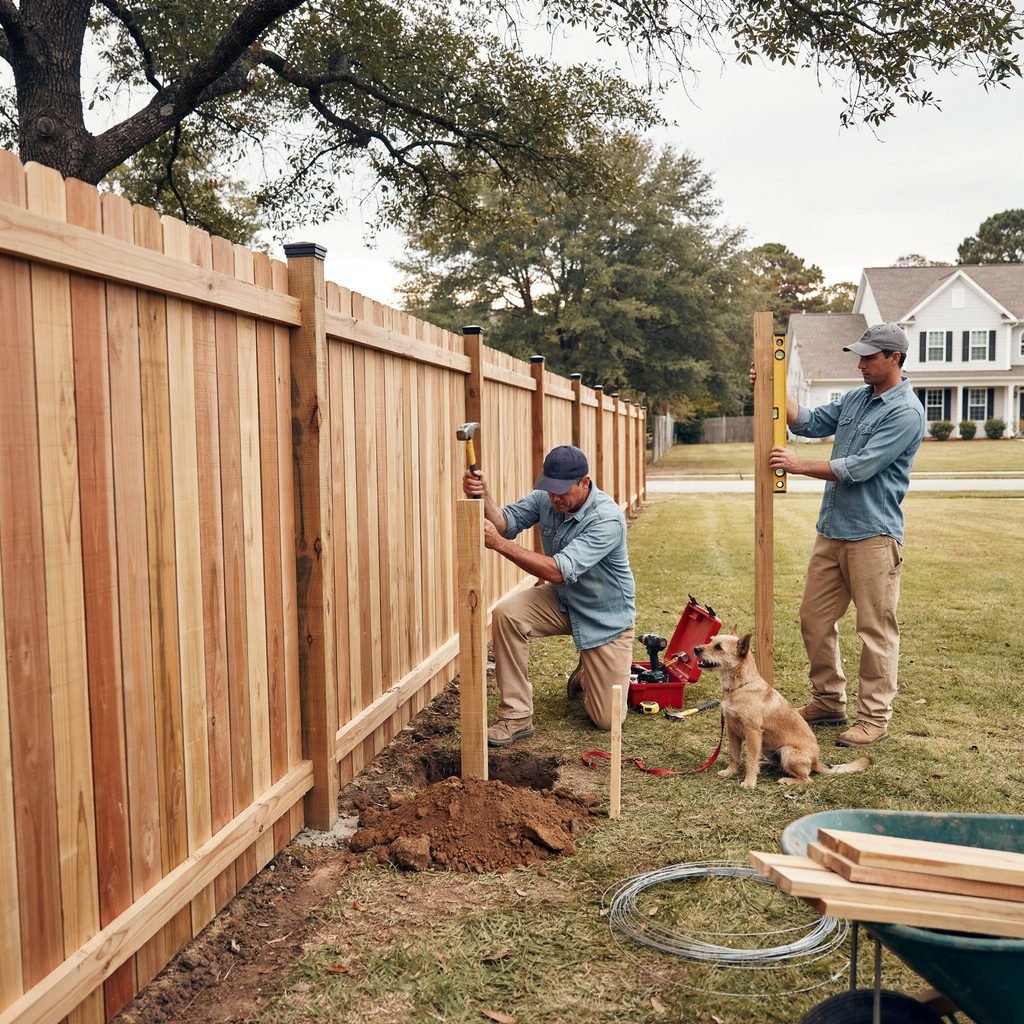
How Much Does Fence Installation Cost in 2026? (National Averages)
For a typical suburban lot of 150–165 linear feet, the average fence cost 2026 homeowners should budget sits around $3,000 to $7,500 installed. Here’s how that breaks down:
- Materials: 50–65% of total cost
- Labor (fence labor cost): 35–50%
- Extras: Gates, permits, old-fence removal, site prep
Regional pricing matters. Northeast and West Coast homeowners often pay 10–20% more due to higher labor rates and stricter permitting. The South and Midwest tend to come in slightly below the national average.
Average Installed Cost Per Linear Foot by Material
| Material | Installed Cost per Linear Foot |
|---|---|
| Chain link (4–6 ft) | $15–$30 |
| Pressure-treated pine (privacy, 6 ft) | $22–$38 |
| Cedar (privacy, 6 ft) | $30–$50 |
| Vinyl / PVC (privacy, 6 ft) | $30–$55 |
| Ornamental aluminum | $35–$55 |
| Wrought iron / galvanized steel | $45–$70+ |
| Composite | $40–$65 |
These ranges assume a 6-foot fence on relatively flat ground with standard soil. Slopes, rocky terrain, and premium hardware push numbers higher.
Fence Cost Per Linear Foot by Material (Detailed Breakdown)
Chain Link Fence Cost
Installed range: $15–$30 per linear foot
The chain link fence cost remains the most budget-friendly option in 2026. Galvanized or vinyl-coated chain link handles decades of weather with almost zero upkeep.
- Pros: Cheapest installed option, extremely durable, low maintenance, great for pet containment and boundary marking.
- Cons: No privacy, limited curb appeal, can corrode in salty coastal air.
- Best for: Large rural lots, dog runs, back boundaries where aesthetics are secondary.
Wood Fence Cost (Pressure-Treated Pine, Cedar, Redwood)
Installed range: $22–$50 per linear foot depending on species and style
A pressure-treated pine fence in a 6-foot privacy configuration runs roughly $22–$38/ft installed, while a cedar fence cost climbs to $30–$50/ft thanks to natural rot resistance and richer grain.
- Pros: Classic natural look, excellent privacy, easy to customize (picket, board-on-board, shadowbox), widely available at lumber yards nationwide.
- Cons: Needs staining or sealing every 2–4 years; can warp, split, or rot over time. Typical lifespan: 15–20 years (pine) to 20–25 years (cedar).
- Best for: Traditional suburban privacy fences, rustic or craftsman-style homes, backyard fence ideas that prioritize a warm, natural aesthetic.
Vinyl (PVC) Fence Cost
Installed range: $30–$55 per linear foot
The vinyl fence cost has stabilized in 2026 after a few years of resin price swings. A PVC fence in a 6-foot privacy panel style is the go-to low maintenance fence for HOA communities.
- Pros: Virtually zero upkeep (no paint, stain, or sealant), 25–40-year lifespan, consistent color and appearance, excellent privacy options.
- Cons: Higher upfront cost than wood, can crack in extreme cold snaps (below 0 °F), limited color palette (white, tan, gray dominate).
- Best for: Homeowners who want “install and forget,” neighborhoods with strict HOA guidelines, humid Southern climates where wood rots quickly.
Aluminum and Ornamental Metal Fence Cost
Installed range: Aluminum $35–$55/ft · Wrought iron / galvanized steel $45–$70+/ft
An ornamental aluminum fence delivers the look of wrought iron at roughly half the weight and a fraction of the rust risk. True wrought iron fence cost sits at the premium end, especially for custom scrollwork.
- Pros: Elegant curb appeal, extremely long lifespan (40+ years for aluminum, 50+ for properly maintained iron), great for pool enclosures and front-yard boundaries.
- Cons: Little to no privacy, higher material cost, aluminum can dent from impact.
- Best for: Front yards, pool code compliance, historic or upscale neighborhoods.
Composite and Other Premium Materials
Installed range: $40–$65 per linear foot
Composite fence cost reflects a blend of wood fibers and recycled plastics, giving you a wood-grain texture without the maintenance cycle.
- Pros: Wood-like appearance, resistant to rot and insects, 25–30-year lifespan, eco-friendly options.
- Cons: Highest per-foot price among common residential materials, fewer style/color options, heavier panels require sturdier posts.
- Best for: High-end projects, modern architectural styles, homeowners who want the wood look with vinyl-level upkeep.
Best Fence Materials by Goal
- Best budget fence: Chain link, basic pressure-treated pine
- Best privacy fence: 6-ft wood privacy panels, vinyl privacy
- Best low-maintenance fence: Vinyl, ornamental aluminum, composite
- Best for pets and kids: Wood privacy, vinyl, chain link with privacy slats
- Best curb appeal: Cedar picket, ornamental aluminum, shadowbox wood
- Best for harsh climates: Coastal → vinyl, aluminum, galvanized steel fence; extreme cold → vinyl (rated for low temps), aluminum; hot/arid → cedar, composite
What Drives Fence Installation Costs? (Key Factors)
Two identical 150-foot fences can differ by thousands of dollars. Here’s why:
- Fence height: A 4-ft picket costs significantly less than an 8-ft privacy screen. Each added foot increases material and post requirements.
- Linear footage: More footage means more posts, panels, and labor hours.
- Gates: A standard walk-through fence gate cost runs $300–$800 installed; a double driveway gate or automatic opener can add $1,500–$4,000+.
- Terrain: A sloped yard fence cost can jump 15–30% because installers must step or rack panels and dig deeper. Rocky or clay-heavy soil also slows post-hole digging.
- Old fence removal: Expect $3–$7 per linear foot for tear-down and haul-away.
- Permits and HOA fees: Vary by municipality (more on this below).
- Local labor rates: Urban and coastal markets pay more than rural Midwest or Southern towns.
- Fence post depth and concrete footing: Standard posts go 24–36 inches deep; frost-line regions (Northeast, upper Midwest) may require 42+ inches, adding concrete and labor.
DIY Fence vs Professional Installation: Which Is Worth It?
DIY fence vs professional installation is one of the most common questions homeowners wrestle with. Material-only costs run 40–60% less than installed prices, but the trade-off is time, tools, and risk.
DIY makes sense when:
- The run is short (under 80 ft) and the ground is flat.
- You’re using chain link or lightweight panels.
- You have a post-hole digger, level, and a weekend (or two).
Hire a pro when:
- The run exceeds 100 ft or includes slopes.
- You’re working with heavy materials (wrought iron, composite).
- Local fence permit requirements demand engineered drawings or inspections.
- You want a warranty on both materials and workmanship.
Pro tip: Get at least three written estimates. Confirm each quote includes posts set in concrete, all hardware, gates, cleanup, and disposal. Check reviews on Angi, HomeAdvisor, or Nextdoor before signing.
Permits, HOA Rules, and Property Lines: Don’t Skip This Step
Before you dig a single post hole:
- Check fence permit requirements with your city or county building department. Fees typically range from $50 to $300.
- Know fence height restrictions: Many municipalities cap front-yard fences at 4 ft and back/side-yard fences at 6 ft (8 ft in some rural zones).
- Verify property lines with a recent survey or county plat map. Installing even six inches over a neighbor’s lot can trigger a costly removal order.
- Review HOA covenants for approved materials, colors, and styles.
- Talk to your neighbors. A heads-up conversation (and possibly a shared-cost agreement for a boundary fence) prevents disputes down the road.
How to Estimate Your Fence Project (Simple Formula + Example)
Use this quick formula:
Total cost ≈ (linear feet × cost per foot) + gates + permits + extras
Example: You want 150 ft of 6-ft cedar privacy fence in the Midwest.
- 150 ft × $30/ft = $4,500
- One 4-ft walk-through gate = $500
- Permit = $150
- Old fence removal (150 ft × $5) = $750
- Estimated total: ~$5,900
An online fence cost calculator can refine this by your ZIP code, factoring in local labor rates and material availability.
Frequently Asked Questions
How much does it cost to install a 100-foot fence?
For a 100-foot run, expect roughly $1,500–$6,000+ installed depending on material. Chain link lands near the low end ($1,500–$3,000), while vinyl or ornamental aluminum pushes toward $4,000–$6,000.
What is the cheapest type of fence to install?
Chain link is consistently the least expensive at $15–$30 per linear foot installed. Basic pressure-treated pine picket fencing is the next most affordable option.
How long does a typical fence last?
Chain link and vinyl last 25–40 years, aluminum 30–50 years, pressure-treated wood 15–20 years, cedar 20–25 years, and wrought iron 50+ years with maintenance.
Do I need a permit to install a fence?
Most US cities and counties require a permit for fences over 4–6 feet tall. Fees are usually $50–$300. Some rural areas skip permits entirely, so always check your local building department.
Is vinyl fence worth the extra cost?
If you want zero maintenance and a 25–40-year lifespan, yes. Vinyl’s higher upfront cost is often offset by never buying stain, sealant, or replacement boards. It’s especially smart in humid or coastal climates where wood deteriorates quickly.
Final Thoughts
Fence installation costs in the US in 2026 generally fall between $15 and $60+ per linear foot, with most homeowners spending $3,000–$7,500 on a standard backyard project. The “right” fence isn’t always the cheapest—it’s the one that matches your budget, maintenance tolerance, climate, and goals, whether that’s keeping a golden retriever contained, blocking a nosy neighbor’s view, or boosting curb appeal before a future sale.
Get at least three quotes, verify local permit and HOA rules, and think in terms of total cost of ownership (upfront price + maintenance + lifespan), not just the number on the estimate.
Ready to put numbers on your project? Use a fence cost calculator tailored to your ZIP code, or search “fence installation near me” to connect with top-rated local contractors who can walk your yard and deliver a tailored quote.
Looking for more ways to upgrade your outdoor space? See our guide on backyard landscaping ideas and read more about home exterior upgrades to tie your new fence into a cohesive curb-appeal plan.