A small, harmless-looking crack in your driveway might not seem like an emergency. However, once water enters that gap and freezes, it expands, turning a minor blemish into a major structural failure. For US homeowners, landlords, and property managers, protecting pavement from the elements is a critical part of property maintenance.
Driveway sealing helps protect the surface from water infiltration, UV rays, oxidation, road salt, oil spills, and general wear. It is important to clarify that sealing does not repair major structural damage or permanently stop all cracks. It is a preventive maintenance step that works best when the driveway is cleaned, repaired, and sealed at the appropriate time. Furthermore, the correct sealer depends entirely on whether your surface is asphalt, concrete, or pavers.
This leads to a common question: Does driveway sealing prevent cracks? Sealing prevents the widening and acceleration of cracks by blocking water and UV damage, but it cannot prevent new cracks caused by underlying soil movement or heavy loads.
What Is Driveway Sealing?
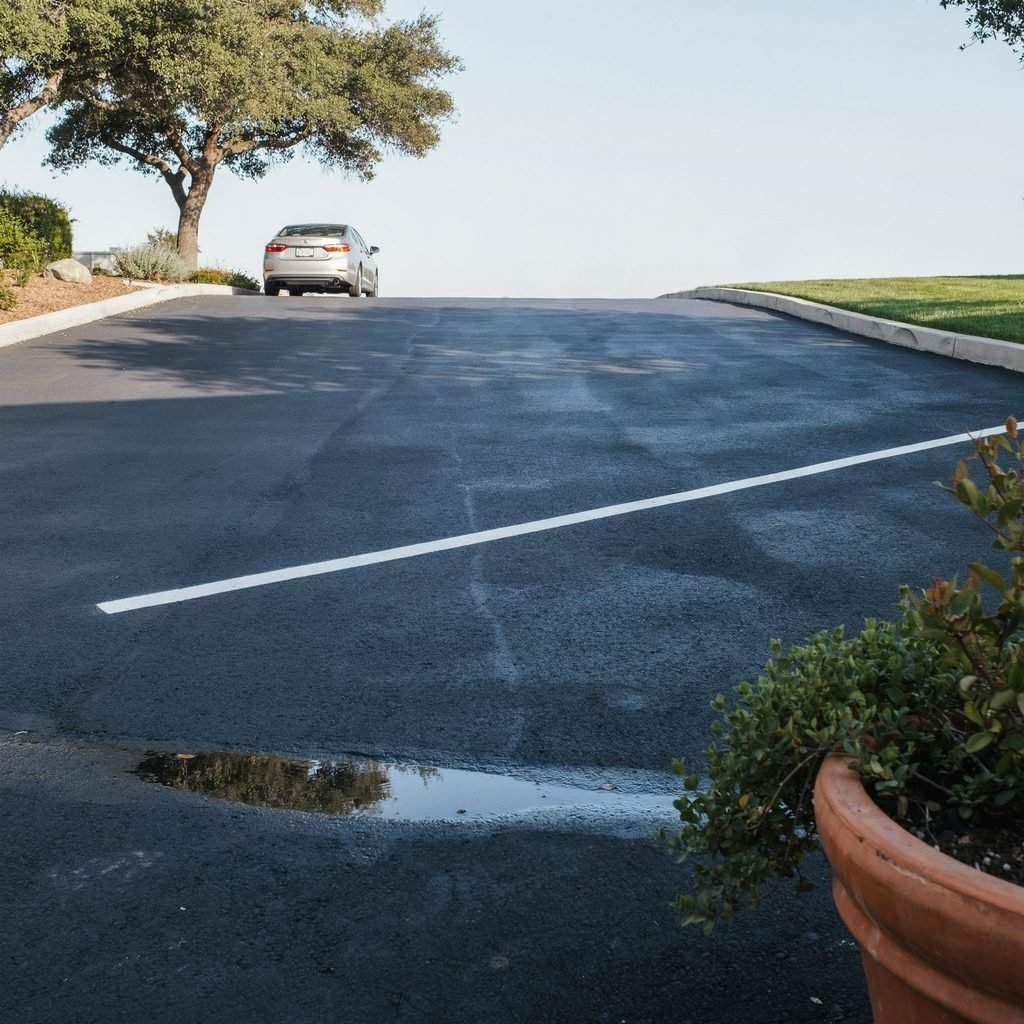
Driveway sealing—often referred to as driveway sealcoating, asphalt sealing, or concrete driveway sealing—is the process of applying a protective coating to pavement. Sealers work by creating either a protective surface film, a water-repellent barrier that penetrates the material, or a coating that reduces exposure to sunlight, moisture, chemicals, and traffic.
It is vital to understand the difference between various pavement services:
- Sealing a driveway: Applying a thin protective layer to prevent surface deterioration.
- Filling driveway cracks: Using specialized fillers to bridge gaps and prevent water intrusion.
- Repairing potholes: Removing damaged material and patching it to restore structural integrity.
- Resurfacing: Applying a new layer of asphalt or a concrete overlay over the existing surface.
- Replacing: Excavating the old driveway and installing a completely new base and surface.
Cracks should generally be cleaned and filled before the sealer is applied. A driveway with widespread alligator cracking, major driveway settlement, drainage problems, or large potholes needs professional repair instead of simple sealcoating.
How Driveway Sealing Protects Against Cracks
Routine pavement maintenance extends the life of your investment in several key ways:
- Reduces water penetration: Rainwater, melting snow, and ice can easily enter weak areas. Sealing blocks this moisture from reaching the vulnerable base layers.
- Limits freeze-thaw damage: In colder states, water inside cracks freezes and expands. By keeping water out, sealing minimizes this destructive freeze-thaw cycle.
- Protects asphalt from oxidation: UV exposure dries out and weakens asphalt binders, leading to faded asphalt and brittleness. Sealcoating blocks these harmful rays.
- Reduces surface drying and brittleness: Regular maintenance helps keep asphalt flexible, allowing it to withstand minor shifts without snapping.
- Protects against oil and chemical stains: Vehicle fluids can soften and dissolve asphalt binders. A sealed surface makes it much easier to remove oil stains before they cause permanent damage.
- Improves surface appearance: A fresh coat of blacktop sealing restores a rich, dark color, vastly improving curb appeal.
Important Clarification: Driveway sealing can slow the development of some cracks, but it cannot prevent cracks caused by soil movement, tree root damage, poor installation, drainage problems, heavy loads, or structural failure.
Asphalt vs. Concrete Driveway Sealing
Homeowners should always read the product label and choose a sealer specifically formulated for their driveway material. Sealer performance, product availability, and local restrictions may vary by state and municipality. Some sources report that certain coal-tar products are restricted in particular jurisdictions due to environmental concerns, so advise readers to check local regulations before purchasing asphapro.
| Feature | Asphalt driveway | Concrete driveway |
|---|---|---|
| Common protection goal | Protect against oxidation, water, and surface wear | Reduce water absorption, staining, and freeze-thaw damage |
| Typical sealer categories | Asphalt emulsion, coal-tar alternatives where permitted, acrylic or polymer-modified products | Penetrating silane/siloxane, acrylic, epoxy, or polyurethane products |
| Appearance | Usually matte black or darkened | Natural, matte, glossy, or enhanced finish depending on product |
| Crack treatment | Asphalt crack filler before sealcoating | Concrete crack repair or flexible concrete sealant |
| Main caution | Never apply an unsuitable concrete product to asphalt | Never use asphalt sealcoating on concrete |
Types of Driveway Sealer
Asphalt Emulsion Sealer
This is the most common choice for residential driveway sealing. It is a water-based formulation that offers lower odor, easy cleanup, and reliable driveway protection for many asphalt surfaces. Actual durability depends heavily on preparation, climate, and traffic.
Coal-Tar or Coal-Tar-Based Sealer
Historically prized for its extreme resistance to fuel and oil exposure, coal-tar sealer was once the industry standard. However, it is no longer universally available or automatically the best choice. Always verify local environmental and legal requirements before purchasing.
Acrylic and Polymer-Modified Sealer
These advanced products offer improved appearance, superior UV resistance, and specialized performance. While an acrylic driveway sealer or polymer-modified sealer often costs more, they provide excellent sealant compatibility and longevity when selected for the correct surface.
Penetrating Concrete Sealer
Silane sealer and siloxane sealer formulations are designed specifically for concrete driveway sealing. They repel water and prevent road salt damage without creating a thick, glossy film. Penetrating sealers are generally not intended for asphalt.
Film-Forming Concrete Sealer
Acrylic concrete sealers, epoxy driveway coatings, and polyurethane sealers create a visible protective shield. They offer excellent stain resistance and decorative finishes but require strict attention to drying time. They can become slippery when wet or peel if incorrectly applied.
Buyer Checklist:
- Surface compatibility (Asphalt vs. Concrete)
- Recommended temperature requirements
- Drying and curing time
- Coverage rate per gallon
- Expected reapplication interval
- Slip resistance (need for a non-slip additive)
- VOC and odor information
- Local environmental regulations
- Manufacturer driveway sealing warranty
When Is the Best Time to Seal a Driveway?
The best time for sealcoating application is usually late spring through early fall. The surface must be clean and dry, with weather conditions aligning with the manufacturer’s guidelines and no rain forecast during the curing period. One current cost guide similarly recommends consistent temperatures above 50°F and a dry curing period justsealmydriveway.
- Spring: Wait until winter moisture has completely dried. Perform driveway crack repair first.
- Summer: Avoid sealing during extreme midday heat, which can cause the sealer to flash-dry unevenly.
- Fall: Highly useful before winter, provided the driveway has time to cure before the first freeze.
- Winter: Generally unsuitable due to cold temperatures, moisture, ice, and poor curing conditions.
| US climate | Timing and concern |
|---|---|
| Northern states | Seal well before freezing temperatures and snow to prevent freeze-thaw damage. |
| Southern states | Avoid extreme heat; seal during a moderate-weather window to prevent rapid drying. |
| Pacific Northwest | Choose a reliably dry period; moisture is the enemy of adhesion. |
| Humid coastal areas | Allow additional drying time if recommended by the manufacturer. |
| Desert regions | Avoid the hottest part of the day and monitor the surface for rapid, uneven curing. |
| Heavy rainfall areas | Check the extended forecast carefully before any application. |
How to Prepare a Driveway for Sealing
Proper driveway surface preparation dictates the lifespan of the job. Loose dirt, oil, and untreated cracks will prevent adhesion.
- Remove vehicles, decorations, basketball hoops, and other objects.
- Sweep away leaves, dirt, gravel, and loose material.
- Use a pressure washer carefully to clean driveway surfaces without damaging the base.
- Remove oil stains, grease, and chemical spills using a dedicated pavement degreaser.
- Pull weeds and remove vegetation from gaps.
- Repair potholes and fix crumbling driveway edges.
- Fill transverse cracks, longitudinal cracks, and hairline cracks with the correct filler.
- Allow all repairs to cure according to product instructions.
- Let the driveway dry completely (usually 24-48 hours after washing).
- Protect garage doors, siding, walkways, and landscaping from overspray.
How to Seal an Asphalt Driveway
- Check the weather forecast and product temperature requirements.
- Stir the sealer thoroughly without introducing excessive air bubbles.
- Apply using a driveway squeegee, specialized brush, roller, or sprayer.
- Work in manageable, overlapping sections.
- Maintain an even coat; avoid puddles which will remain tacky and track onto shoes.
- Follow instructions for a second coat if necessary.
- Keep people, pets, and vehicles off the surface.
- Respect the driveway reopening time specified on the label.
Warning: Do not apply excessive sealer, seal over wet surfaces, or cover expansion joints and drainage features incorrectly.
How to Seal a Concrete Driveway
Concrete requires a fundamentally different approach. Confirm that the concrete is fully cured. Fresh concrete commonly needs a substantial curing period before sealing; one current guide identifies 28 days as a common minimum for fresh concrete before sealing housey.co.
Clean dirt, grease, algae, and existing failing coatings. Repair gaps using concrete crack repair products. Test the penetrating concrete sealer or film-forming product on a small inconspicuous area. Apply at the recommended coverage rate, avoiding puddling. Use a non-slip additive if applying a glossy film-forming sealer, and allow for proper curing time.
How Often Should You Seal a Driveway?
There is no universal schedule. Factors include material, traffic volume, sun exposure, winter road salt damage, and local climate. Current product guides commonly cite approximately 2–4 years for some asphalt emulsion products and 5–10 years for some penetrating concrete sealers asphapro.
Signs your driveway needs resealing:
- Faded gray asphalt (asphalt oxidation)
- A dry, rough, or brittle surface
- Water soaking in immediately instead of beading up
- Increasing frequency of oil stains
- Minor surface deterioration returning after previous repairs
Driveway Sealing Cost in the United States
The cost to seal a driveway depends on square footage, surface condition, required repairs, and regional labor rates. A current 2026 guide lists broad contractor and DIY ranges, but readers should obtain at least two or three local estimates allmetalbrake.
| Service | Main cost factors & Estimated Ranges |
|---|---|
| DIY sealing | $100 – $300+ (Sealer, tools, cleaners, crack filler, protective materials) |
| Professional asphalt sealing | $0.15 – $0.75+ per sq. ft. (Size, preparation, repairs, coats, local labor rates) |
| Concrete sealing | $0.20 – $1.50+ per sq. ft. (Product type, surface condition, finish, repairs) |
| Crack filling | $0.50 – $2.00+ per linear ft. (Crack length, width, depth, hot vs. cold material) |
Note: Figures are general US estimates and vary heavily by location and project condition.
DIY or Professional Driveway Sealing?
DIY driveway sealing may be suitable when the driveway is small, damage is minor, the surface is easily accessible, and you have the time for meticulous preparation.
Professional driveway sealing is better when the property has extensive alligator cracking, potholes, steep slopes, or drainage issues. A residential sealcoating contractor or asphalt maintenance contractor has access to commercial-grade driveway sealing equipment, hot-pour crack filler, and can provide a valid driveway repair estimate and service warranty.
Safety Advice: Always wear gloves, eye protection, and ensure ventilation when handling chemicals. Control traffic, and keep children and pets away from wet sealer.
Common Driveway Sealing Mistakes
- Sealing without repairing cracks: Traps moisture inside; always fill cracks before sealing.
- Applying sealer to a dirty surface: Prevents adhesion; always clean the driveway thoroughly first.
- Sealing over moisture: Ruins the cure; ensure the pavement is bone-dry.
- Ignoring oil stains: Sealer won’t stick to grease; use a degreaser to remove oil stains.
- Applying too much product: Causes peeling, tracking, and uneven curing; follow the coverage rate.
- Sealing during unsuitable weather: Rain or cold ruins the job; monitor weather conditions closely.
- Using concrete sealer on asphalt: Will not adhere properly and damages the pavement.
- Using asphalt sealcoat on concrete: Creates a messy, slippery, incompatible film.
- Reopening the driveway too soon: Causes permanent tire scuffs; respect the curing time.
- Failing to address drainage problems: Water will pool and destroy the new seal; fix grading first.
- Applying sealer over loose pavement: A waste of money; fix driveway settlement and base issues first.
- Choosing the lowest-priced product: Often lacks durability; invest in quality pavement maintenance.
Driveway Maintenance After Sealing
Sealing is part of a broader driveway maintenance plan, not a replacement for proper installation and drainage.
- Clean chemical and oil spills immediately.
- Sweep away sand, leaves, and debris regularly.
- Keep drainage paths and culverts clear.
- Avoid parking heavy equipment or RVs unnecessarily.
- Monitor for hairline cracks every few months.
- Repair new cracks early before they expand.
- Use plastic snow-removal tools; avoid damaging the surface with sharp metal shovel edges.
- Follow product-specific cleaning instructions.
- Schedule inspections after severe weather events.
Frequently Asked Questions
1. Does driveway sealing stop cracks?
No, driveway sealing slows water intrusion that widens existing gaps, but it cannot stop structural driveway cracks caused by soil movement, tree roots, or heavy loads. Always perform proper driveway crack repair before applying any sealer to ensure lasting results.
2. Is it worth sealing an asphalt driveway?
Yes, residential driveway sealing is highly cost-effective. It prevents asphalt oxidation, water infiltration, and road salt damage. By maintaining flexibility and preventing surface deterioration, blacktop sealing extends the pavement’s lifespan and delays the need for an expensive full-depth pavement replacement project.
3. How soon after paving can you seal a driveway?
Fresh asphalt needs time to cure and release excess oils. Most asphalt maintenance contractors recommend waiting at least 30 to 90 days, depending on local weather conditions and temperature requirements, before performing your first sealcoating application to ensure proper adhesion and curing.
4. Can you seal a cracked driveway?
You should never seal over open gaps. You must fill cracks before sealing using a hot-pour crack filler, cold-pour crack filler, or rubberized crack filler. Sealing over untreated gaps traps moisture and accelerates underlying pavement deterioration and freeze-thaw damage.
5. What is the best sealer for an asphalt driveway?
An asphalt emulsion sealer is the most popular choice for DIY driveway sealing due to low odor and easy cleanup. For superior fuel and chemical resistance, some prefer a coal-tar sealer or polymer-modified sealer, provided local environmental regulations permit their use on residential properties.
6. What is the best sealer for a concrete driveway?
A penetrating concrete sealer, like a silane sealer or siloxane sealer, offers excellent driveway waterproofing without altering traction. For a glossy finish, an acrylic concrete sealer, epoxy driveway coating, or polyurethane sealer provides durable surface protection, though you may need a non-slip additive.
7. Can I seal my driveway myself?
DIY driveway sealing is feasible for small, easily accessible driveways if you have the time for thorough driveway surface preparation. However, hiring a professional driveway sealing service or local driveway sealing company is highly recommended for large properties, steep slopes, or surfaces requiring extensive pothole repairs.
8. How long should a sealed driveway stay dry?
Most products require a minimum of 24 to 48 hours of dry weather conditions after application. Rain during the initial drying time and curing time will wash away the emulsion, ruining the sealcoating application and forcing you to repeat the entire process.
9. How long should vehicles stay off a sealed driveway?
The driveway reopening time typically ranges from 48 to 72 hours for passenger vehicles. Always verify the specific manufacturer’s instructions, as local temperature requirements and humidity levels significantly impact the final curing time and overall durability of the protective film.
10. What happens if it rains after driveway sealing?
If it rains before the sealer fully cures, the water will dilute and wash away the protective coating. This leads to uneven coverage, poor adhesion, and compromised driveway protection, meaning you will likely need to clean the surface and reapply the product once it dries.
11. How much does driveway sealing cost?
The driveway sealing cost varies widely based on square footage, material, and regional labor rates. DIY driveway sealing might cost $100 to $300 in materials, while hiring an asphalt maintenance contractor for professional driveway sealing typically ranges from $0.15 to $0.75 per square foot.
12. Should cracks be filled before sealcoating?
Absolutely. Sealcoating is a thin protective film, not a structural patch. You must clean and fill transverse cracks, longitudinal cracks, and hairline cracks with appropriate asphalt crack filler or concrete crack repair products to prevent water infiltration beneath the pavement base.
13. Can driveway sealing fix potholes?
No. Driveway sealing only addresses surface deterioration and minor oxidation. Potholes, crumbling driveway edges, and deep alligator cracking indicate base failure. These require professional driveway crack repair, pothole patching, or complete resurfacing by an asphalt maintenance contractor before any liquid sealant can be applied.
14. How often should an asphalt driveway be sealed?
Generally, asphalt driveway sealing is required every two to four years. However, this depends on local weather conditions, UV exposure, traffic volume, and winter road salt damage. Inspect your pavement annually and reseal when the asphalt appears faded, gray, and dry.
15. Is driveway sealing safe for pets and children?
Yes, once fully cured. Keep children and pets off the driveway during application and the initial drying time. Ensure good ventilation if using solvent-based products, and always store chemicals safely. After curing, the surface is completely safe for normal everyday use.
Conclusion
Ultimately, driveway sealing is a highly effective, cost-effective preventive maintenance step when the surface is in reasonably good condition and properly prepared. To get the best results, always repair cracks before sealing, use a product explicitly designed for your driveway material, and apply it during suitable weather. Do not confuse sealing with structural repair; if you have widespread alligator cracking or drainage problems, consult a professional.
Inspect your driveway this season, repair small cracks early, and compare local driveway sealing options before minor damage becomes an expensive replacement project.