Quick Summary: A clean basement isn’t just about aesthetics—it’s one of the most effective (and overlooked) strategies for preventing costly flood damage. This guide walks you through step-by-step cleaning routines, seasonal maintenance, and proven flood prevention techniques trusted by US homeowners from the Midwest to the Pacific Northwest.
Every year, basement flooding costs US homeowners an estimated $20 billion in repairs, ruined belongings, and mold remediation. If you live in regions prone to heavy spring rain, rapid snowmelt, or hurricane-driven storms—places like the Midwest, Southeast, or Pacific Northwest—you already know the anxiety that comes with watching the weather forecast.
But here’s the thing most people miss: basement cleaning tips for flood prevention aren’t just about mopping floors and organizing boxes. A thorough, systematic approach to cleaning your basement can reveal early warning signs of water intrusion, keep drainage pathways clear, and ultimately save you thousands of dollars in emergency repairs.
In this complete guide, you’ll learn exactly how to clean, inspect, and maintain your basement to dramatically reduce your flood risk—whether you’re a DIY enthusiast or planning to call in a professional.
Why Cleaning Your Basement Helps Prevent Flooding
It might seem counterintuitive. How does cleaning prevent flooding? The answer lies in understanding how water moves through and around your home.
The Hidden Connection Between Clutter and Water Damage
A cluttered basement is a flood liability. Here’s why:
- Blocked drainage pathways: Stacked boxes, furniture, and stored items can obstruct floor drains, sump pump pits, and interior drainage channels. When water enters, it has nowhere to go—so it pools against walls and soaks into your belongings.
- Concealed cracks and leaks: You can’t spot a hairline foundation crack if it’s hidden behind a towering shelf of holiday decorations. By the time you notice the water stain, structural damage may already be underway.
- Mold and mildew breeding grounds: Organic materials like cardboard, fabric, and paper absorb moisture from the air. In a humid basement, these items become sponges that trap humidity and promote mold growth—long before any flood event occurs.
The Real Cost of Ignoring Basement Maintenance
Consider this real-world example: A homeowner in Minneapolis neglected basement maintenance for three years. A small crack behind stored furniture went unnoticed until a spring snowmelt event sent 4 inches of water across the entire basement floor. The final bill? $12,400 in water extraction, drywall replacement, mold remediation, and ruined personal property—none of which was fully covered by standard homeowners insurance.
💡 Key Insight: Many standard US home insurance policies do not cover basement flooding caused by groundwater seepage or sewer backup. You often need a separate flood insurance policy or a specific water backup endorsement.
The risks of ignoring your basement include:
| Risk | Potential Cost |
|---|---|
| Mold remediation | $2,000–$10,000+ |
| Foundation repair | $5,000–$30,000+ |
| Sump pump failure (no maintenance) | $3,000–$8,000 in water damage |
| Ruined stored belongings | $1,000–$15,000+ |
| Structural integrity compromise | $10,000–$50,000+ |
Regular basement cleaning isn’t a chore—it’s an investment in your home’s foundation protection and your family’s health.
Step-by-Step Basement Cleaning Guide for Flood Protection
Follow this systematic approach to transform your basement from a flood risk into a well-maintained, water-resistant space.
1. Declutter and Remove Obstacles
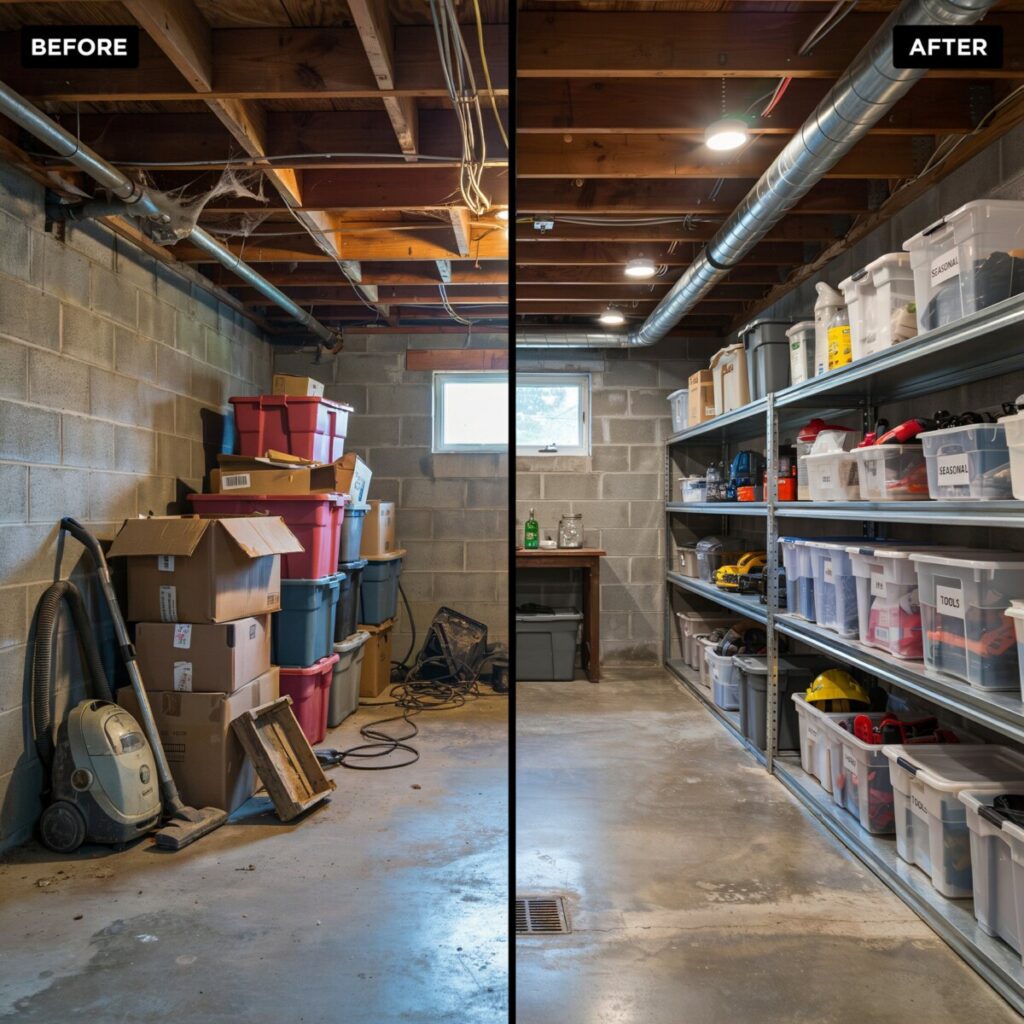
Start at the perimeter. Walk the entire outline of your basement walls and remove everything stored within 3 feet of the foundation. This gives you full visual access to inspect for water intrusion and keeps drainage areas clear.
Decluttering strategy:
- Sort into four piles: Keep, Donate, Recycle, Toss
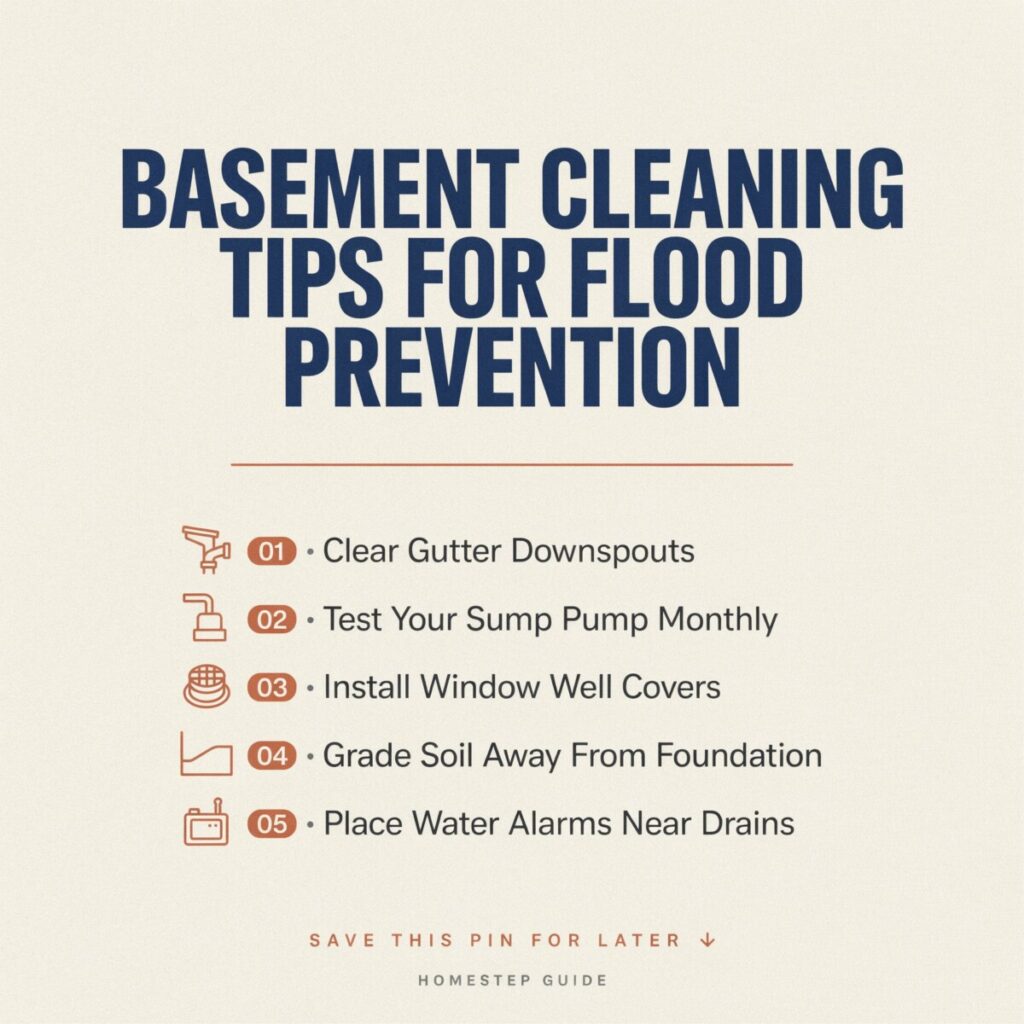
- Elevate what stays: Never store items directly on the floor. Use metal shelving units (not wood, which absorbs moisture) raised at least 6 inches off the ground.
- Replace cardboard boxes with sealed plastic bins. Cardboard absorbs moisture and disintegrates—plastic bins protect your belongings and don’t contribute to humidity problems.
- Clear the sump pump area: Ensure your sump pump pit is accessible and free of debris. A clogged pump during a storm is a recipe for disaster.
2. Clean Floors and Walls Thoroughly
Once decluttered, it’s time for a deep clean. This step is critical because cleaning reveals problems you can’t see through dirt and dust.
Floor cleaning process:
- Dry sweep or vacuum the entire floor to remove debris.
- Inspect for efflorescence (white, chalky mineral deposits). This is a telltale sign of water seeping through concrete via capillary action.
- Scrub with a concrete cleaner or a solution of 1 cup bleach per gallon of water to kill existing mold spores.
- Mop and dry thoroughly. Use fans or a dehumidifier to accelerate drying.
Wall cleaning process:
- Wipe down walls with a moisture-detecting cloth or use a moisture meter for basement walls to identify hidden damp spots.
- Look for discoloration, bubbling paint, or peeling sealant—all indicators of past or active water intrusion.
- Clean any visible mold with an EPA-registered mold-killing product. For areas larger than 10 square feet, consider professional mold remediation.
Pro tip: If you’ve previously dealt with flooding, learning how to clean basement floor after flood events properly is essential. Always disinfect with appropriate cleaners and ensure complete drying before re-storage.
3. Inspect and Clean Drains & Gutters
Your basement doesn’t exist in isolation—it’s connected to a larger water management system that starts on your roof and ends at your foundation.
Interior drain maintenance:
- Floor drains: Remove covers and flush with hot water. Use a plumbing snake if water drains slowly.
- Sump pump pit: Remove debris, check the float switch, and pour 5 gallons of water into the pit to test activation.
- Window wells: Clear leaves, dirt, and standing water. Ensure drain gravel at the bottom is not compacted.
Exterior gutter and downspout maintenance:
This is where many homeowners fail—and it’s where exterior drainage for flood prevention starts.
- Clean gutters twice a year (spring and fall) at minimum. Clogged gutters send water cascading down your foundation walls.
- Extend downspouts at least 6–10 feet away from your foundation. Simple downspout extension ideas include buried PVC pipe, flexible corrugated extensions, or decorative splash blocks for shorter distances.
- Check gutter slope: Gutters should slope toward downspouts at a rate of ¼ inch per 10 feet for proper flow.
4. Check for Cracks, Leaks, and Water Stains
This is your early warning system inspection. Be thorough.
What to look for:
- Horizontal cracks in foundation walls: These can indicate hydrostatic pressure from saturated soil pushing inward. These are serious—call a structural engineer.
- Vertical or diagonal cracks: Often caused by normal settling. Hairline cracks (less than ⅛ inch) can typically be sealed DIY.
- Water stains on walls or floor: Dark, irregular marks that indicate past or recurring moisture issues.
- Damp spots or puddles near walls, especially after rain.
- Rusty nail pops or efflorescence on walls.
Sealing basement cracks to prevent water:
For minor cracks, use a hydraulic cement or polyurethane crack injection kit (available at Home Depot, Lowe’s, or online). These products expand as they cure, creating a watertight seal. For larger cracks or anything structural, hire a professional.
Flood Prevention Tips Beyond Cleaning
Cleaning is your first line of defense. But for serious basement waterproofing tips, you need a multi-layered approach.
Sump Pump Installation and Maintenance
A quality sump pump is the heart of any basement flood prevention DIY system.
What to look for in the best sump pump for US homes:
- Battery backup system: When storms knock out power (the worst time for your pump to fail), a backup keeps you protected.
- Submersible design: More durable and quieter than pedestal pumps.
- Minimum ⅓ HP motor for most residential applications.
- Cast iron or stainless steel construction (avoid plastic impellers).
Recommended US-available brands include Wayne, Zoeller, and Liberty Pumps—all widely available and well-reviewed.
Maintenance schedule: Test your sump pump every 3 months. Clean the pit annually. Replace the pump every 7–10 years.
French Drains and Drain Tile Systems
A French drain installation home guide starts here: these systems collect groundwater before it reaches your foundation.
- Interior drain tile: Installed beneath the basement floor along the perimeter, channeling water to the sump pump. Low-maintenance once installed but requires professional installation.
- Exterior French drains: Buried in a gravel trench outside the foundation, diverting water away from the house.
- Drain tile system maintenance: Annually flush the system with water through cleanout ports to prevent sediment buildup.
Waterproofing Walls and Sealing Cracks
For interior protection, apply waterproof paint for basement interior walls. Products like Drylok, KILZ, or Thoroseal create a barrier against minor moisture penetration.
⚠️ Important: Waterproof paint is a moisture barrier, not a structural fix. If water is actively entering through cracks, seal cracks first—painting over active leaks will cause the paint to bubble and fail.
Proper Exterior Drainage
Erosion control and proper grading are your foundation’s best friends.
- Grade soil away from the house at a slope of at least 6 inches over the first 10 feet from the foundation.
- Install window well covers to prevent rain and snow from collecting in basement window wells.
- Use splash blocks or buried drain lines at downspout outlets.
- Consider a dry well or rain garden for homes with large roof areas that generate significant runoff.
Seasonal Basement Maintenance Checklist
Flooding risk changes with the seasons. Here’s your seasonal basement maintenance checklist to stay ahead of problems year-round.
🌱 Spring — Snowmelt and Rain Prep
- [ ] Inspect foundation walls for new cracks from winter freeze-thaw cycles
- [ ] Test sump pump and battery backup before heavy spring rains
- [ ] Clean gutters and downspouts after winter debris accumulation
- [ ] Check grading around foundation—winter frost heave may have altered soil slopes
- [ ] Run dehumidifier to manage increased humidity from melting snow
☀️ Summer — Humidity Control
- [ ] Maintain humidity control by running a dehumidifier set to 45–50% relative humidity
- [ ] Check for condensation on pipes, walls, and windows (sign of excessive humidity)
- [ ] Inspect window wells for debris and proper drainage after summer storms
- [ ] Ensure adequate ventilation in basement spaces
🍂 Fall — Pre-Rain and Pre-Winter Prep
- [ ] Gutter cleaning before rain season is critical—remove all leaves and debris
- [ ] Extend downspouts and verify they’re directing water away from the foundation
- [ ] Seal any discovered cracks before winter freeze expands them
- [ ] Store outdoor hoses and drain exterior faucets to prevent frozen pipe bursts
- [ ] Inspect sump pump discharge line to ensure it won’t freeze in winter
❄️ Winter — Freeze Protection
- [ ] Insulate exposed pipes to prevent freezing and bursting
- [ ] Keep basement temperature above 55°F even in unoccupied areas
- [ ] Monitor sump pump discharge line for ice blockages
- [ ] Clear snow away from foundation walls to reduce snowmelt infiltration
- [ ] Check for ice dams on the roof that could lead to meltwater entering the basement
Essential Tools & Products for Basement Flood Prevention
Equipping yourself with the right tools makes maintenance manageable and effective.
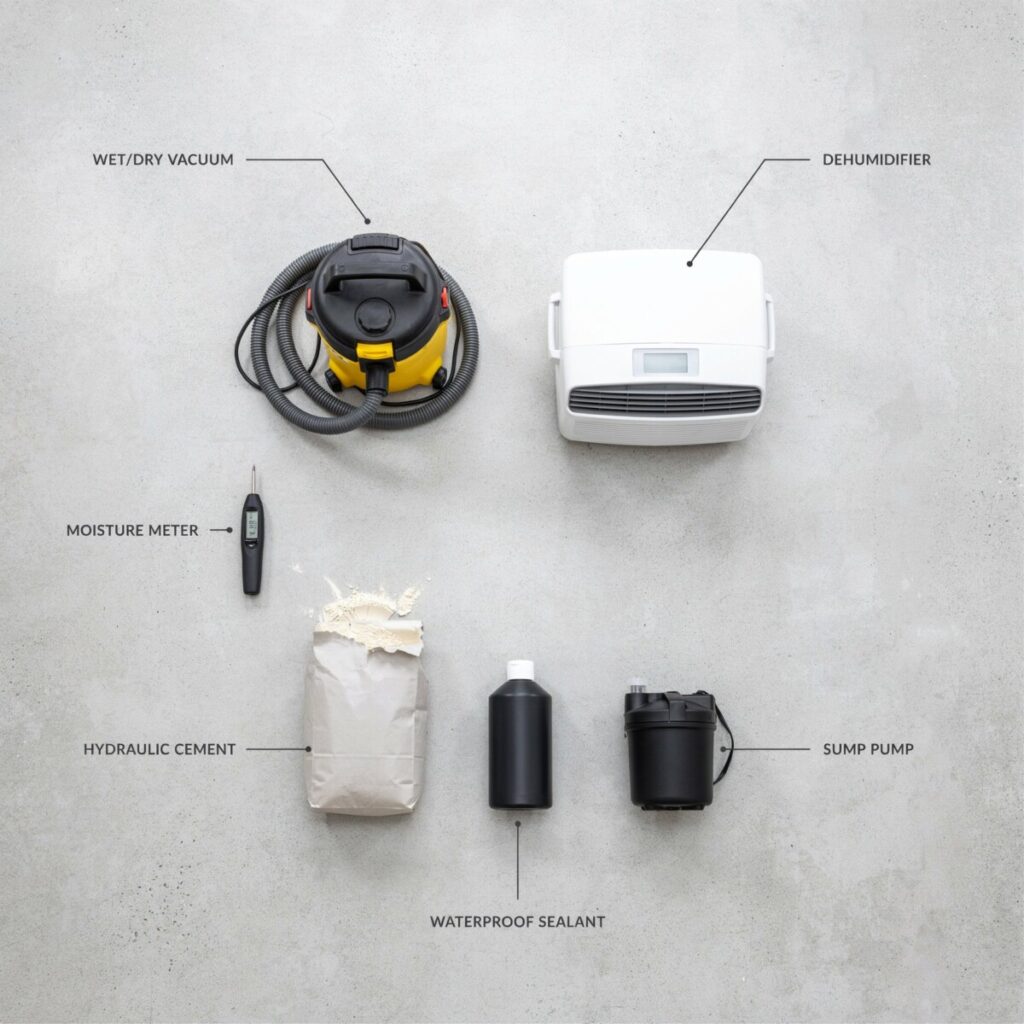
| Tool / Product | Purpose | Recommended Brands (US) |
|---|---|---|
| Wet/dry vacuum | Standing water removal, general cleanup | Shop-Vac, Ridgid, Craftsman |
| Dehumidifier (50+ pint) | Humidity control and mold prevention | Frigidaire, Midea, AlorAir |
| Moisture meter | Detect hidden moisture in walls and floors | General Tools, Protimeter, Klein Tools |
| Sump pump with battery backup | Active water removal during floods | Wayne, Zoeller, Liberty Pumps |
| Hydraulic cement | Emergency crack sealing | Quikrete, DAP, Red Devil |
| Waterproof sealant/paint | Interior wall moisture barrier | Drylok, KILZ, Thoroseal |
| Polyurethane crack injection kit | Sealing foundation cracks | Sika, RadonSeal, CrackPack |
| Summers pump / utility pump | Emergency water extraction | Superior Pump, Wayne |
| Emergency basement flood response kit | Preparedness for flood events | Assemble DIY: pump, vacuum, tarps, flashlight, gloves |
Basement dehumidifier recommendations: For most US basements (800–1,500 sq ft), a 50-pint dehumidifier with a built-in pump and continuous drain option is ideal. The Frigidaire FFAD5033W1 and Midea 50-Pint Cube are consistently top-rated for performance, noise level, and energy efficiency.
When to Call a Professional Waterproofing Expert
DIY basement flood prevention has its limits. Knowing when to call a pro saves you time, money, and heartache.
Signs That DIY Isn’t Enough
- Horizontal foundation cracks or cracks wider than ¼ inch
- Water actively entering the basement despite your best efforts
- Persistent mold that returns after cleaning (may indicate hidden moisture sources)
- Sump pump running constantly or cycling every few minutes
- Bowing or leaning basement walls (sign of significant hydrostatic pressure)
- Sewage backup through floor drains (health hazard requiring immediate professional response)
How to Choose a Waterproofing Company
Not all contractors are created equal. When hiring:
- Get 3+ written estimates from licensed, insured companies.
- Check reviews on Google, BBB, and Angi. Look for companies with 100+ reviews.
- Ask about warranties. Reputable companies offer lifetime transferable warranties on interior drainage and sump pump systems.
- Verify licensing and insurance. Waterproofing work must meet local building codes.
- Request references from jobs completed in the last 12 months.
Well-known national brands in the US waterproofing industry include Basement Systems (B-Dry), EverDry, and AquaGuard, alongside many excellent local contractors.
Quick Takeaways: 7 Key Points for Flood-Proofing Your Basement
Before we wrap up, here are the most important basement cleaning tips for flood prevention summarized:
- 🧹 Clean regularly to see problems early. Declutter walls, floors, and drain areas at least twice a year to spot cracks, leaks, and moisture issues before they escalate.
- 💧 Maintain your drainage system. Gutters, downspouts, floor drains, and sump pumps must all work together—or your basement pays the price.
- 🏗️ Seal cracks immediately. Even hairline cracks invite water intrusion. Use hydraulic cement or polyurethane injection for minor cracks; call a pro for structural ones.
- 📈 Control humidity. A quality dehumidifier set to 45–50% prevents condensation, mold growth, and moisture damage year-round.
- 🌍 Manage exterior water. Proper grading, extended downspouts, and French drains keep water away from your foundation—the cheapest fix is preventing water from arriving.
- 🔋 Invest in sump pump redundancy. A battery backup sump pump can mean the difference between a dry basement and a $10,000 disaster during a power outage.
- 📋 Follow a seasonal maintenance checklist. Each season brings unique risks—spring snowmelt, summer humidity, fall leaves, and winter freeze-thaw cycles all demand attention.
FAQs About Basement Cleaning and Flood Prevention
1. Can cleaning my basement really prevent flooding?
Yes—indirectly but powerfully. Cleaning your basement doesn’t stop water from entering your foundation, but it allows you to detect problems early, keep drainage pathways clear, remove moisture-absorbing materials, and ensure your flood prevention equipment (sump pumps, drains) operates properly. A clean, inspected basement is a prepared basement.
2. How often should I clean my basement?
Perform a full declutter and deep clean at least twice a year (spring and fall). Monthly, do a quick visual inspection—walk the perimeter, check for new water stains, listen for your sump pump cycling, and ensure floor drains are unobstructed. After any significant rain event, do a spot check.
3. What’s the first sign of basement water damage?
The earliest signs include:
- A persistent musty or earthy smell
- Efflorescence (white, powdery deposits) on concrete walls or floors
- Damp spots or darkening on walls or floor near the foundation
- Peeling paint, bubbling wallpaper, or warping on finished walls
- Condensation on pipes, windows, or walls
Don’t wait for standing water to act. If you notice any of these signs of basement water intrusion, investigate immediately.
4. Does homeowners insurance cover basement flooding?
It depends on the cause. Standard US homeowners insurance typically covers sudden, accidental water damage (like a burst pipe) but does not cover flooding from groundwater seepage, sewer backup, or surface water entering through foundation cracks. For that, you need:
- Flood insurance (through the NFIP or private insurers)
- A water backup endorsement added to your existing policy
Review your policy annually with your agent to understand your home insurance basement flood coverage.
5. What should be in an emergency basement flood response kit?
Your emergency basement flood response kit should include:
- A submersible utility pump with a hose (for rapid water removal)
- A wet/dry vacuum rated for water pickup
- Heavy-duty tarps and plastic sheeting to protect belongings
- Rubber gloves, boots, and eye protection
- A battery-powered or crank flashlight (power often fails during floods)
- Towels and mops for final water absorption
- Contact list for your plumber, waterproofing contractor, and insurance agent
Conclusion: Start Cleaning Today to Avoid Costly Flood Damage
Basement flooding isn’t a matter of if—for many US homeowners, it’s a matter of when. But here’s the good news: the majority of basement flood damage is preventable with consistent cleaning, proactive maintenance, and smart preparation.
You don’t need to tackle everything at once. Start with the simplest step: walk to your basement right now and do a 10-minute inspection. Look at your walls. Check your sump pump. Clear items away from your floor drains. That single action puts you ahead of most homeowners.
From there, work through the seasonal checklist, invest in the right tools, and seal any cracks you discover. If problems are beyond DIY, don’t hesitate—contact a local waterproofing professional before the next big storm hits.
Your basement is the foundation of your home—both literally and financially. Protecting it with regular cleaning and maintenance is one of the smartest investments you can make as a homeowner.