You walk into your living room, turn on the air conditioning, and are immediately greeted by a faint, musty smell. Or perhaps you notice a fine layer of dust settling on your furniture just days after a thorough cleaning. If you or your family members have been suffering from unexplained allergy flare-ups, you might be looking up at your vents and wondering: is it time to call in the pros? The Environmental Protection Agency (EPA) notes that Americans spend approximately 90% of their time indoors, where pollutant concentrations can be two to five times higher than outdoors. This makes indoor air quality a critical concern for every homeowner.
This brings us to a common dilemma: are professional duct cleaning services actually worth the cost? With prices ranging from a few hundred to over a thousand dollars, it’s a significant investment. In this comprehensive guide, we will explore the real duct cleaning benefits, weigh the air duct cleaning pros and cons, and break down the typical air duct cleaning cost. We’ll also cover the definitive signs you need duct cleaning, what the process actually involves, when to try DIY alternatives, and how to choose a reputable contractor. By the end, you’ll know exactly whether HVAC duct cleaning is a smart move for your home.
What is Duct Cleaning? What It Includes
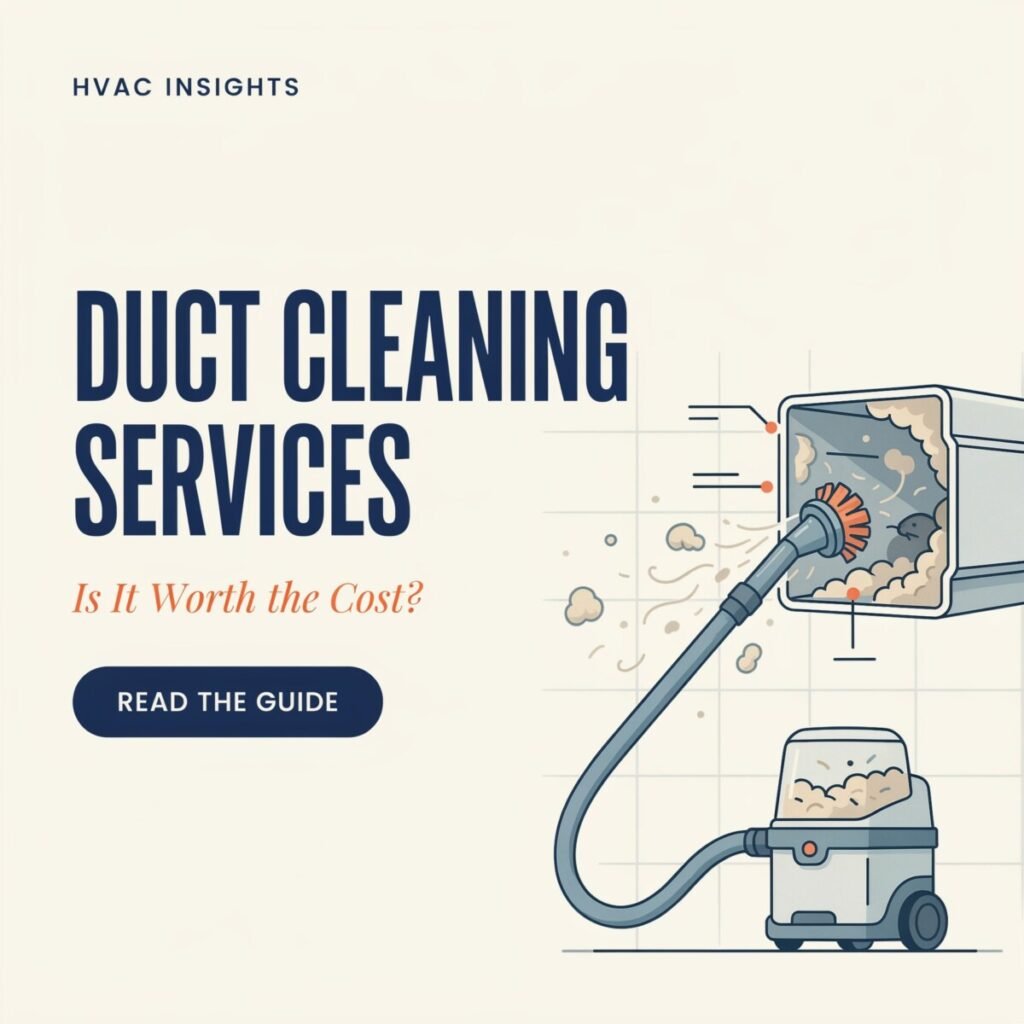
Before evaluating the return on investment, it is important to understand what a professional service actually entails. True HVAC duct cleaning goes far beyond simply vacuuming out the visible part of your air registers. A comprehensive cleaning targets the entire HVAC system’s air pathway. This includes the supply and return air ducts, registers, grilles, diffusers, heat exchangers, cooling coils, condensate drip pans, fan motor, and the air handler housing.
To achieve this, reputable technicians use specialized equipment. The most effective method involves placing the entire duct system under continuous negative pressure using a truck-mounted or portable HEPA-filtered vacuum collection device. While the vacuum pulls debris out, technicians use agitation tools—such as rotary brushes, compressed air whips, and skip-balls—to dislodge dirt and dust stuck to the interior walls of the ductwork.
It is also crucial to understand what typical HVAC maintenance and cleaning does not cover. While a good duct cleaning will clear out accumulated dust, pet hair, and debris, it is not a substitute for mechanical HVAC repairs. If your blower motor is failing or your refrigerant lines are leaking, cleaning the ducts will not fix the underlying mechanical issues.
Why Homeowners Consider Duct Cleaning: Common Benefits Claimed
Homeowners typically look into duct cleaning services for a few primary reasons, ranging from health concerns to home comfort. The most common claims revolve around improving health and indoor air quality by reducing the presence of allergens in air ducts. Proponents argue that removing built-up dust, pollen, pet dander, and mold spores from the ductwork can significantly relieve asthma and allergy symptoms. When the HVAC system kicks on, it won’t circulate these trapped irritants back into your living spaces.
Another major driver is HVAC efficiency. Heavy buildup inside the ducts, particularly on the blower wheel or cooling coils, can restrict airflow. When airflow is restricted, your system has to work harder to heat or cool your home, potentially leading to higher utility bills. Many homeowners hope to see measurable energy savings from duct cleaning, extending the life of their expensive HVAC equipment by reducing mechanical strain. Additionally, cleaning is often sought for odor removal. Lingering smells from tobacco smoke, cooking, pets, or even minor mold growth can permeate the ductwork, releasing stale odors every time the fan runs.
Consider a real-world scenario: a family of four in Texas with two shedding dogs recently finished a drywall remodeling project. Despite changing filters, they noticed dust blowing out of the supply vents and a persistent construction smell. After hiring a professional service—which cost around $650 for their 2,500 sq. ft. home and included a full negative-pressure vacuuming, rotary brushing, and a coil wipe-down—they noticed an immediate drop in airborne dust and a complete elimination of the drywall odor, finding the investment entirely worthwhile.
What the Science and Expert Bodies Say
While the benefits sound compelling, the scientific consensus on routine HVAC duct cleaning is surprisingly nuanced. The U.S. Environmental Protection Agency (EPA) states that knowledge about air duct cleaning is still in a relatively early stage, and they do not recommend it as a routine measure. According to the EPA, ducts are rarely the primary source of indoor air pollution. Most dust and allergens enter the home from outside or are generated indoors, settling on surfaces long before they ever get pulled into the return ducts. The EPA specifically notes that no studies have conclusively demonstrated that duct cleaning prevents health problems or significantly increases dust levels in homes.
Similarly, regarding energy efficiency, Consumer Reports and various independent studies suggest that unless your ducts are severely blocked or the cooling coils are caked in grime, cleaning the ducts alone will not yield massive energy savings. The friction loss from normal dust accumulation in large main trunk lines is often negligible.
However, the National Air Duct Cleaners Association (NADCA) maintains that proper cleaning, done to their strict ACR 2022 standards, is highly effective at removing substantial contamination. The balanced interpretation here is that duct cleaning benefits are highly situational. If your ducts are full of construction debris, vermin droppings, or active mold, cleaning is absolutely necessary and beneficial. But if your ducts are merely dusty and you have no indoor air quality symptoms, a professional cleaning is unlikely to make a measurable difference in your health or energy bills.
Cost Breakdown and Factors That Affect Price
When researching air duct cleaning cost, you will find a wide array of pricing models. The national average for a standard single-family home typically ranges from $350 to $700. However, larger homes with multiple HVAC zones, extensive duct runs, or complex layouts can easily push the duct cleaning price to between $800 and $1,200+.
Pricing is usually structured in one of two ways: a flat rate for the whole house or a per-vent/per-register fee (often $30 to $50 per vent). Several factors can significantly drive up the final bill. Severe contamination, such as extensive duct cleaning for mold or heavy vermin infestations, requires specialized remediation, protective gear, and extra disposal efforts. Add-on services are another major cost variable. Many companies offer air duct sanitizing treatments, UV light installations, or dryer vent and duct cleaning bundles. While sanitizing can be useful in specific mold or smoke cases, it is often an unnecessary upsell for standard dust removal.
Beware of red flags when comparing quotes. If a company offers a “$49 Whole House Special,” it is almost certainly a bait-and-switch scam. These operators often use a “blow-and-go” method, failing to use negative pressure or agitation tools, and will aggressively pressure you into expensive chemical sanitizers or claim you have a non-existent mold problem to inflate the price. Legitimate companies with NADCA certified duct cleaners and heavy-duty truck-mounted vacuums have high overhead costs that make $49 pricing impossible.
Signs You Should Consider Professional Duct Cleaning
Because the EPA recommends an “as-needed” approach, how do you know when it is time to hire duct cleaning near me? There are a few undeniable signs you need duct cleaning that justify the expense.
First, visible mold growth inside hard-surface ducts or on other components of your heating and cooling system is a major red flag. Note that if you have insulated ductwork and the insulation gets wet or moldy, it usually needs to be replaced, not just cleaned. Second, evidence of vermin or insect infestation inside the ducts requires immediate cleaning to remove droppings, nesting materials, and potential pathogens. Third, if your supply registers are actively blowing out significant amounts of dust, debris, or pet hair when the system runs, your ducts are overloaded.
Persistent odors are another strong indicator. If you have ruled out a dead animal in the crawlspace or a dirty drip pan, but a musty or stale smoke smell lingers every time the fan kicks on, the odor-causing bacteria are likely trapped in the ductwork. Finally, recent remodeling or construction is a prime seasonal trigger. Drywall dust, sawdust, and chemical off-gassing can easily be pulled into the return vents, coating the entire system. If you are moving into a previously occupied home or just finished a major renovation, scheduling an inspection is a smart maintenance step.
DIY Maintenance and Alternatives
If you don’t have the severe contamination issues listed above, you might not need a full professional clean. There are several highly effective DIY maintenance steps and alternatives that protect your indoor air quality and system health without the high cost.
The single most important thing a homeowner can do is regularly replace their HVAC air filters. For most residential systems, a MERV 8 to MERV 11 pleated filter provides the best balance. It captures a high percentage of allergens in air ducts and household dust without restricting airflow so much that it strains the blower motor. Check your filters monthly and replace them at least every 90 days.
You can also do basic DIY cleaning by removing the grilles and registers and vacuuming out the first few feet of accessible ductwork with a hose attachment. Beyond the ducts, focus on source control: use exhaust fans when cooking, prohibit indoor smoking, and keep pets groomed. Using portable HEPA air purifiers in bedrooms or living rooms can dramatically reduce airborne particulates.
Finally, consider the difference between duct cleaning vs HVAC tune-up. Often, poor airflow or bad odors stem from a dirty blower wheel or a clogged evaporator coil, not the ducts themselves. Scheduling an annual professional HVAC tune-up allows a technician to clean these critical internal components, check refrigerant levels, and ensure the system is running safely and efficiently. Deep system cleaning requires specialized negative-pressure equipment, which is the limit of DIY.
How to Choose a Reputable Duct Cleaning Service
If you decide to hire a pro, selecting the right company is critical for your duct cleaning safety and wallet. Always look for NADCA certified duct cleaners. NADCA certification ensures the company has signed a code of ethics, employs certified Air System Cleaning Specialists (ASCS), and adheres to industry-standard cleaning protocols. Additionally, verify that the company holds up-to-date state and local licensing, carries comprehensive liability insurance, and has verifiable local references and positive duct cleaning reviews.
When getting quotes, ask pointed questions. Will they use a HEPA-filtered vacuum collection device to maintain negative pressure? Do they use mechanical agitation (like rotary brushes) rather than just blowing air around? Will they clean the entire system, including the coils and blower? A reputable company will gladly provide a written checklist of services, show before-and-after photos of previous jobs, and offer a transparent, written estimate.
Be highly suspicious of warning signs such as vague answers about their equipment, high-pressure sales tactics for chemical biocides or air duct sanitizing, or technicians who claim to find toxic mold without offering independent lab verification. When the job is done, expect a proper post-clean inspection, the reattachment of all registers, and the proper disposal of all debris from your property.
Cost vs Benefit Conclusion + Quick Decision Guide
So, is duct cleaning worth it? The short answer is: sometimes. It is highly beneficial for specific, severe problems, but it is not a mandatory annual chore for every homeowner.
Use this quick decision checklist:
- Likely worth it: You have visible mold growth, evidence of pests, massive dust blowouts after a renovation, or persistent, unexplainable odors.
- Probably unnecessary: Your home has normal dust levels, you change filters regularly, no one suffers from unexplained allergies, and your HVAC system is well-maintained.
Instead of defaulting to a full duct cleaning, follow a prioritized approach. First, visually inspect your ducts with a flashlight. Second, upgrade and regularly change your air filters. Third, schedule a professional HVAC tune-up to clean the coils and blower. If, after taking these steps, you are still experiencing poor indoor air quality or airflow issues, then it is time to invest in professional duct cleaning.
Practical Call-to-Action and Local Search Tips
Take control of your home’s air quality today. Start by unscrewing a few return and supply vent covers to inspect the ductwork with a flashlight. If you suspect you need professional help, don’t settle for the first flyer that lands in your mailbox. Get two to three written quotes from insured, highly-rated local pros.
When searching online, use specific phrases like “NADCA certified duct cleaners near me,” “air duct cleaning cost [Your City, State],” or check “HVAC cleaning reviews [Your City]” to find reputable contractors.
Have you ever hired a professional duct cleaning service? Did you notice a drop in dust or an improvement in your allergies? Share your experience and the results you saw in the comments below!